
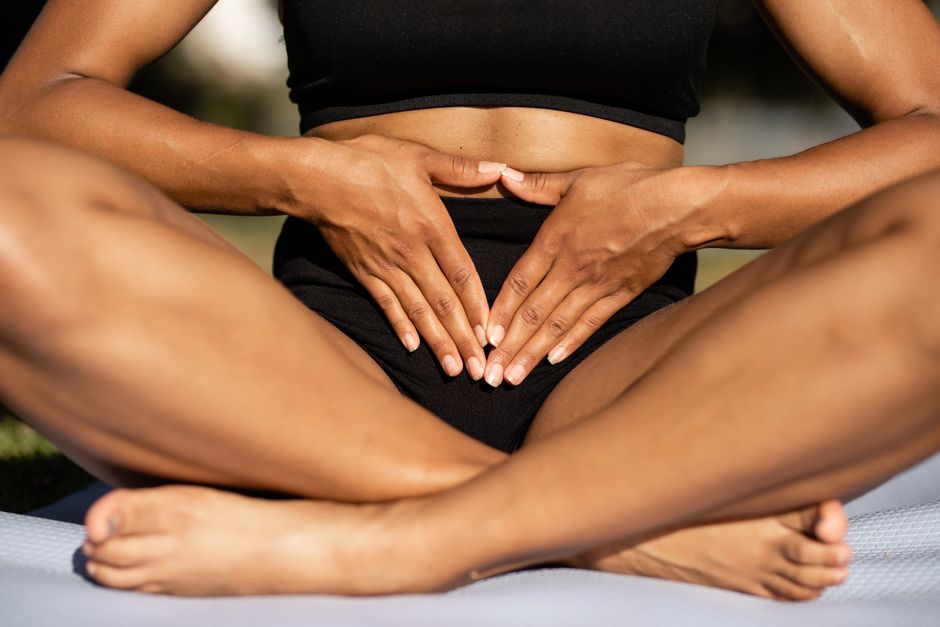
You cannot choose where your body loses fat first. That is the honest answer. Spot reduction — the idea that working a specific muscle burns the fat over it — has been studied for decades and the evidence is clear: it does not work. The bottom two abs are often the last place fat disappears because of genetics, hormones, and how your body stores fat. The key facts are that lower belly fat is typically the most stubborn fat on the body, losing it requires overall body fat reduction, and no exercise, diet, or gadget can target that area specifically.
Why Is Lower Belly Fat So Stubborn?
Your body stores fat in different places for different reasons. Subcutaneous fat sits just under the skin. Visceral fat surrounds your organs deep inside the abdomen. The lower belly area usually holds a mix of both, and for many people it is the last deposit to be used for energy.
Genetics play the biggest role. Your fat cells are distributed in a pattern determined by your DNA. Some people lose weight first in their face or arms. Others lose it in their legs or chest. The order in which fat leaves is largely fixed by your biology, not by your workout routine.
Hormones also matter. Cortisol, the stress hormone, is linked to increased abdominal fat storage. Higher stress levels can make belly fat harder to lose. For women, estrogen changes during perimenopause and menopause shift fat storage toward the abdomen. These hormonal factors are not something a crunch can override.
Blood flow also plays a role. Fat cells in some areas receive more blood supply, which makes them more responsive to fat-burning signals. Lower belly fat often has less blood flow than other areas, making it slower to mobilize.
Can You Target the Bottom Two Abs With Exercise?
No. Exercise strengthens and builds the muscles underneath the fat, but it does not burn the fat covering them. When you do leg raises or reverse crunches, you are working the lower portion of the rectus abdominis muscle. That work builds muscle tone, but the fat layer on top remains until overall body fat drops low enough.
Research on spot reduction goes back decades. Studies have compared people who did abdominal exercises daily for weeks against control groups who did not. The abdominal exercise groups showed no greater fat loss in the belly area than the control groups. The conclusion has been consistent: working a muscle does not selectively burn fat nearby.
What abdominal exercises do accomplish is building the muscle underneath. If you build enough muscle and reduce body fat, the lower abs become visible. But the exercise itself is not what removes the fat. The fat loss comes from a calorie deficit across your whole body.
What Does It Actually Take to See the Bottom Two Abs?
Seeing the bottom two abs requires a low enough body fat percentage that the skin and fat layer over them becomes thin. For men, the lower abs typically become visible around 10 to 12 percent body fat. For women, it usually takes around 16 to 19 percent body fat. These are general ranges and individual variation is significant.
Reaching those percentages requires a sustained calorie deficit. You need to consume fewer calories than your body burns each day. A modest deficit of about 300 to 500 calories per day leads to a steady, sustainable weight loss of about half a pound to one pound per week. Faster loss is possible but often comes with muscle loss and rebound weight gain.
Protein intake matters during fat loss. Eating enough protein — generally 0.7 to 1 gram per pound of body weight per day — helps preserve muscle while you lose fat. If you lose muscle along with fat, the abs will not look defined even at a lower weight.
Resistance training is important for the same reason. Lifting weights or doing bodyweight strength work signals your body to keep muscle tissue. A combination of full-body strength training and a calorie deficit is the most reliable path to visible lower abs.





Does Cardio Help or Hurt?
Cardiovascular exercise helps create the calorie deficit needed for fat loss. It burns calories directly and supports overall health. But cardio alone will not reveal the bottom two abs if your diet is not in a deficit.
High-intensity interval training (HIIT) has been studied for its effects on belly fat specifically. Some studies suggest HIIT may reduce abdominal fat more efficiently than steady-state cardio for the same amount of time. The difference is modest, and the practical takeaway is that the best cardio is the kind you will do consistently.
Excessive cardio can work against you. Very high volumes of cardio increase appetite and can lead to muscle loss if protein intake and strength training are neglected. A balanced approach — two to three strength sessions and two to three cardio sessions per week — is sustainable for most people.
How to Get Bottom 2 Abs Lower Body Fat First: The Real Strategy
You cannot get lower body fat to leave first. But you can create the conditions where it leaves as quickly as your biology allows. The strategy is straightforward even if the execution takes time.
First, establish a modest calorie deficit. Track your food for at least a week to understand your baseline intake. Then reduce it by about 300 to 500 calories per day. Prioritize protein at every meal to protect muscle.
Second, lift weights. Full-body strength training two to three times per week is more effective for body composition than endless ab work. Compound movements like squats, deadlifts, and presses build overall muscle and raise your resting metabolic rate.
Third, train your abs directly but not excessively. Two to three short ab sessions per week are enough. Include exercises that target the lower portion of the rectus abdominis, such as hanging leg raises, reverse crunches, and lying leg lifts. These build the muscle so it is visible when fat drops.
Fourth, be patient. The lower belly is typically the last area to slim down. Many people lose visible fat everywhere else first and become frustrated when the lower belly remains. That is normal. It means you are close, not that the approach is failing.
What Does Not Work?
The market is full of products claiming to target lower belly fat. Ab belts that stimulate muscles, fat-burning creams, sauna wraps, and vibration plates all share the same problem: no credible evidence shows they reduce localized fat. Some may cause temporary water loss or skin tightening, but the fat cells remain.
Ab exercises alone will not do it either. Doing hundreds of crunches daily builds endurance in the muscle but does not meaningfully change the fat above it. You cannot outwork a diet that keeps you in a calorie surplus.
Detox teas and fat-burning supplements are similarly unsupported. No supplement has been shown in rigorous trials to selectively reduce abdominal fat. Some contain stimulants that slightly increase calorie burn, but the effect is small and often comes with side effects like jitteriness or digestive discomfort.
Frequently Asked Questions
How long does it take to see lower abs?
It depends on your starting body fat percentage and how consistent your calorie deficit is. Most people need several months of steady fat loss to reach the body fat range where lower abs become visible.
Are lower abs harder to build than upper abs?
No. The rectus abdominis is one continuous muscle. Upper and lower ab exercises both activate the same muscle, though some exercises bias the lower portion more. The reason lower abs appear later is fat, not muscle development.
Can I lose belly fat without losing weight overall?
No. Fat loss happens throughout the body, not in one spot. To lose belly fat, you must be in a calorie deficit, which means losing weight overall. There is no way around this.
