
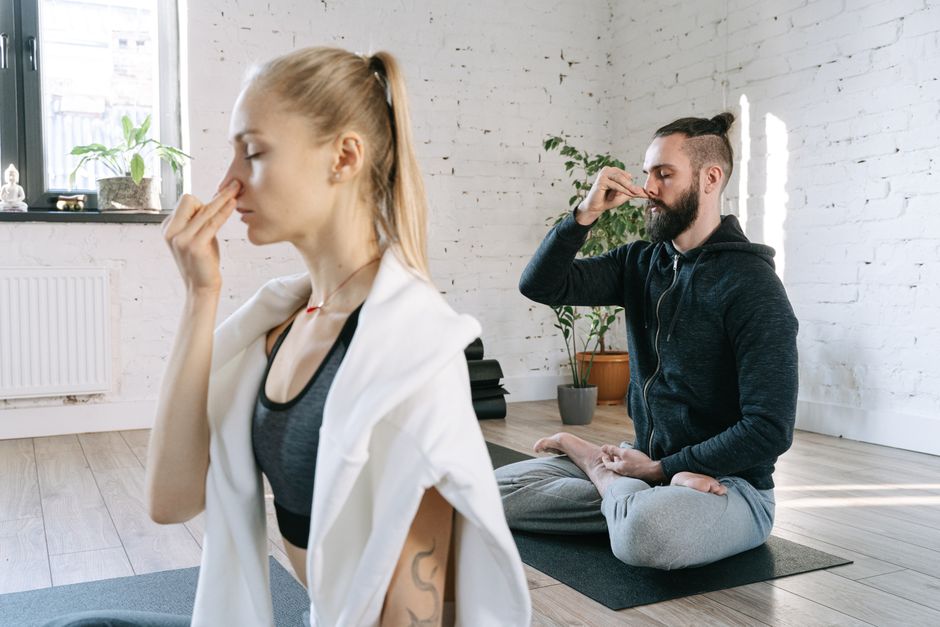
Breath control is a trainable skill, not a fixed talent. The muscles that drive breathing — mainly the diaphragm, the intercostals between the ribs, and the abdominal wall — respond to practice the same way other skeletal muscles do. Exercises that work share three traits: they slow the breath below a typical resting rate, they train the diaphragm to do most of the work, and they are practiced consistently rather than occasionally.
That is the short answer. The rest of this article explains why these three traits matter, which specific exercises reflect them, and where the popular advice around breathing gets ahead of the evidence.
What Does Breath Control Actually Mean?
Breath control is the ability to regulate how fast, how deep, and how steadily you breathe, and to keep that regulation under pressure. It has two parts: mechanical efficiency and nervous system regulation. They are related but not the same thing.
Mechanical efficiency comes down to the diaphragm. This dome-shaped muscle sits below the lungs. When it contracts, it flattens downward, expanding the chest cavity and pulling air in. When it relaxes, air flows out. In quiet breathing, the diaphragm does most of the work. Accessory muscles in the neck, upper chest, and shoulders can pitch in when breathing demand rises, but when they take over at rest, breathing tends to be shallower and faster.
Nervous system regulation is about carbon dioxide. This surprises many people. The urge to breathe is driven less by low oxygen than by rising carbon dioxide in the blood. Chemoreceptors detect that change and signal the brainstem to increase breathing. People who breathe rapidly and shallowly blow off carbon dioxide faster than the body produces it, which shifts blood chemistry and can produce dizziness, tingling in the hands and feet, and a sense of air hunger even when oxygen levels are fine. Slow breathing exercises work partly by building tolerance to mild rises in carbon dioxide without panic.
Both parts respond to training. Neither changes overnight.
How To Get Better Breath Control Exercises That Work
Effective exercises have a few features in common. They slow the breathing rate, they emphasize the diaphragm over the chest and shoulders, and they are done in a calm state before being tested under stress.
Diaphragmatic breathing is the foundation. Lie on your back with one hand on your belly and one on your chest. Breathe so the lower hand rises more than the upper one. Keep the neck and shoulders relaxed. This is sometimes called belly breathing, though the belly itself is not doing the breathing — it moves because the diaphragm pushes downward against the abdominal contents.
Slow-paced breathing means deliberately reducing your breaths per minute. A typical adult resting rate is about 12 to 20 breaths per minute. Slowing to roughly 6 breaths per minute is a common target in research on slow breathing, and it generally means inhaling for about 4 seconds and exhaling for about 6. The longer exhale matters: exhaling is linked to the parasympathetic branch of the nervous system, which tends to slow heart rate.
Pursed-lip breathing involves breathing in through the nose and out through lightly pursed lips, with the exhale roughly twice as long as the inhale. It is widely taught in pulmonary rehabilitation for people with conditions like COPD, and it is a reasonable technique for anyone who feels short of breath during exertion.
Box breathing uses equal counts — inhale, hold, exhale, hold — often at 4 seconds each. It is popular in military and athletic settings. The evidence that it outperforms other slow breathing patterns is limited, but it is a structured way to slow the breath and it is easy to remember.
What these have in common is not a secret ingredient. It is deliberate slowing, diaphragmatic emphasis, and repetition.
How Often Should You Practice Breathing Exercises?
Consistency matters more than session length. Short daily practice tends to work better than long occasional sessions, for the same reason it does with any motor skill.
A practical starting point is 5 to 10 minutes once or twice a day. Some structured programs use longer sessions, but there is no firmly established minimum dose that applies to everyone. What is well supported is that regular practice over weeks, not days, is what produces change.
Two habits make practice more effective:
- Practice in a calm state first. Trying to learn breath control while already anxious or short of breath is harder and less productive.
- Keep the effort low. Straining to breathe slowly can trigger tension and defeat the purpose. If you feel air hunger, ease off the pace.
Once a technique feels natural at rest, it can be practiced during light activity — walking, for example — which is closer to how breath control is actually used in daily life.





Do Breathing Exercises Really Lower Stress and Heart Rate?
Slow breathing does produce measurable physiological changes. Research on slow-paced breathing has found shifts toward parasympathetic nervous system activity, including changes in heart rate variability — the variation in time between heartbeats. Higher heart rate variability is generally associated with better stress regulation.
Where the evidence gets thinner is in claims about specific outcomes. Some studies suggest slow breathing can reduce self-reported anxiety and improve mood. The quality and size of these studies vary, and results are not uniform. It is reasonable to say the evidence supports a modest effect on stress and relaxation. It is not reasonable to say breathing exercises treat anxiety disorders, depression, or any medical condition on their own.
There is also a common misconception worth correcting. Breathing exercises do not “detoxify” the body or flood it with oxygen. Blood oxygen is already tightly regulated in healthy people, and it stays in a narrow range regardless of how deeply you breathe. What changes with slow breathing is carbon dioxide balance, muscle coordination, and nervous system tone — not oxygen delivery.
Can Breath Control Improve Athletic Performance?
Breathing efficiency matters during exercise, but the effect of dedicated breathing training on athletic performance is mixed. Some studies in swimmers and runners have found improvements in breathing efficiency or endurance. Others have found little difference.
What is clearer is that breathing mechanics during exertion matter. Holding the breath or breathing erratically during hard effort wastes energy. Coordinating breath with movement — exhaling on the exertion phase of a lift or stride — is standard coaching practice and is well established.
One specific technique, inspiratory muscle training, uses a device that adds resistance when you breathe in. It has been studied in athletes and in people with respiratory conditions. Results vary, and it is not clear that it adds much beyond regular training for healthy recreational athletes. For people with certain respiratory conditions, it is used in clinical settings, but that is a decision for a clinician, not a self-directed experiment.
When Should You Be Cautious About Breathing Exercises?
Breathing exercises are generally low risk for healthy adults. There are situations where caution is warranted.
Rapid or forceful breathing patterns, sometimes used in certain breathwork practices, can cause lightheadedness, tingling, and fainting. These effects come from changes in carbon dioxide and blood pH. They are usually temporary, but they can be dangerous if they lead to a fall or if done in water or while driving.
People with asthma, COPD, heart conditions, or panic disorder should talk with a clinician before starting a structured breathing program. Some techniques that are helpful for one condition can be unhelpful or uncomfortable for another. For example, pursed-lip breathing is often recommended in COPD, while some breath-holding patterns may not be appropriate for people with certain heart or lung conditions.
Anyone who experiences chest pain, severe shortness of breath, or fainting during breathing practice should stop and seek medical attention.
What Makes Some Breathing Exercises Fail?
Most breathing exercises do not fail because the technique is wrong. They fail because of how they are practiced.
Common reasons include:
- Practicing only when stressed, when it is hardest to learn a new pattern
- Breathing too forcefully or too deeply, which can cause dizziness and reinforce tension
- Expecting results in days rather than weeks
- Focusing only on the inhale and ignoring the exhale, which is where much of the calming effect occurs
- Using the chest and shoulders instead of the diaphragm without realizing it
The fix is usually to slow down, shorten sessions, and check in with where the breath is actually moving. A hand on the belly is a simple way to tell.
Frequently Asked Questions
How long does it take to improve breath control?
Most people notice some change within a few weeks of daily practice, though this varies. Meaningful, lasting change generally takes consistent practice over a longer period.
What is the best breathing exercise for beginners?
Diaphragmatic breathing is the most sensible starting point because it builds the foundation for other techniques. Once that feels natural, slow-paced breathing with a longer exhale is a good next step.
Can breathing exercises lower blood pressure?
Some studies suggest slow breathing may produce small reductions in blood pressure, but the evidence is not strong enough to replace standard treatment. Anyone with high blood pressure should follow their clinician’s guidance.
Is it normal to feel dizzy during breathing exercises?
Mild lightheadedness can happen if you breathe too quickly or too deeply, and it usually passes when you return to normal breathing. If it persists or is severe, stop and speak with a healthcare provider.
