
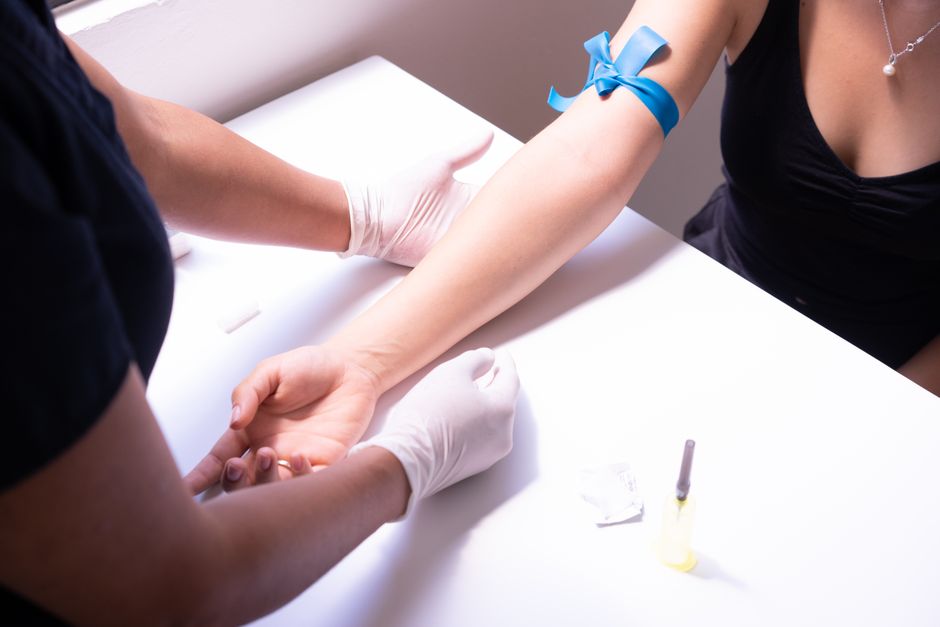
Getting an allergy test usually starts with a visit to your primary care doctor, who can order blood tests directly or refer you to an allergist for skin testing. The type of test, your insurance coverage, and where you live all affect what you pay. Costs range from $0 with full insurance coverage to several hundred dollars out of pocket for skin testing, and $200 or more for a broad blood panel without insurance.
How Do You Get an Allergy Test Done?
You do not walk into a lab and ask for an allergy test the way you might ask for a cholesterol check. Allergy testing needs a reason, a clinician’s order, and an interpretation that connects results to your actual symptoms.
The process usually follows a clear path:
- Start with your primary care doctor. Describe your symptoms, when they happen, and what seems to trigger them. This history matters more than any single test result.
- Get a referral if needed. Some insurance plans require a referral to see an allergist. Others let you book directly.
- The allergist decides which test fits. Skin tests, blood tests, or occasionally a supervised food challenge each answer different questions.
- Results are interpreted alongside your history. A positive test alone does not mean you have an allergy. This point trips up a lot of people.
That last point deserves emphasis. Allergy tests detect sensitization — the presence of specific antibodies or a skin reaction. Sensitization and clinical allergy are not the same thing. You can test positive to a substance and never react to it in daily life. This is why a test result without symptoms is not a diagnosis.
What Are the Different Types of Allergy Tests?
There are three main categories of allergy testing used in clinical practice, plus a few others for specific situations. Each has strengths and limits.
Skin Prick Testing
This is the most common method allergists use. A small amount of allergen extract is placed on your forearm or back, and the skin is lightly pricked so the extract contacts the surface layer. Results appear within about 15 to 20 minutes.
A raised, red, itchy bump — called a wheal — indicates sensitization. The size of the reaction is measured. Skin prick testing is fast, and results are available during your visit. It is generally used for airborne allergens like pollen, dust mites, and pet dander, and for some foods.
You must stop certain medications before this test. Antihistamines can block the reaction and produce false negatives. Your doctor will give you a list of what to avoid and for how long.
Blood Testing (Specific IgE)
Blood tests measure the level of allergen-specific IgE antibodies in your blood. They are sometimes called RAST tests, though modern versions use different technology. A single blood draw can test for many allergens at once.
Blood testing is useful when skin testing is not practical. This includes people with severe skin conditions like eczema, those who cannot stop taking antihistamines, and those at risk of a severe reaction. Results usually take a few days to a week.
The tradeoff is sensitivity. Blood tests are generally considered slightly less sensitive than skin prick tests for some allergens, though the gap varies by allergen and by the specific test used.
Patch Testing
Patch testing is different from the others. It looks for delayed reactions — the kind that show up a day or two after contact. This is used for contact dermatitis, not for food or airborne allergies.
Small patches containing allergens are applied to your back and left in place for about 48 hours. You return to have them removed, and the skin is checked again a day or two later. This test takes multiple visits and is specifically for identifying substances that cause skin reactions.
Food Challenges
An oral food challenge is the most definitive way to diagnose a food allergy. You eat small, increasing amounts of the suspected food under medical supervision, with emergency equipment ready.
This is not a routine test. It carries real risk and is done only when the answer genuinely matters and cannot be determined another way. It is typically performed in a specialist setting.
How Much Do Allergy Tests Cost?
Costs vary widely based on the test type, your insurance, and your location. The figures below are general ranges for the US market. They are not quotes, and actual bills can fall outside these ranges.
| Test Type | Typical Cost Without Insurance | With Insurance |
|---|---|---|
| Skin prick test (panel) | Roughly $60 to $300 or more, depending on the number of allergens | Often covered; you may pay a copay or coinsurance |
| Specific IgE blood test (single allergen) | Roughly $20 to $100 | Usually covered if medically necessary |
| Specific IgE blood test (broad panel) | Can exceed $200 to $1,000 depending on how many allergens are tested | Coverage varies; some panels are considered screening and not covered |
| Patch test | Roughly $100 to $500 or more | Often covered for contact dermatitis evaluation |
| Oral food challenge | Several hundred dollars to over $1,000 | Coverage varies; often requires prior authorization |
These numbers shift constantly. Billing codes, regional pricing, and individual insurance contracts all change what you actually owe. The only reliable way to know your cost is to ask your insurance plan and the testing facility directly before the test.
One practical note: the number of allergens tested drives the cost more than the test method itself. A skin test for three allergens costs less than one for forty. Ask how many allergens are being tested and why.




Does Insurance Cover Allergy Testing?
Most health insurance plans cover allergy testing when it is medically necessary. The key phrase is “medically necessary.” Insurance companies want documentation that your symptoms justify testing.
What that means in practice:
- Your doctor documents your symptoms, their frequency, and suspected triggers.
- The test ordered matches the suspected allergy. Testing for forty foods when you have seasonal nasal symptoms may be denied.
- Some plans require prior authorization, especially for food challenges or large panels.
- Medicare Part B generally covers allergy testing that a doctor orders for diagnosis. Medicare Advantage plans may have different rules.
- Medicaid coverage varies significantly by state.
If a claim is denied, you can ask your doctor to submit additional documentation. Denials for allergy testing are often about paperwork, not about whether the test was appropriate.
Can You Get an Allergy Test Without a Doctor?
Direct-to-consumer allergy tests exist, and this is where a lot of money gets wasted. You can order at-home kits online that test a finger-prick blood sample for various allergens.
The problem is interpretation. These kits give you a number without a clinical context. A positive result on a home test does not mean you have an allergy. Without a doctor connecting that result to your symptoms, you may end up avoiding foods or environments unnecessarily — or worse, ignoring a real problem because a home test came back negative.
Some direct-to-consumer tests also use methods that are not standard for allergy diagnosis. Hair analysis and applied kinesiology, for example, have no established role in diagnosing IgE-mediated allergies. No clinical evidence currently confirms these methods can identify true allergies.
If you suspect an allergy, the reliable path is a clinician who can order validated tests and interpret them alongside your history.
What Should You Expect During and After Testing?
Skin prick testing is quick. The pricks feel like light scratches. Most people tolerate it without issue. You will need to stay in the office for about 20 to 30 minutes so the reaction can develop and be measured.
Blood draws take a few minutes, and results come back within days. Patch testing requires three visits over about four to five days.
After testing, your doctor reviews the results with you. The conversation should cover what you are actually allergic to, what you can safely ignore, and what steps — if any — make sense for your situation. If a test result does not match your symptoms, that mismatch matters and should be discussed.
Avoiding a substance you are truly allergic to is the core of allergy management. But avoiding things you are merely sensitized to can add unnecessary restrictions to your life. Getting the interpretation right is as important as getting the test done.
Frequently Asked Questions
How much does an allergy test cost without insurance?
A skin prick panel typically runs about $60 to $300 or more, and a broad blood panel can exceed $200 to $1,000 depending on the number of allergens tested. Actual prices vary by region and provider, so ask for a cost estimate before testing.
Do I need a referral to see an allergist?
It depends on your insurance plan. Some plans require a referral from your primary care doctor, while others allow you to book directly with an allergist.
Can a blood test tell me if I have a food allergy?
Blood tests detect allergen-specific IgE antibodies, which indicate sensitization but not necessarily a clinical allergy. A diagnosis requires connecting the test result to symptoms you actually experience, and sometimes a supervised food challenge.
Are at-home allergy tests accurate?
Some at-home kits use validated IgE testing methods, but the results still require clinical interpretation to be meaningful. Other methods sold online, such as hair analysis, have no established role in diagnosing allergies.
