
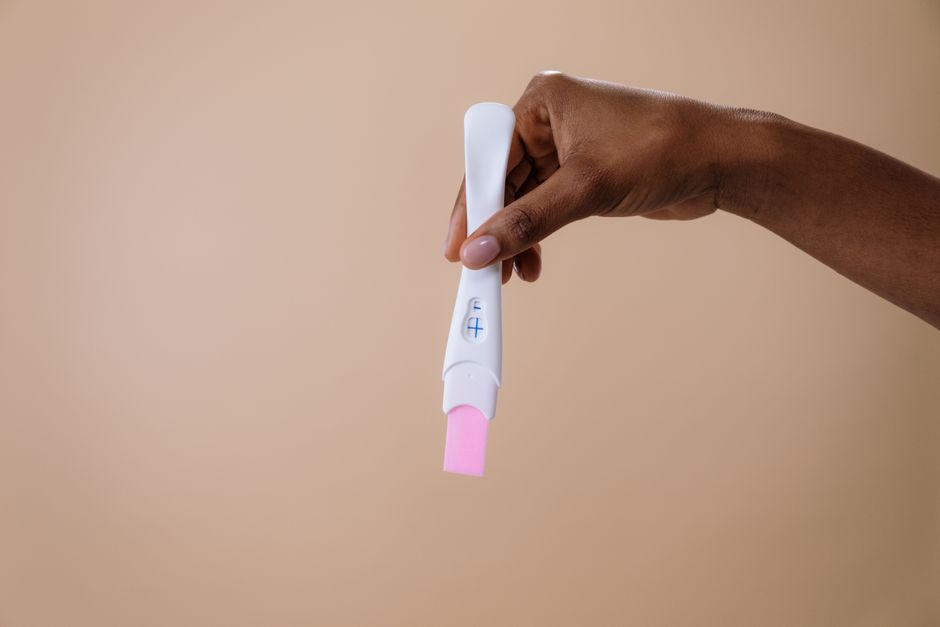
Home pregnancy tests work by detecting a hormone called human chorionic gonadotropin, or hCG, in your urine. That hormone starts building up in your body only after a fertilized egg implants in the uterus, which usually happens about six to twelve days after ovulation. Because of that biology, testing too early is the single most common reason a test gives the wrong answer. Testing at the right time gives you a reliable result the great majority of the time.
How Do Pregnancy Tests Actually Detect Pregnancy?
Every home pregnancy test, whether it uses a stick, a strip, or a digital screen, is looking for the same thing: hCG. This hormone is produced by cells that will eventually form the placenta. It shows up in your blood first and in your urine a short time later.
Once implantation happens, hCG levels roughly double every two to three days in early pregnancy. That rapid rise is what makes testing possible. A test taken a few days after implantation may catch a low level of hCG. A test taken a week later will catch a much higher level. This is why timing matters more than which brand you buy.
There are two basic test formats:
- Qualitative tests tell you yes or no. These are the standard urine tests sold in drugstores and used in most clinics.
- Quantitative tests measure the exact amount of hCG in your blood. These are done in a lab and ordered by a doctor. They can detect pregnancy earlier than any urine test.
One detail people often miss: hCG is not detectable the moment sperm meets egg. There is a window of several days where you can be pregnant but no test, urine or blood, will show it. That gap is biological, not a flaw in the test.
What Is the Best Time to Take a Pregnancy Test?
The best time is the first day of a missed period. For most people with regular cycles, that is roughly two weeks after ovulation. By that point, hCG levels are usually high enough for a standard urine test to detect.
If your cycles are irregular, counting days is unreliable. In that case, waiting at least three weeks after the last time you had unprotected sex gives a more dependable window, because ovulation timing itself is uncertain.
If you test before your missed period, you may get a false negative. That means the test says no when you are actually pregnant. The test is not broken. Your hCG level is simply still too low for that test to pick up.
Some tests are marketed as able to detect pregnancy several days before a missed period. These claims depend on the test’s sensitivity and on your personal hCG rise, which varies from person to person. A negative result taken early does not rule out pregnancy. You should retest after your period is late.
Does Morning Urine Really Matter for Accuracy?
Morning urine usually gives the strongest reading, especially early in pregnancy. The reason is simple: you have not urinated for several hours overnight, so hCG has had time to concentrate in your bladder.
This matters most in the days right around your expected period. Once you are a week or more past a missed period, hCG levels are typically high enough that the time of day makes little difference.
If you cannot test in the morning, you can still get an accurate result. Try to hold your urine for a few hours beforehand and avoid drinking large amounts of water right before testing, since diluted urine can lower hCG concentration.


How Accurate Are Home Pregnancy Tests?
When used correctly and on or after the first day of a missed period, home urine tests are accurate for detecting pregnancy in the large majority of cases. The key phrase is “used correctly and at the right time.”
Most false results come from three sources:
- Testing too early, before hCG has risen enough to be detected.
- Reading the result outside the time window printed in the instructions. Lines or color changes that appear later can be evaporation lines, not true positives.
- Diluted urine from drinking a lot of fluid before testing.
A false positive, where the test says pregnant but you are not, is uncommon. When it does happen, it can be caused by certain medications that contain hCG, some fertility treatments, or medical conditions that raise hCG levels. A very early miscarriage can also produce a positive test followed by a negative one days later.
If a home test gives a result that does not match your symptoms or your gut feeling, the next step is a blood test at a clinic. A quantitative blood test measures the exact hCG level and is the most precise way to confirm pregnancy. Doctors may also repeat the test over two days to see whether the level is rising as expected.
What Is the Difference Between Urine and Blood Pregnancy Tests?
Blood tests detect pregnancy earlier and measure hCG more precisely than urine tests. A blood test can typically detect hCG about a week to ten days after ovulation, while a urine test usually needs closer to two weeks.
Here is how the two compare:
| Feature | Urine Test | Blood Test |
|---|---|---|
| Where it is done | At home or in a clinic | In a lab or clinic |
| Earliest detection | Around the first missed period | About a week to ten days after ovulation |
| What it measures | Presence of hCG (yes or no) | Presence or exact amount of hCG |
| Result speed | Minutes | Usually same day to a few days |
| Typical use | First check at home | Confirmation, monitoring, early detection |
The two types of blood tests are qualitative, which just says yes or no, and quantitative, which gives a number. The quantitative test is what doctors use to track an early pregnancy, because a single number tells less than a pattern over time.
Can You Get a Negative Test and Still Be Pregnant?
Yes. A negative test does not always mean you are not pregnant. This is called a false negative, and it is more common than a false positive.
The most frequent cause is testing too soon. If you ovulated later than usual, which happens even in people with generally regular cycles, your hCG may not have risen enough yet. Waiting a few days and testing again is the standard advice.
Other situations can also affect results:
- Using a test that has expired or was stored improperly.
- Not following the instructions, such as dipping the stick for the wrong amount of time.
- Very dilute urine.
- Rare medical conditions, including some that produce hCG in ways that interfere with testing.
If you have pregnancy symptoms such as nausea, breast tenderness, or fatigue, but your test is negative, retest in a few days. If the result stays negative and your period still does not come, see a healthcare provider. There are reasons other than pregnancy for a missed period, and a clinician can help sort out which one applies to you.
When Should You See a Doctor About Pregnancy Testing?
See a healthcare provider if you have a positive home test, since that result should be confirmed and followed up with prenatal care. You should also seek care if you have a negative test but ongoing symptoms or a missed period.
Contact a provider promptly if you have a positive test along with:
- Vaginal bleeding or spotting
- Sharp or severe abdominal pain
- Pain in one shoulder
- Dizziness or fainting
These symptoms can point to an ectopic pregnancy, where a fertilized egg implants outside the uterus. This is a medical emergency and needs immediate evaluation. Do not wait to see if it passes.
For people trying to conceive, a doctor can also help interpret hCG levels over time. A single hCG number is less useful than the trend across two or more tests spaced a couple of days apart.
Frequently Asked Questions
How early can I take a pregnancy test?
The most reliable time is the first day of a missed period, which is usually about two weeks after ovulation. Testing earlier raises the chance of a false negative because hCG may not be high enough yet.
Is a blood test more accurate than a urine test?
Yes. A blood test can detect pregnancy earlier and measure the exact hCG level, while a urine test only shows whether hCG is present. Blood tests are typically used to confirm and monitor early pregnancy.
Can I be pregnant and still get a negative test?
Yes, a false negative is possible, most often because you tested too early or your urine was diluted. Wait a few days and test again, or ask a provider for a blood test if symptoms continue.
Does the time of day affect pregnancy test accuracy?
Morning urine is usually the most concentrated, which helps early in pregnancy when hCG levels are still low. Once you are a week or more past a missed period, the time of day matters much less.
