
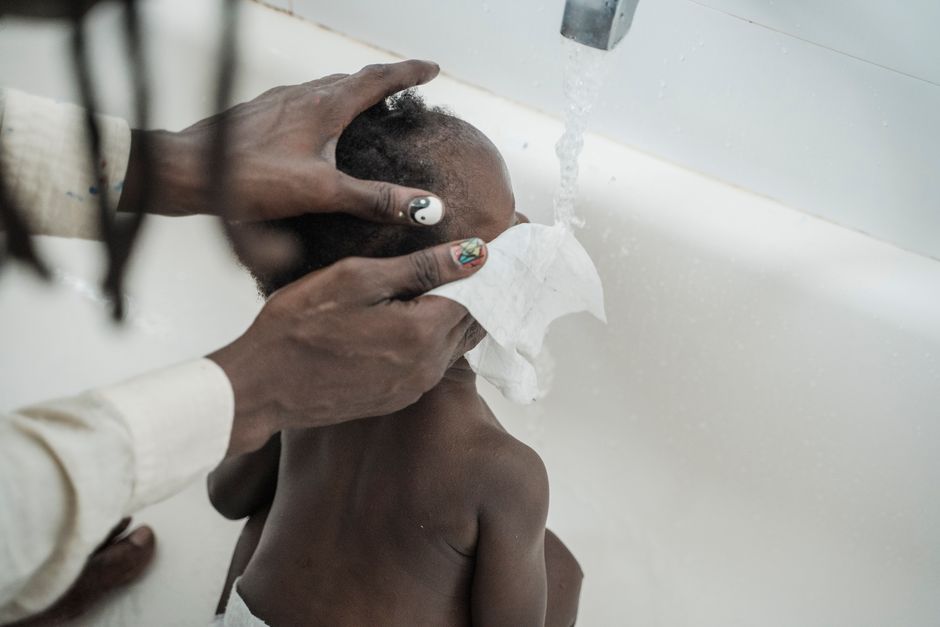
Cleaning a baby’s face with eczema requires a gentle touch, lukewarm water, and a mild, fragrance-free cleanser. The goal is to remove dirt and irritants without stripping the skin of its natural moisture, which can trigger a flare-up. You should wash your baby’s face once daily and pat it dry with a soft towel, never rubbing the sensitive skin.
Why Is My Baby’s Face Eczema So Sensitive?
Eczema, also known as atopic dermatitis, weakens the skin barrier. In healthy skin, the outer layer acts like a brick wall, keeping moisture in and irritants out. In a baby with eczema, that wall has gaps. Water escapes easily, and irritants, allergens, and bacteria get in.
Facial skin is thinner and more delicate than skin on the rest of the body. This is why the cheeks and chin are often the first places eczema appears in infants. The skin is easily irritated by saliva from drooling, food residue, and even the friction of a bib or blanket.
Understanding this barrier dysfunction explains why cleaning matters. It is not just about hygiene. It is about gently removing triggers that can worsen inflammation while preserving whatever moisture barrier remains.
What Supplies Do You Need for a Gentle Face Clean?
Preparation makes the process easier and safer. Gather everything before you start so you are not scrambling while holding a wriggling baby.
- A mild, fragrance-free cleanser specifically formulated for sensitive skin or eczema. Look for the National Eczema Association Seal of Acceptance on the label, but confirm it is also soap-free and dye-free.
- Lukewarm water, not hot. Hot water strips oils and worsens itching.
- A soft, clean washcloth or your bare hands. Your hands are often gentler than a cloth.
- A soft towel for patting dry. Never share towels between family members if eczema is active, as it may be infected.
- Moisturizer to apply immediately after drying. A thick cream or ointment works better than a thin lotion.
Do not use baby wipes on an eczema flare. Many contain preservatives and alcohols that sting broken skin. If you are out and need a quick clean, use plain water on a soft cloth.
Step-by-Step: How To Gently Clean A Baby’s Face With Eczema
Follow this routine once a day, ideally at bath time or before bedtime. Over-washing dries the skin out. Under-washing leaves irritants in place.
Step 1: Wet your hands or a washcloth with lukewarm water. Do not add cleanser yet.
Step 2: Gently wipe the face to remove obvious dirt, drool, or food. Use light, sweeping motions from the center of the face outward. Do not scrub. Scrubbing creates micro-tears in already fragile skin.
Step 3: Apply a pea-sized amount of cleanser to your fingertips. Rub it gently onto the cheeks, chin, forehead, and nose. Avoid the eye area entirely unless there is crusting that needs attention, and if so, use plain water only.
Step 4: Rinse thoroughly with lukewarm water. Leftover cleanser residue can irritate the skin. Use your hand to cup water and gently splash the face, or use a clean, wet washcloth to wipe away the suds.
Step 5: Pat the face dry with a soft towel. Do not rub. Rubbing removes moisture and irritates the skin surface.
Step 6: Apply moisturizer within three minutes of drying. This locks in the water absorbed during washing. Dermatologists call this the “soak and smear” method. It is the single most important step for managing eczema.
If your baby’s skin is severely cracked or oozing, skip the cleanser and use only water until the skin heals. If you see signs of infection — honey-colored crusts, weeping, or spreading redness — contact your pediatrician before starting any routine.




What Temperature Should the Water Be?
Lukewarm water is the standard recommendation. It should feel neutral when you test it on the inside of your wrist. Not warm, not cool, just neutral.
Hot water feels good on itchy skin at first, but it triggers a rebound effect. It releases histamine, which makes the itching worse after the initial relief fades. Cooler water is safe and can be soothing, but it does not clean as effectively as lukewarm water.
Bath time should be limited to 5 to 10 minutes. Longer exposure to water, even lukewarm, pulls moisture out of the skin through a process called transepidermal water loss. The same rule applies to washing the face alone.
Should You Use a Cleanser Every Day?
Most dermatologists recommend using a gentle cleanser once daily for babies with eczema. Water alone does not remove oil-based dirt, dried saliva, or food residue effectively. These substances can sit on the skin and trigger inflammation.
However, some babies have very reactive skin. If even a mild cleanser causes stinging or redness, reduce use to every other day. On off days, clean the face with water only.
Choose a cleanser with a pH between 4.5 and 5.5. Healthy skin is naturally slightly acidic. Cleansers with a higher pH, like traditional bar soaps, disrupt the acid mantle and make eczema worse. Most liquid cleansers marketed for babies are pH-balanced, but not all. Check the label.
What About Drool and Food Rashes?
Drool rash is common in babies between 3 and 6 months old. Saliva contains digestive enzymes that break down skin proteins. When saliva dries on the chin and cheeks, it leaves those enzymes behind, and they continue to irritate the skin.
Cleaning alone will not fix drool rash if the skin stays wet. You must also protect the area. Apply a thick barrier ointment, such as petrolatum or zinc oxide, after cleaning. This creates a physical shield between the saliva and the skin.
Food rashes occur when acidic foods like tomatoes or berries touch the skin. The treatment is the same: wash gently, pat dry, and apply a barrier. The rash usually fades within hours if the irritant is removed and the skin is protected.
What Should You Do After Cleaning?
Moisturizing is not optional. It is the cornerstone of eczema treatment. Without moisturizer, the water you just added to the skin evaporates quickly, leaving the skin drier than before.
Apply a generous layer of moisturizer to the entire face, not just the red patches. Use a cream or ointment rather than a lotion. Lotions contain more water and less oil, and they evaporate quickly. Creams and ointments hold moisture in longer.
For severe flares, some pediatricians recommend a “wet wrap” technique. This involves applying moisturizer and then placing a damp cloth over the area for a short period. Do not attempt this without specific instructions from your doctor.
If your pediatrician has prescribed a topical steroid, apply it after moisturizer. The steroid treats the inflammation, and the moisturizer repairs the barrier. Applying them in the wrong order can reduce effectiveness.
What Mistakes Make Eczema Worse?
Several common habits can undo your cleaning efforts. Avoid these entirely.
Rubbing the skin dry. This is the most common mistake. Rubbing creates friction that damages the top layer of skin and triggers itching. Always pat.
Using hot water. It feels soothing but worsens inflammation afterward.
Skipping moisturizer. Even one missed application can let the skin dry out and crack.
Using scented products. Fragrances are among the most common contact allergens for babies with eczema. This includes scented laundry detergent, fabric softener, and lotions.
Over-bathing or over-washing. More washing does not mean cleaner skin. It means drier, more irritated skin.
Letting saliva sit. If your baby drools heavily, gently wipe the area with plain water several times a day and reapply a barrier ointment. Do not wait until the daily wash.
Frequently Asked Questions
How often should I wash my baby’s face with eczema?
Once daily is sufficient for most babies. Washing more often strips natural oils and worsens dryness.
Can I use baby wipes on eczema-prone skin?
No. Most baby wipes contain preservatives, alcohols, or fragrances that irritate broken skin. Use plain water on a soft cloth instead.
Should I use a washcloth or my hands to clean my baby’s face?
Your hands are usually gentler because you control the pressure better. A soft washcloth works too, but never scrub.
What moisturizer is best after cleaning an eczema face?
Thick creams and ointments work better than thin lotions. Look for fragrance-free products with ingredients like ceramides, petrolatum, or shea butter.
