
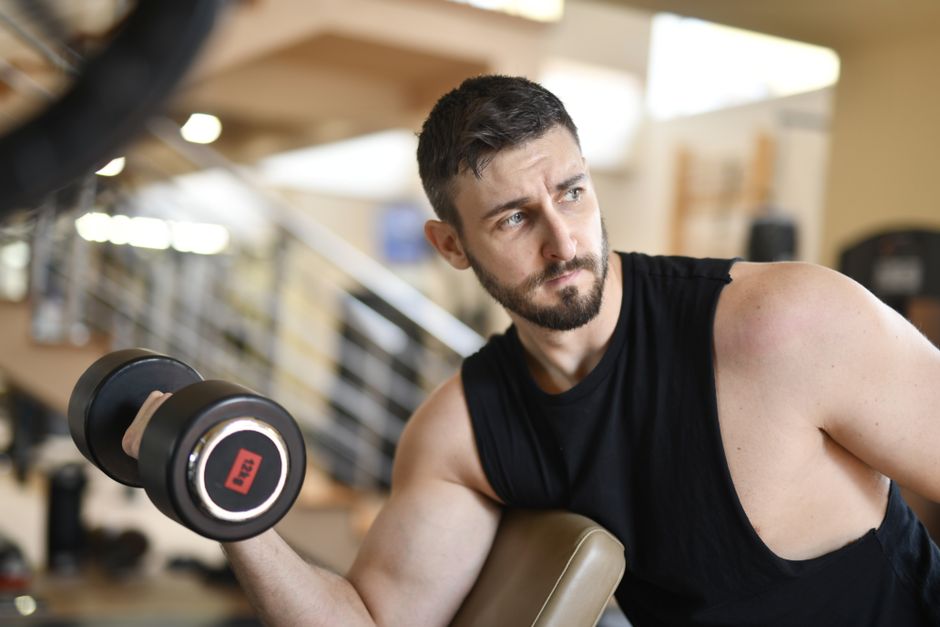
Building muscle after 60 is not only possible, it is one of the most effective ways to protect your independence and health as you age. The process relies on the same fundamental principle as it does at any age: you must challenge your muscles with progressive resistance and give them enough protein to rebuild. However, the specific approach changes because your body’s response to exercise and nutrition shifts with age, making consistency and recovery far more important than intensity.
Why Is It Harder To Build Muscle After 60?
Muscle loss with age has a medical name: sarcopenia. This process begins around age 30 but accelerates significantly after 60. You lose muscle fibers, particularly the fast-twitch fibers responsible for power and strength, and the remaining fibers shrink.
There is also a biological change called anabolic resistance. This means your muscles do not respond to protein and resistance exercise as efficiently as they did in your 20s. You need a higher dose of protein per meal to trigger the same level of muscle building that a younger person would achieve with less. This is not a myth or a marketing angle; it is a well-documented physiological change.
Hormonal shifts also play a role. Testosterone and growth hormone decline with age, and these hormones are directly involved in muscle protein synthesis. The decline is gradual, but it contributes to the difficulty. This does not mean you cannot build muscle. It means the margin for error is smaller. You must train correctly and eat correctly because your body no longer compensates for mistakes.
What Type Of Exercise Builds Muscle At 60?
Resistance training is the only reliable way to build muscle after 60. Walking, swimming, and cycling are excellent for cardiovascular health, but they do not provide the mechanical tension required to stimulate significant muscle growth. You must lift weights, use resistance bands, or perform bodyweight exercises that challenge your muscles near their limit.
Focus on compound movements that work multiple muscle groups at once. Squats, deadlifts, chest presses, rows, and overhead presses give you the most benefit for the time invested. These movements also train the muscles you rely on for daily activities like getting out of a chair, carrying groceries, and lifting grandchildren.
The research is clear that heavier loads build strength more effectively than lighter loads performed for many repetitions. However, “heavy” is relative. For a 60-year-old beginner, heavy might mean a 10-pound dumbbell. The key is that the last few repetitions of each set should feel difficult. If you can easily complete all repetitions, the weight is too light.
Machine weights are a perfectly valid starting point. They provide stability and reduce the risk of injury while you learn proper movement patterns. Free weights, like dumbbells and barbells, require more stabilizer muscle activity and are valuable once you have built a foundation. The best choice is the one you can perform safely and consistently.
How Often Should You Train And How Much Rest Do You Need?
Training frequency matters less than consistency and recovery. Two to three full-body resistance sessions per week is the standard recommendation for older adults. This schedule allows each muscle group to be trained with enough volume while providing adequate recovery time.
Recovery is where many people over 60 fail. Your muscles do not grow during the workout; they grow during the recovery period after it. Older adults require more time to repair muscle tissue than younger individuals. A muscle group trained on Monday should not be trained hard again until at least Wednesday or Thursday.
Sleep is part of recovery. Poor sleep quality directly impairs muscle protein synthesis. If you are training hard but sleeping poorly, you are limiting your results. Aim for seven to nine hours of quality sleep per night and treat it as a component of your training program, not an optional extra.
Rest days do not mean complete inactivity. Light walking or gentle mobility work on off days can improve blood flow and reduce stiffness without interfering with recovery. The distinction between active recovery and strenuous exercise is important.





How Much Protein Do You Actually Need?
Protein is the single most important nutrient for muscle building at any age, but the requirements are higher after 60. The Recommended Dietary Allowance of 0.8 grams per kilogram of body weight prevents deficiency but is insufficient for building muscle in older adults. Research suggests that older adults need between 1.2 and 1.6 grams per kilogram of body weight daily to support muscle gain.
For a 70-kilogram person, that is roughly 84 to 112 grams of protein per day. This is a meaningful amount of food. A chicken breast provides about 30 grams. A cup of Greek yogurt provides about 20 grams. You need to plan your meals to hit this target.
Distribution matters as much as total intake. Eating 20 to 40 grams of protein at each meal is more effective than eating most of your daily protein in one large dinner. Spread your intake across breakfast, lunch, and dinner to maintain a steady supply of amino acids in your bloodstream.
Whey protein supplements are a practical tool for many older adults. They are convenient, easily digested, and provide a complete amino acid profile. They are not magic. They are simply a way to meet your daily protein target when whole food intake falls short.
What Role Do Hormones Play In Muscle Building After 60?
Testosterone levels decline by about one percent per year after age 30. This decline is gradual, but by age 60, many men have levels significantly lower than in their youth. Women experience a dramatic drop in estrogen after menopause, which also affects muscle mass and bone density.
These hormonal changes are real, but they are not a barrier to progress. Resistance training itself stimulates muscle protein synthesis through pathways that are partially independent of testosterone. The training stimulus is still the primary driver of muscle growth.
Testosterone replacement therapy is a medical treatment, not a lifestyle intervention. It is prescribed for men with clinically low testosterone levels and specific symptoms. It is not a shortcut for healthy older men who want to build muscle. The evidence for its muscle-building effects in men with normal levels is limited, and it carries potential side effects.
Growth hormone therapy has been promoted as an anti-aging treatment, but the evidence does not support its use for muscle building in healthy older adults. It can cause fluid retention, joint pain, and increased blood sugar. No clinical guidelines recommend growth hormone for age-related muscle loss.
How To Gain Muscle After 60 What Actually Works
The practical answer to what works is a combination of progressive resistance training, adequate protein intake, and disciplined recovery. No supplement, hormone treatment, or exercise gadget replaces these fundamentals.
Progressive overload is the principle that drives muscle growth. You must gradually increase the weight, repetitions, or sets over time so your muscles are continually challenged. If you do the same workout with the same weight for months, your body adapts and stops growing.
Track your workouts. Write down the exercises, weights, and repetitions you perform each session. This allows you to see progress and ensures you are actually increasing the demands on your muscles. A simple notebook or a notes app on your phone works perfectly.
Work with a qualified professional, especially in the first few months. A physical therapist or certified personal trainer with experience working with older adults can assess your movement patterns, identify weaknesses, and design a program that is safe and effective. The cost is justified by the reduction in injury risk and the improvement in results.
What Are The Most Common Mistakes Older Adults Make?
The most common mistake is training too intensely too soon. Muscles and connective tissues adapt slower than cardiovascular fitness. You may feel capable of lifting a heavy weight, but your tendons and ligaments are not ready for that load. Start with lighter weights and focus on proper form for the first few weeks.
Another common mistake is neglecting the lower body. Many older adults focus on arm and chest exercises because those are visible in the mirror. However, leg strength is the strongest predictor of mobility and independence in later life. Squats and lunges should be a priority, not an afterthought.
Skipping warm-ups is a third mistake. A proper warm-up increases blood flow to the muscles and prepares the joints for movement. Five to ten minutes of light cardio followed by dynamic stretches is sufficient. Cold muscles are more prone to injury.
Finally, many older adults avoid strength training out of fear of injury. This fear is understandable but counterproductive. The research consistently shows that supervised resistance training is safe for healthy older adults and actually reduces the risk of falls and fractures by improving strength and balance.
Do Supplements Help Build Muscle After 60?
Creatine is the most studied supplement for muscle building in older adults. The evidence is strong that creatine monohydrate, taken at a dose of about 3 to 5 grams per day, can enhance the effects of resistance training in people over 60. It is one of the few supplements with consistent scientific support.
Vitamin D is worth checking. Deficiency is common in older adults and is associated with muscle weakness. A simple blood test can determine your levels. If you are deficient, supplementation is appropriate. If your levels are normal, extra vitamin D will not help you build muscle.
Most other supplements marketed for muscle growth are not supported by solid evidence. Protein powders are the exception because they are simply a food source. Branched-chain amino acids, testosterone boosters, and herbal muscle builders have not been shown to provide meaningful benefits beyond adequate protein intake.
Remember that supplements are exactly what the name says: additions to a solid foundation. They do not replace training or nutrition. If your training and diet are poor, no supplement will fix that.
Frequently Asked Questions
Is it safe to lift heavy weights at age 60?
Yes, when you build up gradually and use proper form. Starting with light weights and progressing slowly under professional guidance reduces injury risk while still providing the stimulus needed for muscle growth.
How many days a week should a 60-year-old lift weights?
Two to three days per week is the standard recommendation. This schedule provides enough training volume while allowing adequate recovery time between sessions for muscle repair.
Can you build muscle after 60 without supplements?
Yes, completely. Whole foods can provide all the protein and nutrients you need. Supplements are convenience tools, not requirements for muscle growth.
How long does it take to see results from strength training at 60?
Most people notice strength improvements within four to six weeks of consistent training. Visible muscle size changes typically take about eight to twelve weeks. Consistency matters more than speed.
