
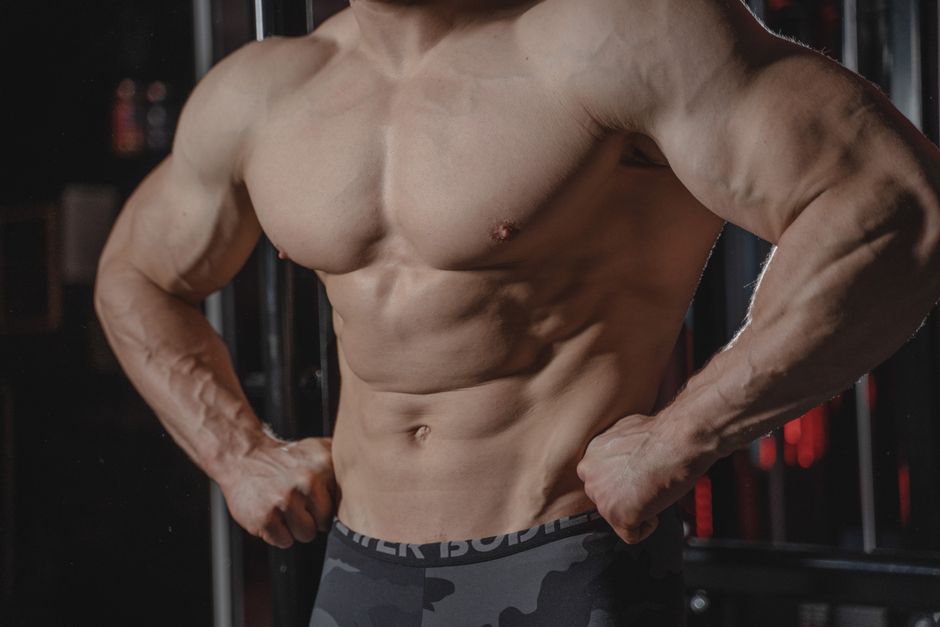
Learning how to flex your chest is about more than just posing in a mirror. A proper chest flex requires activating the pectoral muscles through the mind-muscle connection. It is a skill that takes practice, but almost anyone can learn it within a few sessions of focused effort. The movement is simple: squeeze your pectoral muscles together as if you are pushing your arms toward your midline without actually moving them.
What Does It Mean to Flex Your Chest?
A chest flex is an isometric contraction of the pectoralis major and minor muscles. Isometric means the muscle produces tension without changing length. You are not moving a weight. You are simply hardening the muscle tissue under your skin.
The pectoralis major is the large fan-shaped muscle covering the upper chest. The pectoralis minor sits underneath it. When you flex correctly, you contract both. The result is visible muscle definition and a fuller appearance to the chest wall.
Bodybuilders flex on stage to show judges their muscular development. But the skill is useful for anyone. Learning to flex improves your awareness of the muscle, which can help you train it more effectively in the gym.
Why Is the Mind-Muscle Connection Important?
The mind-muscle connection is the ability to consciously activate a specific muscle during exercise. Research has shown that focusing on the target muscle during resistance training can increase muscle activation. Studies using electromyography (EMG) have found that when lifters actively think about squeezing their chest during a bench press, the pectoral muscles show higher electrical activity.
This matters because many people perform chest exercises without actually using their chest. Their shoulders and triceps take over the movement. Learning to flex first teaches your brain to find the pectoral muscles. Once you can flex on command, you can carry that awareness into presses, flyes, and push-ups.
Some people find this easy. Others struggle for weeks. If you fall into the second group, do not be discouraged. The neural pathway between your brain and your chest muscles may simply be underdeveloped. Consistent practice builds that pathway.
How To Flex Chest: Step-by-Step Technique
Stand or sit with your back straight. Place your arms at your sides with your elbows slightly bent. Now imagine you are trying to squeeze a grape in the center of your chest, right between your pectoral muscles.
Squeeze inward as if pushing your arms toward each other. Your arms should not actually move. Only the chest muscles should contract. Hold the squeeze for two to three seconds, then relax completely.
Here is a breakdown of the key points:
- Keep your shoulders down and back. Do not shrug.
- Do not rely on your triceps or lats to create the squeeze.
- Focus on the inner portion of your chest pulling toward the center.
- Breathe normally. Do not hold your breath.
- Relax fully between reps. A flex is not a sustained state.
Try doing ten slow repetitions in front of a mirror. Watch your chest. You should see the muscle harden and the nipples may point slightly inward. If you see your shoulders rising or your arms moving, you are using the wrong muscles.
A common mistake is squeezing the arms together using the back muscles. The lats can create a similar visual effect. To avoid this, keep your elbows slightly forward of your torso. This position makes it harder for the lats to take over.





How Long Does It Take To Learn?
Most people can learn a basic chest flex within a few practice sessions. Some individuals feel the contraction on their first attempt. Others need several days of daily practice. There is no fixed timeline because it depends on your previous training experience and your natural awareness of your own body.
People who have trained chest with free weights often learn faster. Their muscles have been activated before, so the brain already knows the pathway. Beginners may need more time. If you have never consciously contracted your pectorals, the movement can feel foreign at first.
Practice for a few minutes daily. Stand in front of a mirror and attempt the flex ten times. Rest between attempts. After one week of daily practice, most people report noticeable improvement in their ability to contract the chest on command.
Does Flexing Build Chest Muscle?
Flexing alone will not significantly build chest muscle. Isometric contractions produce some muscle tension, but they do not provide the progressive overload needed for substantial hypertrophy. Muscle growth requires resistance that increases over time.
However, flexing can complement your training program. Bodybuilders have long used posing practice as a way to enhance muscle definition and control. The practice may improve your ability to recruit muscle fibers during actual lifting. Some coaches recommend flexing between sets as a way to maintain tension and reinforce the mind-muscle connection.
If your goal is a bigger chest, you still need traditional resistance training. Push-ups, bench presses, and chest flyes are the tools that build size. Flexing is the skill that helps you feel those muscles working during the exercises.
Can You Flex Your Chest While Doing Push-Ups?
Yes. Applying the flex technique during push-ups can improve chest activation. As you lower your body, think about stretching the chest. As you push back up, squeeze the pectorals together at the top of the movement.
This is a technique often taught by strength coaches. It turns a basic push-up into a more chest-focused exercise. Many people perform push-ups with poor chest engagement, relying instead on the shoulders and arms. Adding an intentional squeeze at the top forces the chest to do more work.
Try this: perform a push-up normally. At the top, when your arms are straight, pause and squeeze your chest as hard as you can for one second. Lower yourself slowly. Repeat. You should feel a deep burn in the chest that you may not have felt before.
Why Can’t I Flex My Chest?
Some people genuinely struggle to flex their chest. This is usually a coordination problem, not a physical limitation. The pectoral muscles are not commonly used in isolation during daily life. Most everyday movements involve the chest working together with the shoulders and arms.
Another reason is that the chest muscles may be underdeveloped. A very flat chest can be harder to feel because there is less muscle mass to contract. This is not a permanent barrier. As you build chest muscle through resistance training, the flex will become easier to feel and see.
Upper cross syndrome is another factor. If you spend many hours hunched over a desk, your chest muscles may be in a shortened, tight position. This can make it harder to feel a clean contraction. Stretching the chest and improving your posture can help you learn the flex more easily.
If you still cannot flex after several weeks of practice, consider working with a personal trainer. A trainer can place their hand on your chest and guide you through the movement. Physical touch and verbal cueing often help people find muscles they cannot locate on their own.
How To Flex Chest in Different Positions
The basic flex is done standing with arms at your sides. But you can also practice in other positions. Each position changes the angle of the muscle and can improve your overall control.
Seated flex: Sit upright with your hands on your thighs. Squeeze your chest as if pulling your hands together. This position removes any help from your legs and forces your chest to do all the work.
Arms raised flex: Raise your arms to shoulder height with elbows bent at 90 degrees. Squeeze your chest while holding this position. This is closer to the front double biceps pose used in bodybuilding.
One-sided flex: Try flexing only the left side of your chest, then only the right. This is more difficult and requires strong neural control. It is not necessary for most people, but it is a useful drill for advanced trainees.
Practice all positions slowly. Do not rush the movement. The goal is control, not speed.
Common Mistakes To Avoid
Shrugging the shoulders is the most common error. When people try to flex their chest, they often raise their shoulders toward their ears. This activates the upper traps instead of the chest. Keep your shoulders pressed down and slightly back.
Holding your breath is another mistake. A flex is a brief contraction. You should be able to breathe normally throughout. If you find yourself holding your breath, you are tensing more muscles than necessary.
Squeezing too hard for too long causes fatigue and shaking. A flex should be firm but controlled. Two to three seconds of maximal contraction is enough. Anything longer risks cramping, especially if you are new to the movement.
Do not confuse a pec bounce with a flex. A bounce is a rapid, rhythmic contraction often seen in dance or viral videos. A flex is a sustained, controlled contraction. They use different muscle fibers and serve different purposes.
Does Age Affect Your Ability To Flex?
Age does not prevent you from learning to flex. The neural pathways that control muscle contraction remain trainable throughout life. Older adults may need more practice time, but the skill is not lost with age.
Age-related muscle loss, known as sarcopenia, can reduce the visible effect of a flex. Less muscle mass means a less dramatic visual result. However, the ability to contract the muscle remains intact. Resistance training can help maintain or rebuild muscle mass at any age.
If you have a medical condition affecting your muscles or nerves, talk to your doctor before starting any new physical practice. Conditions such as peripheral neuropathy or muscular dystrophy can affect your ability to contract muscles on command.
Frequently Asked Questions
How do you flex your chest for beginners?
Stand with your arms at your sides and squeeze your pectoral muscles together as if pushing your arms toward your midline without moving them. Practice in front of a mirror for a few minutes daily until you can feel the contraction clearly.
Why can’t I flex my chest muscles?
This is usually a coordination issue rather than a physical problem. Your chest muscles are rarely used in isolation during daily life, so your brain may not have a strong pathway to activate them. Daily practice and resistance training can help you develop the connection.
Does flexing your chest make it bigger?
Flexing alone will not significantly increase chest size. It is an isometric contraction that does not provide the progressive overload needed for muscle growth. Use flexing to improve muscle awareness, but rely on resistance training such as push-ups and presses to build size.
How long does it take to learn to flex your chest?
Most people learn within a few days to a few weeks of daily practice. The timeline depends on your training history and body awareness. If you have trained your chest before, you will likely learn faster than someone who has never done resistance exercise.
