
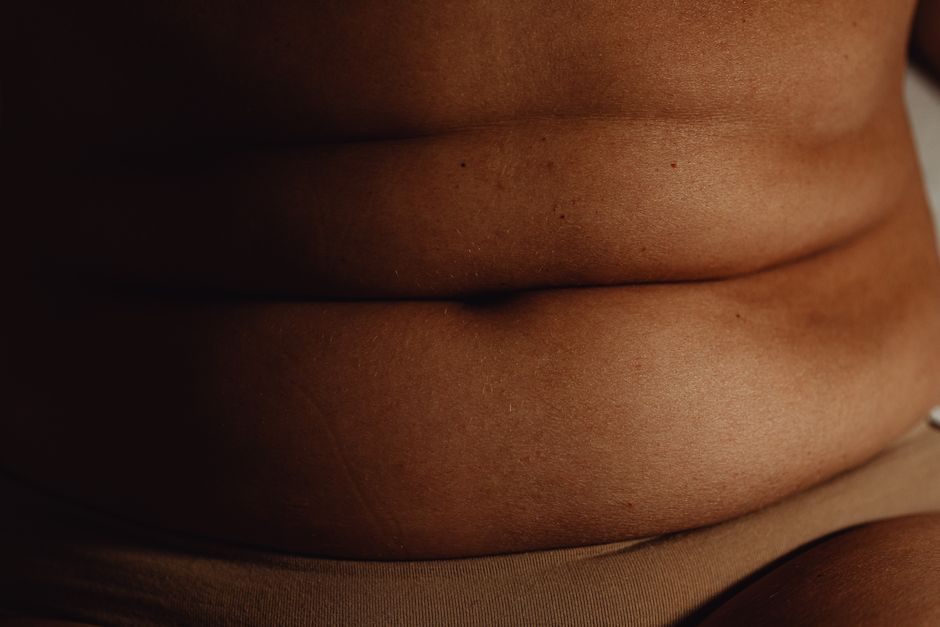
The “mommy tummy” is the stubborn belly fat and loose skin many women notice after childbirth. The honest answer is that no cream, wrap, or gadget removes it. What actually works is a combination of rebuilding your core muscles, restoring your posture, and losing overall body fat through diet and exercise.
What Is the Mommy Tummy Exactly?
The mommy tummy is not one single condition. It is usually a mix of several physical changes that happen during pregnancy. Understanding which parts apply to you matters because each one needs a different approach.
The first change is diastasis recti. This is when the two large bands of abdominal muscle separate down the middle. This separation is normal during pregnancy. The connective tissue stretches to make room for the baby. For many women, it closes on its own after birth. For others, the gap remains wide.
The second change is excess body fat. Pregnancy hormones encourage fat storage, especially around the belly and hips. This is the body’s way of building reserves for breastfeeding. Some of this fat goes away naturally. The rest requires the same calorie deficit needed to lose fat anywhere else.
The third change is stretched skin and weakened connective tissue. Skin elasticity varies from person to person. Some skin snaps back quickly. Some does not. Genetics, age, and how much weight you gained all play a role.
Finally, there is posture. Pregnancy shifts your center of gravity forward. Many women develop an exaggerated curve in the lower back. This makes the belly stick out even when the underlying muscles are not weak.
How To Lose The Mommy Tummy What Actually Works
The most effective approach combines three things: core rehabilitation, full-body strength training, and a moderate calorie deficit. No single one of these is enough on its own.
Core rehabilitation focuses on the deep abdominal muscles, especially the transversus abdominis. This is the deepest layer of abdominal muscle. It wraps around your torso like a corset. When it works properly, it pulls the belly in and supports the spine. Pregnancy stretches this muscle. It needs retraining, not just crunches.
Full-body strength training builds muscle and raises your resting metabolism. Muscle burns more calories than fat, even at rest. Building muscle in your glutes, back, and legs improves your posture and changes how your belly looks from the side.
A moderate calorie deficit is what actually reduces the fat layer. You cannot spot-reduce fat. Doing thousands of crunches will not remove fat from your belly specifically. Fat loss happens across the whole body. For most women, a deficit of about 300 to 500 calories per day leads to a safe, sustainable loss of about one pound per week.
Why Crunches and Sit-Ups Can Make It Worse
Traditional ab exercises like crunches and sit-ups are often the wrong choice after pregnancy. If you have diastasis recti, these exercises can increase the pressure inside your abdomen and push the abdominal contents forward. This can widen the separation instead of closing it.
This is not a myth. Physical therapists who specialize in postpartum recovery routinely advise against traditional crunches until the core is retrained. The same applies to planks that cause the belly to bulge downward. If you feel a doming or tenting effect in your midline during an exercise, stop that exercise.
Instead, the focus should be on exercises that teach you to draw the belly in and brace it without bulging. This is called core bracing. It is the foundation for all other movement.
Walking, swimming, and cycling are generally safe starting points. They do not put excessive pressure on the abdominal wall. As your core gets stronger, you can progress to more demanding exercises.





Rebuilding Your Deep Core Safely
Start with exercises that involve breathing and gentle engagement of the deep abdominal muscles. The goal is to retrain the muscle to contract automatically when you move. This takes time and consistency.
One of the most basic exercises is the diaphragmatic breath. Lie on your back with your knees bent. Breathe in and let your belly rise. Breathe out and gently draw your belly button toward your spine. The movement should be subtle. You should not feel your ribs flaring or your lower back arching.
Another foundational exercise is the heel slide. Lie on your back with your knees bent. Exhale and slowly slide one heel out along the floor. Keep your core braced and your lower back flat. Slide the heel back in and repeat on the other side.
These exercises feel almost too easy. That is normal. The point is to build a connection between your breath and your deep core. This connection is the foundation for everything else. Most postpartum women benefit from working with a physical therapist who specializes in pelvic health. They can assess your specific situation and give you a program tailored to your needs.
The Role of Diet in Losing the Belly Fat
You cannot out-exercise a poor diet. Fat loss comes down to consuming fewer calories than you burn. This is true for everyone, including postpartum women. However, there are important caveats for new mothers.
If you are breastfeeding, your body needs extra calories. Restricting calories too aggressively can affect your milk supply. Most experts suggest waiting until breastfeeding is well established before trying to lose weight. Even then, a modest deficit is safer than a crash diet.
Focus on protein and fiber. Protein supports muscle repair and keeps you full. Fiber helps with digestion and satiety. Lean meats, eggs, beans, lentils, vegetables, and whole grains are good choices. These foods provide the nutrients your body needs while helping you stay within a reasonable calorie range.
Processed foods and sugary drinks are the easiest things to cut. They provide calories without much nutritional value. Replacing a sugary drink with water is a simple change that can make a real difference over time.
When You Can Expect to See Results
This is the question every new mother wants answered. The honest answer is that it varies widely. Some women see significant changes within three months. Others need six to twelve months. Some never fully return to their pre-pregnancy shape, and that is normal and healthy.
Several factors influence your timeline. How much weight you gained during pregnancy matters. So does your age, your genetics, and whether you had a cesarean section. Your level of consistency with exercise and diet matters more than any single factor.
What you should not do is compare yourself to celebrities or influencers. Their timelines are not realistic for most people. They often have personal trainers, chefs, and childcare that allow them to dedicate hours each day to fitness. You are dealing with sleep deprivation, recovery, and the demands of a newborn. Give yourself grace.
One thing to watch for is the six-week checkup. Most doctors clear women for exercise at this point. If you had a cesarean or a complicated delivery, your timeline may be longer. Always get medical clearance before starting an exercise program after giving birth.
What About Belly Wraps, Creams, and Devices
Belly wraps and compression garments are widely marketed to new mothers. They do not remove fat or permanently change your shape. What they can do is provide temporary support and improve posture. Some women find them comfortable in the early weeks after birth. That is a legitimate use. Expecting them to flatten your belly permanently is not realistic.
Fat-burning creams are a marketing product. No topical cream has been shown to remove fat from the belly. The active ingredients in these products do not penetrate deeply enough to affect fat cells. Any visible change from a cream is likely temporary skin tightening or dehydration, not fat loss.
Electrical muscle stimulation devices are sold for home use. Some studies suggest they can produce small increases in muscle strength. None have shown meaningful changes in belly fat or waist circumference. They are not a substitute for actual exercise.
If you are considering any device or treatment, the safest approach is to ask your doctor or a physical therapist first. Many of these products cost hundreds of dollars and deliver little to nothing.
When to See a Professional
Some symptoms after childbirth warrant a medical evaluation. If you experience pain in your pelvis or lower back that does not improve, see a doctor. If you feel a bulge in your abdomen that is tender to the touch, see a doctor. If you have heaviness or pressure in your pelvic area, this could be a sign of pelvic organ prolapse and needs professional assessment.
A pelvic floor physical therapist is the right professional for most postpartum core issues. They can assess your diastasis recti, check your pelvic floor function, and give you a safe exercise program. This is covered by many insurance plans. It is worth the investment.
If you have been doing core exercises for several months without any improvement, that is another reason to seek help. You may be doing exercises that are not appropriate for your specific condition. A professional can identify what is holding you back.
Frequently Asked Questions
How long does it take to lose the mommy tummy?
Most women see noticeable changes within three to six months of consistent exercise and a moderate calorie deficit. Full results often take a year or longer, and some changes to skin and muscle may be permanent.
Can I lose belly fat while breastfeeding?
Yes, but weight loss should be gradual to protect your milk supply. A deficit of about 300 to 500 calories per day is generally considered safe for most breastfeeding mothers.
Are crunches safe for postpartum belly fat?
Traditional crunches are not recommended until your core is retrained, especially if you have diastasis recti. They can increase intra-abdominal pressure and widen the separation.
Do belly wraps help flatten the stomach?
Belly wraps provide temporary support and posture improvement but do not remove fat. No evidence shows they permanently change your abdominal shape.
