
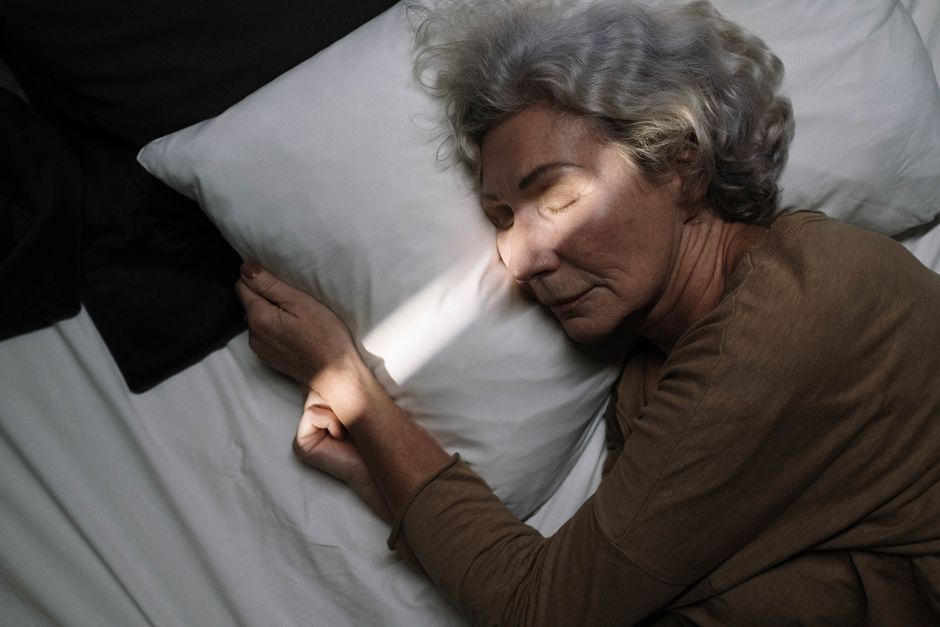
You cannot “fix” posture while you sleep the way you fix it while sitting at a desk. Muscles are relaxed, you are not holding yourself up, and no position is perfectly neutral for eight hours. What you can do is reduce the strain your sleeping setup puts on your neck and lower back by choosing a position that keeps your spine roughly straight and using a pillow that matches that position. Back sleeping with a pillow that fills the gap under your neck, side sleeping with a pillow that fills the space between your ear and your shoulder, and avoiding stomach sleeping are the three changes with the clearest reasoning behind them.
What Does Good Posture Actually Mean When You Are Lying Down?
Standing posture has a defined shape. Lying posture is different because gravity is no longer pulling you down through your feet.
When you lie down, the goal is to keep your spine in roughly the same gentle S-curve it has when you stand. That means the neck keeps a slight forward curve, the upper back keeps a slight backward curve, and the lower back keeps its inward curve. A mattress and pillow that let the spine sag into a C-shape, or arch it into an exaggerated U-shape, are the two failure modes.
This is why “sleeping posture” is really about support, not effort. You cannot contract your muscles all night to hold a position. The surface you lie on does the work.
One clarification worth making: there is no single correct sleeping position for everyone. Body shape, shoulder width, mattress firmness, and existing pain all change what works. The general principles below are widely used in clinical practice, but individual results vary.
Which Sleeping Position Is Best for Your Spine?
Back sleeping is generally considered the most spine-friendly position, because it distributes body weight evenly and keeps the head, neck, and spine in a neutral line without twisting.
The catch is the lower back. When you lie on your back, there is often a gap between the curve of your lumbar spine and the mattress. Placing a pillow or rolled towel under the knees can flatten that curve slightly and take pressure off the lower back. This is a common clinical suggestion, though formal trials comparing it to other setups are limited.
Side sleeping is the most common position and can also be comfortable for the spine, provided the pillow is thick enough to fill the gap between your ear and the outer edge of your shoulder. Without that support, the head drops toward the mattress and the neck bends sideways for hours.
Stomach sleeping is the position most likely to cause trouble. Your head is turned to one side for a long stretch, which rotates and extends the neck, and your lower back tends to arch because the belly pushes the spine forward. If you cannot sleep any other way, using a very thin pillow or no pillow under the head reduces the neck angle. Some clinicians also suggest a thin pillow under the pelvis to reduce the lower back arch.
How Do You Choose the Right Pillow for Your Position?
Pillow choice is position-specific. A pillow that works beautifully for side sleeping will feel wrong on your back, and vice versa.
The core question is simple: does the pillow fill the space between your body and the mattress so your head stays level with your spine? If your chin tilts down toward your chest, the pillow is too thick. If your head drops back, it is too thin.
- Back sleepers: a thinner pillow, or a contoured pillow with a lower center, keeps the neck in neutral. A pillow under the knees helps the lower back.
- Side sleepers: a thicker, firmer pillow fills the ear-to-shoulder gap. The pillow should reach from the base of your neck to your shoulders.
- Stomach sleepers: a very thin pillow or none at all under the head. A flat pillow under the hips can reduce the lower back arch.
- Combination sleepers: a pillow you can adjust by adding or removing filling is often the most practical option.
Pillow height matters more than pillow material for spinal alignment. Memory foam, latex, down, and shredded fill all behave differently, and there is no strong evidence that any one material is better for posture. The right height for your body and position is what counts.





Does Your Mattress Matter as Much as Your Pillow?
The mattress does most of the work. A pillow can only correct so much.
A mattress that is too soft lets the heaviest parts of your body — hips and shoulders — sink lower than the rest, which pulls the spine out of line. A mattress that is too firm creates pressure points at the shoulders and hips and can leave the lower back unsupported.
Medium-firm is the most commonly recommended range, but firmness is subjective and mattress labels are not standardized. What feels medium-firm to a 130-pound person may feel soft to someone at 220 pounds. There is no universal “best” mattress, and no large trial has identified one.
Mattresses also wear out. Sagging or a visible body impression is a sign the support has changed, and no pillow will compensate for that.
How To Fix Posture While Sleeping Positions Pillows: What Actually Helps
If you wake up stiff or sore, the fix is usually a combination of position and support, not a single product.
Start by identifying your dominant sleep position. Most people know this from how they wake up. Then check whether your pillow keeps your head level with your spine in that position. If your neck is bent or your head is propped too high, that is the first thing to change.
Next, look at your lower back. Back sleepers who wake with lumbar stiffness often benefit from a pillow under the knees. Side sleepers who wake with hip or lower back pain sometimes benefit from a pillow between the knees, which keeps the top leg from dropping forward and rotating the pelvis.
Finally, give any change a week or two. Muscles and joints adapt slowly, and a new pillow or position can feel worse before it feels better. If pain persists or gets worse, that is a signal to see a clinician rather than keep adjusting your setup.
When Should You See a Doctor About Sleep-Related Pain?
Waking up sore once in a while is common and usually not a sign of anything serious. Pain that is persistent, worsening, or accompanied by numbness, tingling, or weakness in an arm or leg is different.
Those symptoms can point to a nerve issue, and no pillow or mattress change will address the underlying cause. The same applies to neck or back pain that lasts more than a few weeks despite reasonable changes to your sleep setup.
There is also a separate category worth knowing about. If you snore heavily, wake gasping, or feel exhausted despite a full night’s sleep, that pattern can suggest a sleep-related breathing disorder. Position can affect this — sleeping on the back tends to worsen snoring and mild obstructive sleep apnea in some people — but this is a medical issue, not a posture issue. It should be evaluated by a clinician rather than managed with pillows alone.
What About Pillows Marketed for Posture?
Many pillows are sold with claims about spinal alignment, neck support, or “correcting” posture. Some of these claims are reasonable. Many are not.
A contoured cervical pillow, for example, is designed to support the natural curve of the neck. Some studies suggest these can reduce neck pain in certain people, but the evidence is mixed and results vary by individual. There is no strong evidence that any specific pillow design prevents long-term postural problems.
Be cautious with claims that a pillow can “correct” posture permanently, realign your spine, or replace medical treatment. No pillow has been shown to do those things. A pillow can support a comfortable position. That is a real benefit, but it is a smaller claim than most marketing suggests.
The most reliable approach is unglamorous: match the pillow to your position, keep your head level with your spine, support the lower back where needed, and replace worn-out bedding. That covers most of what sleep posture can realistically do.
Frequently Asked Questions
What is the best sleeping position for posture?
Back sleeping is generally considered the most spine-friendly because it keeps the head, neck, and spine in a neutral line. Side sleeping can also work well if your pillow fills the gap between your ear and shoulder.
Should I use a pillow between my knees when sleeping?
A pillow between the knees can help side sleepers by keeping the top leg from dropping forward and rotating the pelvis. It is a common clinical suggestion, though formal trials comparing it to other setups are limited.
Can a pillow fix my posture permanently?
No. A pillow can support a comfortable sleeping position, but no pillow has been shown to permanently correct posture or realign the spine. Claims that they do are not supported by evidence.
Is stomach sleeping bad for your back and neck?
Stomach sleeping is the position most likely to strain the neck and lower back, because the head stays turned to one side and the lower back tends to arch. If you cannot change position, a very thin pillow or none under the head reduces the neck angle.
