
Pelvic tilt is common but it is not a medical diagnosis you fix overnight with one magic stretch. The way to fix it involves addressing the specific type of tilt you have, then using targeted stretches and strengthening exercises consistently over weeks. Most people with an anterior pelvic tilt need to stretch the hip flexors and strengthen the glutes and abs. For posterior pelvic tilt the needs flip: stretch the hamstrings and glutes, strengthen the hip flexors and lower back. The right approach depends entirely on which way your pelvis is tilted and why.
What Is Pelvic Tilt and How Do You Know Which Type You Have?
Pelvic tilt describes the natural angle of your pelvis. A small amount of tilt is normal. Problems start when the tilt becomes exaggerated and pulls your spine out of its neutral position.
There are two main types. Anterior pelvic tilt happens when the front of the pelvis drops forward and the back rises up. This pushes your belly forward and exaggerates the curve in your lower back. Posterior pelvic tilt is the opposite. The back of the pelvis drops down and the front rises up. This flattens the lower back and makes you look like you are slouching.
You can check which type you have at home with a simple test. Stand against a wall with your heels, butt, and shoulders touching it. Place one hand flat between your lower back and the wall. If the gap is larger than the thickness of your hand you likely have anterior tilt. If your lower back presses flat against the wall with no gap you likely have posterior tilt.
This distinction matters because the exercises that help one type can make the other type worse. Stretching your hip flexors is good for anterior tilt but bad for posterior tilt. Strengthening your hamstrings helps posterior tilt but can worsen anterior tilt if done incorrectly.
What Causes Pelvic Tilt in the First Place?
The most common cause is prolonged sitting. When you sit for hours your hip flexors shorten and tighten. Your glutes switch off and become weak. Over time this pulls the pelvis into an anterior tilt. Research from the National Institutes of Health has linked prolonged sitting to changes in muscle activation patterns that favor this forward tilt position.
Weak core muscles also play a major role. Your abdominal muscles help hold your pelvis in a neutral position. When they are weak the pelvis is free to tip forward. The same goes for your glutes. They are the primary muscles that pull the pelvis back into alignment. If they are weak from sitting there is nothing counteracting the pull of the tight hip flexors.
For posterior tilt the causes are different. This type is often linked to tight hamstrings and a weak lower back. People who sit with a rounded lower back for long periods can develop this pattern. It is also common in people who have had lower back injuries and have learned to brace by tucking their pelvis under.
Some people report that wearing high heels contributes to anterior tilt. This is widely claimed though strong evidence is limited. The mechanics make sense — heels shift your weight forward and your body compensates by tilting the pelvis — but the research is not conclusive on how much this matters over time.
Which Stretches Actually Help Fix Pelvic Tilt?
The stretches you need depend on your tilt type. For anterior pelvic tilt the hip flexors are the main target. The kneeling hip flexor stretch is the most effective option. Kneel on one knee with the other foot flat in front of you. Keep your torso upright and gently push your hips forward until you feel a stretch in the front of the thigh on the kneeling side. Hold for 30 seconds on each side. Do this twice daily.
The quadriceps stretch is another important one for anterior tilt. Stand and pull one foot toward your glutes. Keep your knees together. If you cannot reach your foot use a strap or towel. Hold for 30 seconds per side.
For posterior pelvic tilt the priority shifts to the hamstrings. The seated hamstring stretch works well. Sit on the floor with one leg straight and the other bent. Reach toward the toes of the straight leg. Keep your back straight. Do not round your spine. Hold for 30 seconds per side.
The glute stretch also helps with posterior tilt. Lie on your back with both knees bent. Cross one ankle over the opposite knee. Pull the bottom knee toward your chest until you feel the stretch in the glute of the crossed leg. Hold for 30 seconds per side.
A common mistake is stretching too aggressively. Stretching should feel like a gentle pull not a sharp pain. If you feel pain you are pushing too hard and may be activating a protective muscle response that works against you.





What Strengthening Exercises Fix Pelvic Tilt?
Stretching alone will not fix pelvic tilt. You must also strengthen the opposing muscles. For anterior tilt the glutes and abs need the most work.
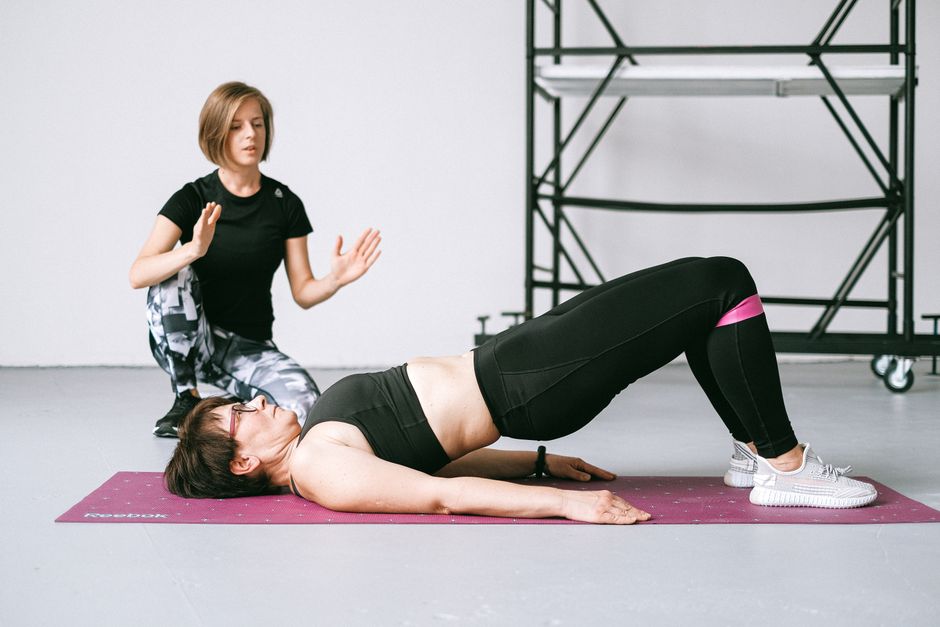
The glute bridge is a foundational exercise. Lie on your back with knees bent and feet flat on the floor. Squeeze your glutes and lift your hips until your body forms a straight line from shoulders to knees. Hold at the top for two seconds. Do three sets of 15 repetitions.
The dead bug exercise targets the deep core muscles that stabilize the pelvis. Lie on your back with arms extended toward the ceiling and knees bent at 90 degrees. Slowly lower your right arm and left leg toward the floor without arching your back. Return to start and repeat on the other side. Do three sets of 10 per side.
For posterior tilt the focus is on the hip flexors and lower back. The standing hip flexor march strengthens the hip flexors. Stand tall and lift one knee to hip height while keeping your torso straight. Lower slowly. Do three sets of 12 per side.
The superman exercise targets the lower back. Lie face down with arms extended forward. Lift your arms, chest, and legs off the floor simultaneously. Hold for two seconds. Do three sets of 10 repetitions.
| Pelvic Tilt Type | Stretch | Strengthen |
|---|---|---|
| Anterior | Hip flexors, quads | Glutes, abs |
| Posterior | Hamstrings, glutes | Hip flexors, lower back |
A 2021 study published in the Journal of Bodywork and Movement Therapies found that a six-week program combining stretching and strengthening exercises significantly reduced anterior pelvic tilt angle in participants. The improvements were maintained at a three-month follow-up. This tells us consistency matters more than intensity.
How To Fix Pelvic Tilt Stretches And Exercises Without Making It Worse
The biggest risk with pelvic tilt exercises is doing the wrong ones for your specific tilt. If you have anterior tilt and you stretch your hamstrings excessively you can actually increase the tilt. The hamstrings are already lengthened in anterior tilt. Stretching them further destabilizes the pelvis.
Another common mistake is focusing only on stretches and skipping the strengthening work. Stretching temporarily lengthens tight muscles but without strengthening the opposing muscles the tilt will return within hours. The glutes and core need to be strong enough to hold the pelvis in place on their own.
Poor form during exercises also causes problems. During glute bridges if you push through your lower back instead of your glutes you can aggravate existing back pain. The same goes for dead bugs — if you let your lower back arch off the floor you are training the wrong muscles.
Some people report that foam rolling helps with pelvic tilt. This is widely claimed though strong evidence is limited. Foam rolling may provide temporary relief from muscle tightness but it does not correct the underlying muscle imbalance. It is not a substitute for the stretching and strengthening work.
As of 2026 there is no clinical evidence that any single device or wearable product corrects pelvic tilt on its own. Belts, braces, and posture correctors may remind you to stand straighter but they do not change muscle length or strength. The fix requires active work not passive support.
How Long Does It Take to Fix Pelvic Tilt?
This depends on how severe the tilt is and how consistent you are with the exercises. Most people see noticeable improvement within four to six weeks of daily stretching and three to four weekly strength sessions.
The first change you will notice is that standing feels more natural. Your lower back may feel less tight. The visual change in your posture takes longer. Muscles take time to lengthen and strengthen. Do not expect your pelvis position to change in a week.
If you have had pelvic tilt for years the muscles have adapted to that position. The nervous system has learned to hold the tilt as normal. Reversing this takes time because you are retraining muscle firing patterns not just changing muscle length. This is why consistency matters more than doing intense sessions once a week.
Some people find that their tilt improves quickly but returns just as fast when they stop the exercises. This is normal. Pelvic tilt is a maintenance issue for many people. Once you correct it you may need to do a shorter version of the routine a few times per week to keep it from returning.
When Should You See a Professional for Pelvic Tilt?
If you have pelvic tilt along with persistent back pain, hip pain, or pain that radiates down your leg you should see a physical therapist. Self-diagnosing the type of tilt and the right exercises can be tricky. A therapist can confirm which muscles are tight and which are weak using objective tests.
People with a history of spinal surgery, disc problems, or joint replacements should not start a pelvic tilt correction program without professional guidance. The wrong exercises can strain healing tissues or aggravate existing conditions.
If you have tried a consistent stretching and strengthening routine for eight weeks with no improvement it is worth getting evaluated. There may be structural factors or compensating muscle patterns that need a professional eye to identify.
Frequently Asked Questions
Can you fix pelvic tilt just by stretching?
No. Stretching alone loosens tight muscles but does not strengthen the weak muscles that hold the pelvis in place. You need both stretching and strengthening for lasting change.
Is anterior or posterior pelvic tilt more common?
Anterior pelvic tilt is far more common because prolonged sitting tightens the hip flexors and weakens the glutes. Posterior tilt is less common and often linked to specific sitting habits or past injuries.
How do I know if my pelvic tilt is causing my back pain?
If your lower back pain is worse after sitting for long periods and feels better when you stand or walk it may be related to pelvic tilt. A physical therapist can confirm this with a postural assessment.
Can you fix pelvic tilt while sleeping?
Sleeping position alone cannot correct pelvic tilt but sleeping on your side with a pillow between your knees can help maintain neutral pelvic alignment while you sleep.
