
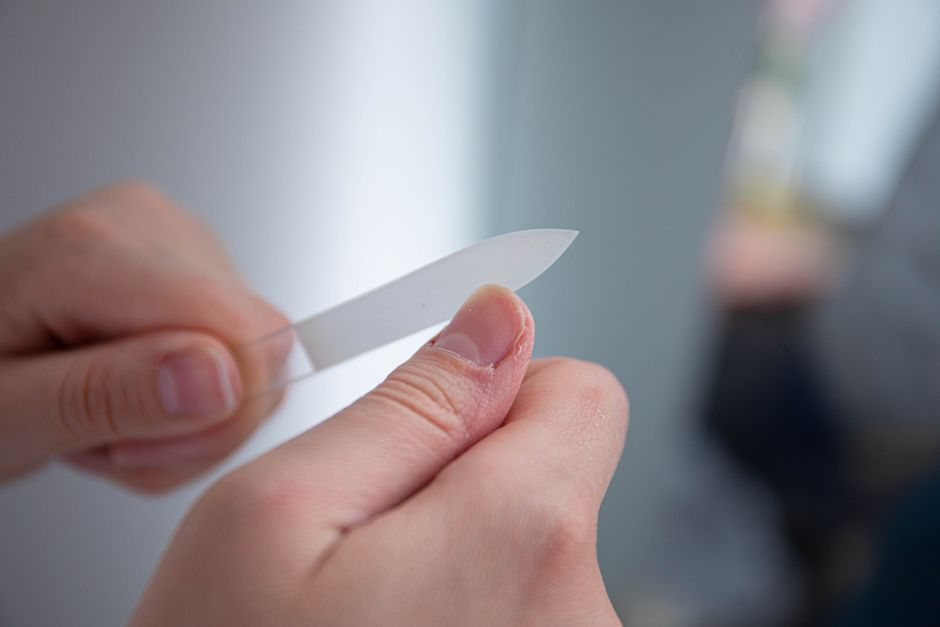
An ingrown fingernail happens when the edge of the nail grows into the skin beside it, causing pain, redness, and sometimes infection. Most mild cases improve with simple home care: soak the finger in warm water, keep the nail edge lifted away from the skin, and avoid cutting the nail too short or rounded. If the area is badly swollen, oozing pus, or the pain is severe, see a doctor rather than digging at it yourself.
Fingernail ingrowth is far less common than toenail ingrowth, mainly because fingers sit in looser shoes — meaning no shoes at all — and face less pressure. But it does happen, and the way you trim your nails is usually the reason. Fixing the current problem and preventing the next one come down to a handful of habits that are easy to get right once you understand what causes it.
What Actually Causes An Ingrown Fingernail?
The cause is almost always mechanical: the nail edge presses into the surrounding skin, and the skin responds with inflammation. The most common trigger is trimming the nail too short or cutting the corners down into a curve. When the nail regrows, its edge can catch the skin instead of growing cleanly over it.
Other common causes include:
- Rounded trimming. Cutting the nail in a deep curve rather than a gentle one encourages the edge to grow inward.
- Nail biting or picking. Chewing or tearing at the nail removes the corner and leaves a jagged edge that can dig in.
- Trauma. A slammed finger, a stubbed fingertip, or repeated pressure can push the nail edge into the skin.
- Tight or repetitive pressure. Some activities that press the fingertips hard and repeatedly can contribute.
- Nail shape and anatomy. Naturally curved or fan-shaped nails, and the shape of the nail fold, make some people more prone.
One clarification worth making: ingrown fingernails are not usually caused by poor hygiene. That idea is common but not well supported. Hygiene matters for how quickly an existing ingrowth becomes infected, but it is rarely the reason the nail turned inward in the first place. The shape and the trimming do most of the work.
How To Fix An Ingrown Fingernail And Prevent It?
For a mild ingrown fingernail — one that is tender and a little red but not badly swollen or draining pus — home care is reasonable and often effective. The goal is to reduce inflammation, soften the nail, and stop the edge from pressing into the skin while it grows out.
Here is the approach most clinicians describe for early, uncomplicated cases:
- Soak the finger. Warm water for about 10 to 15 minutes, a few times a day, softens the nail and calms the skin. Plain warm water is enough.
- Lift the edge gently. After soaking, use a clean cotton bud or a small piece of dental floss to gently lift the nail edge away from the skin. Place a tiny wisp of clean cotton under the edge to keep it lifted. Do not force it.
- Keep the area clean and dry. Wash gently and pat dry. A simple dressing can protect it from pressure and dirt.
- Stop trimming that nail. Let it grow past the skin edge before you trim it again.
- Leave the corner alone. Do not dig, cut, or pick at the ingrown edge. This is the single most common way a mild problem becomes a serious one.
Over-the-counter pain relief can ease discomfort while the nail grows out. If the skin is broken, keep it clean and watch for signs of infection.
Home care is not appropriate for every case. See a doctor if you have:
- Spreading redness, warmth, or swelling
- Pus or drainage
- Fever
- Severe pain that interferes with daily activity
- Diabetes, poor circulation, or a weakened immune system
- No improvement after several days of home care
Those last points matter. People with diabetes or circulation problems are at higher risk of complications from any foot or hand infection, and should not rely on self-treatment for an ingrown nail. This is well-established clinical guidance, not a precaution for its own sake.
What Can A Doctor Do For An Ingrown Fingernail?
When home care is not enough, a clinician has several options. The right one depends on how much inflammation and infection is present.
For a mild-to-moderate case with infection, a doctor may prescribe a topical or oral antibiotic and continue conservative care. For a more stubborn or recurrent ingrowth, a minor procedure can remove the offending edge of the nail. This is usually done under local anesthetic in a clinic.
In some cases, part of the nail and the tissue beneath it (the nail matrix) is treated so that section of nail does not grow back. This reduces recurrence but is generally reserved for nails that keep causing problems. It is a small procedure, but it is not something to seek casually for a first-time ingrowth.
What a doctor will not usually do is aggressively cut into the nail fold without anesthesia. If you have been tempted to do that at home, that instinct is worth resisting. The pain is significant, the infection risk is real, and the result is often a worse ingrowth once the nail regrows.





How Should You Trim An Ingrown Fingernail To Prevent It Coming Back?
Trimming technique is the most controllable factor in preventing ingrown fingernails. Cut the nail straight across with a gentle curve at the corners — not a deep rounded shape. Leave the nail long enough to clear the skin at the sides.
The general guidance:
- Cut straight across. A slight curve at the very corners is fine. Avoid cutting down into the sides.
- Do not cut too short. Leave a small amount of white nail visible past the fingertip. Very short nails are more likely to catch and dig in as they grow.
- Use proper clippers. Sharp nail clippers designed for nails, not scissors or teeth.
- File rough edges. A nail file smooths the corner so it does not catch on skin or fabric.
- Trim regularly. Consistent trimming prevents long nails from snagging and tearing.
If you bite or pick at your nails, addressing that habit is part of prevention. Biting removes the corner unevenly and leaves a sharp edge that can press into the skin. Some people find that keeping nails trimmed and filed reduces the urge to pick. If biting is persistent, it is worth mentioning to a doctor or pharmacist, since there are approaches that can help.
What About Prevention If You Are Prone To Ingrown Nails?
Some people are simply more prone to ingrown nails because of nail shape or how their nail folds sit. For them, prevention is more about consistency than any single fix.
Keeping the nail trimmed correctly and avoiding pressure on the fingertip are the mainstays. If a particular activity presses hard on the fingertips, protecting the finger can help. And if a nail starts to feel tender at the edge, address it early — soak, lift gently, and stop trimming that nail — rather than waiting for it to become badly inflamed.
There is no evidence that supplements, special nail products, or nail hardeners prevent ingrown nails. Those are marketing claims rather than established prevention. The evidence-based prevention is mechanical: trim correctly, avoid trauma, and do not dig at the corners.
When Should You Stop Home Treatment And See A Doctor?
See a doctor if the finger is getting worse rather than better, if there is pus or spreading redness, or if you have a condition that raises your risk of complications. The timeline matters less than the direction: a mild ingrown nail should be improving within a few days of sensible home care.
Signs that warrant prompt medical attention include redness that spreads up the finger, red streaks, increasing swelling, fever, or severe pain. These can indicate a spreading infection, which needs treatment. Do not wait on those.
For most healthy people, a mild ingrown fingernail is a nuisance that resolves with patience and correct trimming. The mistakes that make it worse — cutting the corner out, digging at the edge, trimming too short — are also the easiest to avoid once you know them.
Frequently Asked Questions
How long does an ingrown fingernail take to heal?
A mild ingrown fingernail often improves within several days of consistent home care, though the nail needs to grow past the skin edge to fully resolve. If it is not improving after a few days, or is getting worse, see a doctor.
Should I cut out the ingrown part of my fingernail?
No. Cutting out the corner yourself is the most common way a mild ingrown nail becomes infected or worse. Soak, gently lift the edge, and let a doctor handle removal if it is needed.
Can I prevent ingrown fingernails by trimming them a certain way?
Yes. Cutting the nail straight across with only a slight curve at the corners, and leaving it long enough to clear the skin, reduces the chance of the edge digging in. Avoid cutting nails very short or rounded.
When should I see a doctor for an ingrown fingernail?
See a doctor if there is pus, spreading redness, fever, severe pain, or no improvement after several days of home care. People with diabetes or poor circulation should seek care earlier rather than self-treating.
