
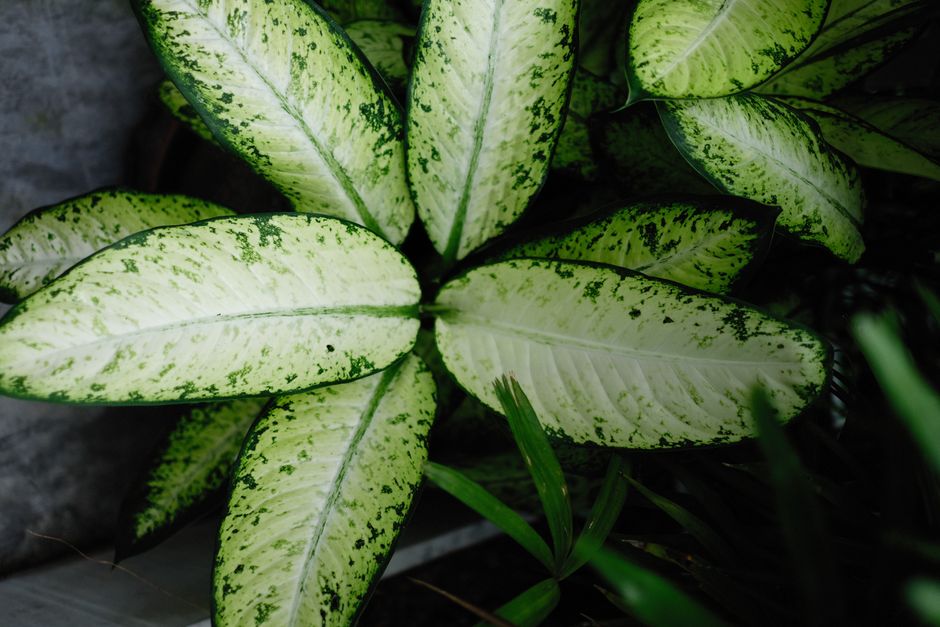
A leggy Dieffenbachia is fixed by cutting the bare stem back to a healthy node, then giving the plant brighter indirect light and more consistent care so new growth comes in full instead of stretched. The trimmed stem sections can be rooted in water or soil to start new plants. To prevent it from happening again, keep the plant within a few feet of a bright window that never gets direct afternoon sun, rotate it weekly, and prune before the gaps get long.
What Causes a Dieffenbachia to Get Leggy?
Legginess is a light problem first and a care problem second. When a Dieffenbachia does not get enough light, it stretches toward the nearest source. The plant produces longer gaps between leaves and smaller new leaves at the top. The stem stays thin. Over time you get a tall bare stalk with a small tuft of leaves at the tip.
This response is called etiolation. It is a normal plant reaction, not a disease. The plant is investing in height to reach light rather than in width and leaf size. Understanding that distinction matters, because it tells you the fix is environmental, not a matter of feeding or spraying something.
Several other factors make a plant look leggy even when light is reasonable:
- Age. Dieffenbachia naturally drops lower leaves as it matures. A plant that has been in the same pot for years will develop a bare “trunk” over time regardless of light.
- Overwatering and poor drainage. Soggy soil damages roots, and a plant with compromised roots cannot support lower foliage. Leaves yellow, drop, and the stem is left exposed.
- Cold drafts or sudden temperature swings. These stress the plant and can trigger leaf drop.
- Inconsistent watering. Long dry spells followed by heavy watering cause the same leaf loss.
Light is still the dominant factor in most cases. If a plant is in a dim corner and the gaps between leaves are long, that is the answer. If the light is decent and the plant is simply old, the bare stem is partly just time.
How To Fix A Leggy Dieffenbachia And Prevent It?
The fix is a combination of pruning and light correction, done together. Cutting alone will not help if the plant goes back into the same dim spot. It will simply stretch again.
Here is the sequence that works:
- Move the plant first. Place it near an east or west window, or a few feet back from a south window. Bright indirect light is the goal. Direct midday sun can scorch the leaves.
- Cut the stem back. Using clean, sharp shears, cut the main stem to a height you find reasonable. Leave at least a few nodes below the cut. A node is the small bump or ring on the stem where a leaf once attached.
- Keep the cut stump. A healthy stump with nodes will usually push out new shoots below the cut. This is how you get a fuller plant rather than a single tall stem.
- Root the cuttings. Cut the removed stem into sections, each with at least one node. Place them in water or moist potting mix.
- Be patient. New growth from a cut stump can take several weeks to appear. Rooting cuttings in water typically takes a few weeks to a couple of months before roots are ready for soil.
One detail people miss: Dieffenbachia sap contains calcium oxalate crystals. It is irritating to skin, eyes, and mouth. Wear gloves when you cut, and keep the plant and cuttings away from children and pets. Wash your hands and the shears afterward.
Where Should You Cut a Leggy Dieffenbachia Stem?
Cut just above a node, not in the middle of a bare stretch. The node is where new growth emerges, so leaving a node below your cut gives the plant a place to branch. If you cut below the lowest node, that section of stem usually will not regrow.
For a very tall plant, you can cut low, leaving just a few inches of stem above the soil. This is aggressive but effective. The stump will often send up multiple new shoots, giving you a bushier plant. If you cut higher, you keep more of the existing structure but get less branching.
There is no single correct height. The right cut is the one that leaves you with a stump that has nodes and a plant you are happy to look at while it regrows. Some growers cut in spring or early summer, when the plant is actively growing and recovery is faster. That timing is common practice rather than a strict rule.





How Do You Root Dieffenbachia Cuttings?
Stem cuttings root reliably in either water or soil. Both approaches work. Water lets you watch root development, while soil avoids a second transplant shock.
For water rooting, place a section of stem with at least one node in a glass of clean water. Change the water every few days. Keep it in bright indirect light. Roots typically appear within a few weeks, though timing varies with temperature and the condition of the cutting.
For soil rooting, push the node into a moist, well-draining mix. Keep the mix consistently moist but not soaked. A plastic bag over the pot can hold humidity, but open it occasionally to prevent rot.
Either way, wait until roots are several inches long before potting a water-rooted cutting into soil. Moving too early is a common reason cuttings fail.
How Do You Prevent Legginess in the First Place?
Prevention comes down to light and steady care. A Dieffenbachia that gets enough light grows compact, with short gaps between leaves and larger foliage. The same plant in a dim spot will always stretch.
Practical steps:
- Give bright indirect light. Near an east or west window, or a few feet from a south window, is usually good. Sheer curtains help if the light is strong.
- Rotate the pot weekly. This keeps growth even instead of leaning toward one side.
- Water when the top inch or two of soil feels dry. Avoid a fixed schedule. Check the soil instead.
- Use a pot with drainage holes. Standing water is a common cause of root problems and leaf drop.
- Prune early. If you see the stem starting to stretch, trim it back before the gaps get long. Small corrections are easier than major ones.
- Repot when the plant outgrows its container. A root-bound plant declines, and decline shows up as leaf loss.
Dieffenbachia is not a low-light plant in the way some people assume. It tolerates lower light than many houseplants, which is why it survives in dim corners. Surviving and growing well are different things. A plant that merely survives in low light is exactly the plant that goes leggy.
Should You Fertilize a Leggy Dieffenbachia?
Fertilizer does not fix legginess, and adding more of it will not make a stretched plant compact. Legginess is a shape problem caused by light, not a nutrient deficiency. Feeding a leggy plant in dim light can actually push more weak, stretched growth.
That does not mean fertilizer is useless. A plant that is actively growing in good light benefits from regular feeding during the growing season, following the product label. The point is order of operations. Fix the light and prune first. Feed a plant that is already growing well.
If you suspect a nutrient issue, look for symptoms other than legginess, such as pale or yellowing leaves across the whole plant. Those point to a different problem than a stretched stem.
Is a Leggy Dieffenbachia Unhealthy?
Not necessarily. A leggy plant can be perfectly healthy. It is simply shaped in a way many people find unattractive. The stem is bare because lower leaves aged out or dropped, and the top is stretched because of light.
That said, legginess sometimes travels with real problems. If the stem is soft, mushy, or discolored near the base, that suggests rot, which is a genuine health issue. If leaves are yellowing throughout rather than just the oldest ones dropping, that points to a watering or root problem. In those cases, address the underlying cause before worrying about shape.
A firm, green stem with a healthy top tuft and bare lower stem is a cosmetic issue. Prune it, improve the light, and it will usually come back fuller.
Frequently Asked Questions
Can a leggy Dieffenbachia be fixed without cutting it?
No, pruning is the only way to remove the bare stretched stem. Better light alone will improve new growth but will not fill in the existing bare section.
Will a cut Dieffenbachia stem grow back?
Yes, a stump with at least one node usually pushes out new shoots, often within several weeks. Growth is faster when the plant is actively growing and getting good light.
Can you root Dieffenbachia cuttings in water?
Yes, stem sections with a node root readily in water, typically within a few weeks. Wait until roots are several inches long before moving the cutting into soil.
Why does my Dieffenbachia keep getting leggy even in bright light?
Age is the usual reason. Dieffenbachia naturally drops lower leaves as it matures, so an older plant develops a bare stem regardless of light quality.
