
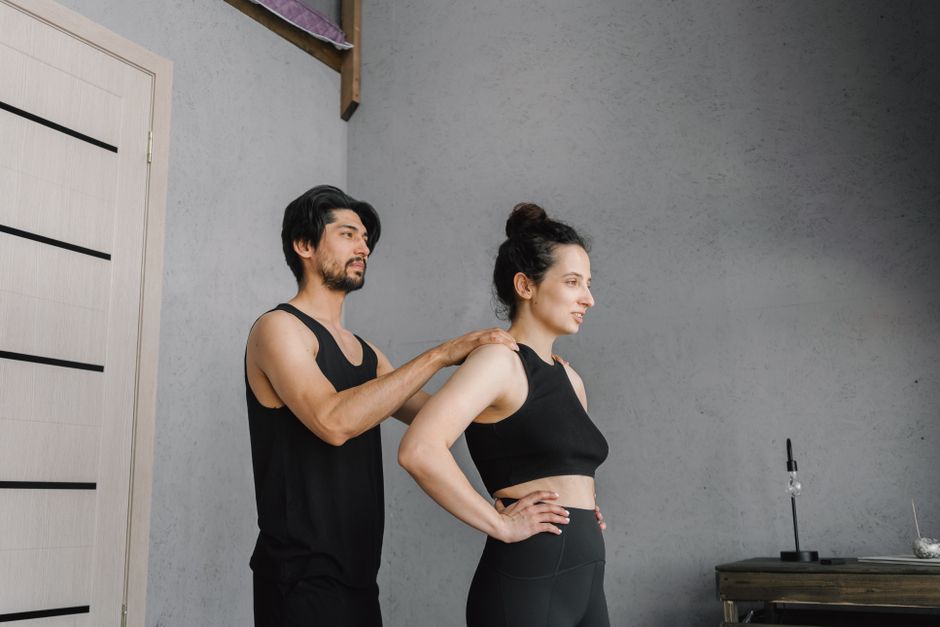
Hunched posture is common, but it is not permanent. The right stretches and exercises can improve it. The goal is to lengthen tight chest muscles and strengthen weak back muscles. This combination pulls the shoulders back and helps the head sit properly over the spine. Consistent daily work makes a real difference over weeks and months.
What Causes a Hunchback Posture?
Most hunched backs come from daily habits, not aging. Sitting at a desk, looking down at a phone, or driving for hours puts the head forward. The chest muscles shorten. The upper back muscles stretch out and weaken. Over time, the body adapts to this position and holds it even when you stand up.
This pattern has a medical name: hyperkyphosis. A normal spine has a natural curve in the upper back. When that curve becomes exaggerated, it looks like a hunch. In older adults, the cause can be different. Osteoporosis can weaken the vertebrae and lead to a true structural curve. If you have back pain, numbness, or a curve that started suddenly, see a doctor before starting any exercise program.
How To Fix A Hunchback Stretches And Exercises: The Core Routine
An effective program targets two areas at once. You must stretch what is tight and strengthen what is weak. Doing only one side of this equation will not fix the problem. For example, stretching the chest without strengthening the back leaves the muscles unable to hold the new position.
Here is the core routine. Do these exercises daily or at least five times per week. Each one is simple, requires no equipment, and takes under two minutes.
- Chest doorway stretch: Stand in a doorway. Place your forearms on the frame at shoulder height. Step forward with one foot until you feel a stretch across your chest. Hold for 30 seconds. Repeat twice.
- Chin tucks: Sit or stand tall. Pull your chin straight back as if making a double chin. Do not tilt your head up or down. Hold for 5 seconds, then relax. Do 10 repetitions.
- Prone Y raises: Lie on your stomach. Extend your arms forward and slightly out, forming a Y shape with your body. Lift your arms and chest off the floor. Squeeze your shoulder blades together. Hold for 3 seconds, then lower. Do 10 repetitions.
- Wall angels: Stand with your back against a wall. Your heels, buttocks, and head should touch the wall. Bring your arms up to form a W shape with your elbows bent. Slowly slide your arms overhead into a Y shape, keeping contact with the wall. Do 10 repetitions.
These four exercises address the main muscle imbalances. The doorway stretch lengthens the chest. Chin tucks retrain the head position. The Y raises and wall angels strengthen the upper back muscles that hold the shoulders back.
Why Stretching Alone Is Not Enough
Many people try to fix their posture by stretching their back. This is a mistake. The back muscles are already overstretched. Stretching them more does not help. What needs to happen is strengthening those muscles so they can hold the spine in a better position.
Think of it like braces on teeth. The braces apply constant pressure to move things into place. Your muscles do the same job for your spine. Weak upper back muscles cannot hold your shoulders back, no matter how flexible your chest becomes. Strength training is the essential partner to stretching.
Research consistently shows that exercise programs combining chest stretching with upper back strengthening improve posture more than stretching alone. Studies have measured reductions in the thoracic curve angle after eight to twelve weeks of consistent training.





How Long Does It Take To See Results?
Posture changes are slow because you are retraining muscle tissue. Most people notice a difference in how they feel within two to four weeks. The shoulders feel lighter. Standing taller feels more natural. Visible changes in posture typically take eight to twelve weeks of consistent work.
The timeline depends on how long you have had the posture. Someone who has hunched for decades will need more time than someone who developed the habit recently. Consistency matters more than intensity. Ten minutes daily beats an hour once a week.
Do not expect permanent change without maintenance. Your daily habits created this posture. If you return to eight hours of desk work without breaks, the hunch will return. The exercises are not a one-time fix. They are a permanent addition to your routine.
Daily Habits That Undo Your Progress
Exercise alone cannot overcome a workday of poor positioning. You need to address the habits that created the problem. Small changes throughout the day reinforce what your exercises are trying to accomplish.
- Desk setup: Your monitor should be at eye level. Your elbows should rest at a 90-degree angle. Your feet should be flat on the floor. A chair with lumbar support helps maintain the natural curve of your lower back.
- Phone position: Hold your phone up to your face instead of bending your neck down. The head weighs about 10 to 12 pounds. For every inch it moves forward, the strain on your neck muscles increases significantly.
- Movement breaks: Stand up and walk for two minutes every hour. Set a timer if you need to. This breaks the static posture that allows muscles to shorten.
- Sleep position: Sleeping on your back with a supportive pillow keeps the spine neutral. Stomach sleeping twists the neck and reinforces poor alignment.
These habits are not optional extras. They are half of the solution. Your muscles are adapting to whatever position you hold most often. If that position is still hunched, your exercises are fighting a losing battle.
When To See a Professional
Most hunched posture responds well to exercise. But some cases need professional care. See a doctor or physical therapist if you have any of the following:
- Back pain that does not improve with rest
- Numbness, tingling, or weakness in your arms or hands
- A curve that appeared suddenly or is getting worse quickly
- Difficulty breathing or shortness of breath
- A diagnosis of osteoporosis
For older adults, a sudden change in posture can signal a spinal fracture. This requires medical evaluation before any exercise. A physical therapist can also assess your specific muscle imbalances and tailor a program to your body. Some people have tight hip flexors or weak core muscles that contribute to the problem in ways a general routine does not address.
Do Posture Correctors Actually Work?
Posture correctors are braces or harnesses that pull your shoulders back. They are widely marketed online. The evidence for them is limited. No large human trials have confirmed that wearing a posture corrector produces lasting change.
These devices can provide temporary relief. They remind you to sit taller while wearing them. Some people find this helpful as a cue. But the muscles do not strengthen while the brace holds you in position. When you remove the brace, the muscles are no stronger than before.
If you use a posture corrector, treat it as a reminder tool, not a treatment. Wear it for short periods during desk work. Continue your strengthening exercises. The exercises are what create permanent change. The brace merely helps you remember the position you are working toward.
Common Mistakes That Slow Your Progress
Several errors keep people from seeing results. Knowing them helps you avoid wasted effort.
Holding your breath during exercises. Breathe normally throughout each movement. Holding your breath increases blood pressure and reduces the quality of the muscle contraction.
Using momentum instead of muscle control. When doing Y raises or wall angels, move slowly and deliberately. Swinging your arms uses momentum, not muscle strength. The exercise loses its purpose.
Overstretching to the point of pain. A stretch should feel like tension, not sharp pain. Pain signals tissue damage. Back off the intensity and hold the stretch longer instead.
Expecting instant results. Posture changes take months. If you quit after two weeks because you see no difference, you will never reach the point where change becomes visible. Consistency over months is the only path that works.
Frequently Asked Questions
Can a hunchback be reversed in adults?
Yes, in most cases the curve can improve with consistent stretching and strengthening. The degree of improvement depends on how long the posture has been present and whether any structural bone changes exist.
How many minutes a day should I do posture exercises?
Ten to fifteen minutes daily is enough for most people. Consistency matters more than duration.
Is it too late to fix my posture at 50?
No, muscle tissue responds to training at any age. Older adults may need more time to see changes, but the exercises remain effective when done consistently.
Can sleeping on my back fix a hunchback?
Sleeping on your back helps maintain neutral spine alignment but does not correct an existing hunch. It works best as a supporting habit alongside daily exercises.
