
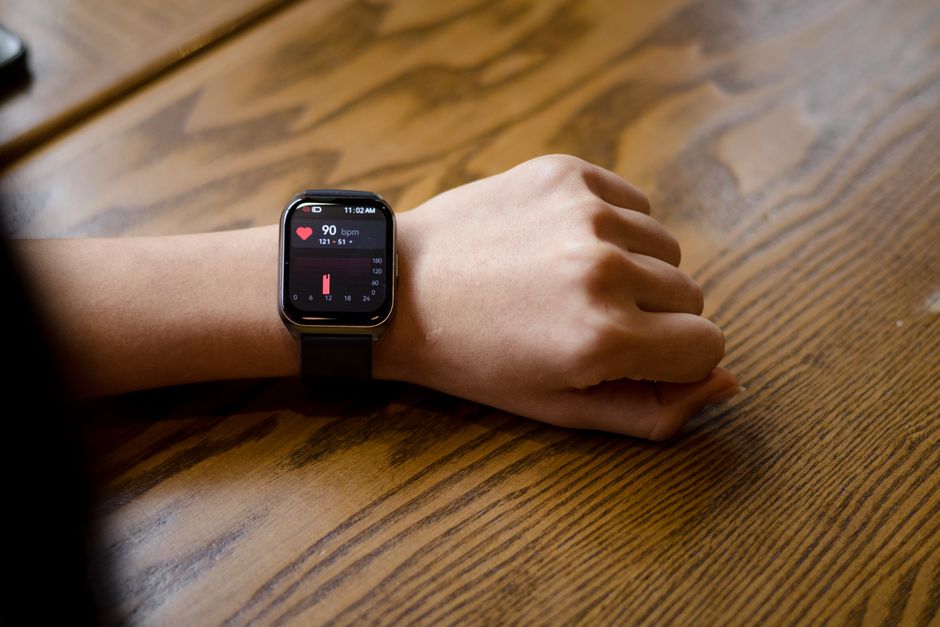
Your heart rate is one of the most direct signals your body gives you about how hard it is working. If you want to burn fat during exercise, the goal is not to push as hard as you possibly can. The goal is to stay in a specific range called your fat-burning zone. To figure out your heart rate for burning fat, start by calculating your maximum heart rate by subtracting your age from 220. Then, aim to keep your heart rate between 60% and 70% of that number during steady exercise. This is the zone where your body relies primarily on fat for fuel, and it is a simple math problem you can do in under a minute.
What Exactly Is the Fat-Burning Zone?
The fat-burning zone is a heart rate range that corresponds to low or moderate exercise intensity. When you work out in this range, your body uses a higher percentage of fat as its energy source compared to higher intensity exercise.
At higher intensities, your body shifts to burning more carbohydrates because they can be converted to energy faster. That does not mean high-intensity exercise is bad. It just means the fuel source is different. In the fat-burning zone, the work is steady enough that your body can break down fat stores for energy over a longer period.
This zone is not the same for everyone. It depends on your age, your fitness level, and your resting heart rate. The simplest starting point is the age-based formula, but it is an estimate. Your actual numbers may differ slightly.
How to Figure Out Heart Rate for Burning Fat: The Simple Math
The most common way to estimate your fat-burning zone uses your maximum heart rate. The standard formula is 220 minus your age.
For example, a 40-year-old would calculate: 220 – 40 = 180 beats per minute as their estimated maximum heart rate.
The fat-burning zone sits between 60% and 70% of that maximum. For the same 40-year-old:
- 60% of 180 = 108 beats per minute
- 70% of 180 = 126 beats per minute
So the fat-burning zone for a 40-year-old would be roughly 108 to 126 beats per minute. You can do this calculation for any age in seconds.
Some sources extend the zone up to 75% of maximum heart rate. The exact boundaries vary depending on the source you consult. What matters is that you are working at a moderate, steady effort — not sprinting and not barely moving.
How to Check Your Heart Rate During Exercise
You have two practical options for measuring your heart rate while you work out: a wearable device or a manual check.
Heart rate monitors on smartwatches and fitness bands are convenient. They show your number in real time, so you can adjust your pace instantly. Optical sensors on the wrist are generally accurate for steady-state exercise, though they can lag briefly when your heart rate changes quickly.
A chest strap monitor is more accurate than a wrist sensor. If you are serious about staying in a precise zone, a chest strap is worth considering.
You can also check manually. Stop briefly and place your index and middle fingers on your wrist, just below the base of your thumb. Count the beats for 15 seconds and multiply by 4 to get your beats per minute. This method works but interrupts your workout, and your heart rate drops quickly once you stop moving.





What Does the Research Say About Fat Burning?
Research consistently shows that lower-intensity exercise uses a greater proportion of fat for fuel. Studies have found that the crossover point — where your body switches from burning mostly fat to burning mostly carbohydrates — occurs at around 60% to 70% of maximum heart rate for most people.
Some research suggests that the exact percentage of fat burned in this zone is often overstated in marketing materials. Your body never burns only fat or only carbohydrates. It always uses a mix of both. The zone simply shifts the ratio.
It is also important to understand that burning a higher percentage of fat during exercise does not automatically mean you lose more body fat overall. Total calories burned matter too. A higher-intensity workout burns more total calories in less time, even if the percentage of fat used is lower.
For overall fat loss, the best workout is the one you can sustain consistently. Both steady-state moderate exercise and higher-intensity interval training have a place. The fat-burning zone is a useful tool, not the only answer.
The Karvonen Formula: A More Personalized Approach
The 220-minus-age formula is simple, but it ignores your resting heart rate. The Karvonen formula accounts for it and gives a more personalized target.
First, find your resting heart rate. Take it in the morning before you get out of bed. A normal resting heart rate for adults is between 60 and 100 beats per minute, though well-conditioned athletes often sit lower.
The formula works like this:
- Calculate your maximum heart rate: 220 – age
- Subtract your resting heart rate from your maximum heart rate to get your heart rate reserve
- Multiply your heart rate reserve by the intensity percentage (0.60 to 0.70)
- Add your resting heart rate back to that number
Here is an example for a 40-year-old with a resting heart rate of 60:
- Maximum heart rate: 220 – 40 = 180
- Heart rate reserve: 180 – 60 = 120
- 60% intensity: (120 × 0.60) + 60 = 132 beats per minute
- 70% intensity: (120 × 0.70) + 60 = 144 beats per minute
The Karvonen formula gives a higher range than the simple method for this example. Both are estimates. The Karvonen approach is generally considered more accurate because it accounts for your individual fitness baseline.
How to Stay in the Zone During Your Workout
Once you know your target range, the next step is staying in it. This takes practice because your heart rate responds to your effort level, and that response changes as you get fitter.
Start with a five-minute warm-up at a comfortable pace. Then gradually increase your intensity until your heart rate reaches the lower end of your zone. Adjust your pace to keep your heart rate within the range for the duration of your workout.
On a treadmill, adjust the speed or incline. On a bike, change the resistance. Outdoors, slow down or speed up as needed. The key is steady, sustained effort.
As your fitness improves, you will need to work harder to reach the same heart rate. That is a sign of progress. Recheck your numbers periodically, especially if you have gained or lost significant weight or if you have been training consistently for several months.
Myths About the Fat-Burning Zone
The most common myth is that you must stay in the fat-burning zone to lose weight. That is not true. Weight loss comes from burning more calories than you consume, regardless of the fuel source.
Another myth is that you cannot burn fat at higher intensities. Your body always burns a mixture of fat and carbohydrates. High-intensity exercise burns fewer fat calories proportionally but more total calories overall.
A third myth is that a wearable device can tell you exactly when you are burning fat. Most devices estimate your heart rate zones based on the same 220-minus-age formula. The calorie and fat-burn numbers on these devices are estimates, not measurements. They can guide you, but they are not precise scientific instruments.
There is also a misconception that you need to exercise for a long time before your body starts burning fat. Your body burns fat from the start of exercise. The proportion of fat used increases as exercise duration lengthens, but you do not need to wait 20 or 30 minutes to begin burning fat.
Practical Tips for Beginners
If you are new to exercise, start at the lower end of your zone. The goal is to sustain the effort, not to hit the top number immediately.
Use the talk test as a simple confirmation. At 60% to 70% of your maximum heart rate, you should be able to hold a conversation but feel slightly breathless. If you can sing, you are working too easy. If you cannot speak in full sentences, you are working too hard.
Stay hydrated. Dehydration raises your heart rate, which can push you out of your zone even at the same effort level.
Be aware that certain medications, particularly beta-blockers, lower your heart rate response to exercise. If you take medication that affects your heart rate, the standard formulas may not be accurate for you. Talk to your doctor about what intensity is appropriate for your situation.
Frequently Asked Questions
What is the best heart rate to burn fat?
The best heart rate for burning fat is between 60% and 70% of your maximum heart rate, which you estimate by subtracting your age from 220. This range varies by age and fitness level.
How long should I exercise in the fat-burning zone?
Most guidelines recommend at least 30 minutes of moderate-intensity exercise on most days of the week. Longer sessions burn more total calories, but consistency matters more than any single workout length.
Is the fat-burning zone better than high-intensity exercise for weight loss?
Not necessarily. The fat-burning zone uses a higher percentage of fat for fuel, but high-intensity exercise burns more total calories in less time. The best approach is the one you can maintain consistently.
Do heart rate monitors accurately track fat burning?
Heart rate monitors measure your heart rate accurately, but the fat-burn numbers they display are estimates based on formulas. They are useful tools for staying in your target zone, but they do not measure actual fat oxidation.
