
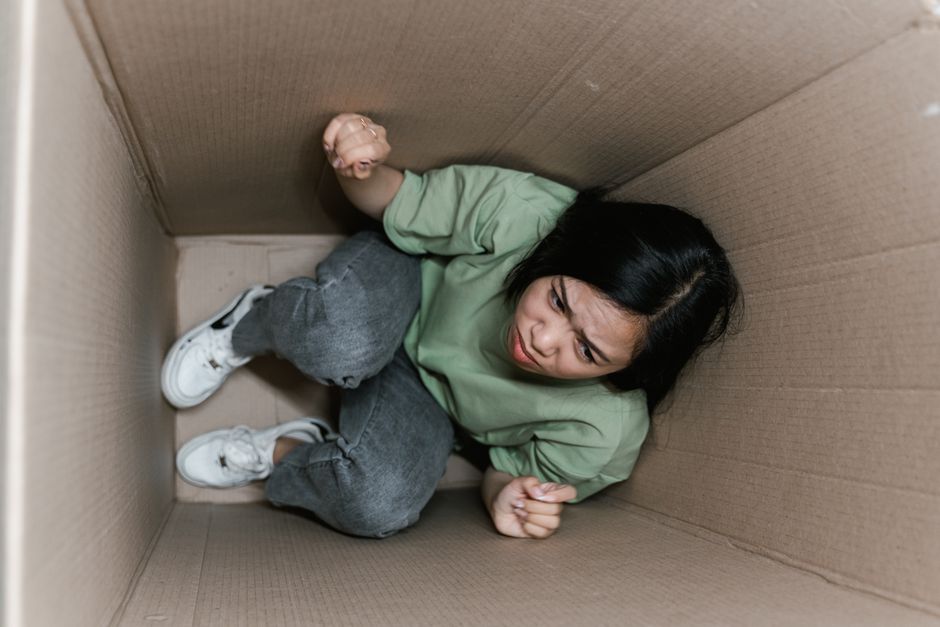
Fear is a normal alarm system. Anxiety is what happens when that alarm keeps ringing after the danger has passed. Learning how to fight fear and overcome anxiety starts with one fact: fear is a built-in survival response, not a character flaw. The body releases stress hormones, the heart speeds up, and attention narrows. That system is designed to protect you. Anxiety becomes a problem when the alarm fires too often, too intensely, or with no real threat present.
What Is the Difference Between Fear and Anxiety?
Fear is the response to a real, immediate threat. Anxiety is the anticipation of a threat that may never come.
If a car swerves toward you, fear floods your body and you jump out of the way. That reaction is fast and useful. Anxiety is different. It is what you feel the night before a job interview, or when a worrisome thought loops for hours with no danger in sight.
The two share the same physical machinery. The amygdala, a small structure deep in the brain, triggers the stress response. It signals the release of adrenaline and cortisol. Your heart rate climbs, breathing quickens, muscles tense, and digestion slows. This is the fight-or-flight response, and it is well documented in physiology.
In fear, this response ends when the threat ends. In anxiety, the response can stay switched on even when nothing is wrong. That is the core difference. One is a reaction to the present. The other is a reaction to a future that has not happened.
Anxiety itself is not a disorder. Everyone feels it sometimes. It only becomes a clinical concern when it is persistent, hard to control, and interferes with daily life. That distinction matters, because occasional anxiety does not require treatment, while an anxiety disorder usually does.
Why Does the Body React This Way?
The stress response evolved to keep humans alive. It is not a malfunction. It is a system doing its job, sometimes at the wrong time.
When the brain perceives danger, it does not wait for you to think it through. The amygdala reacts first, often before the thinking part of the brain, the prefrontal cortex, has caught up. That is why you can feel a jolt of fear before you understand why.
This fast pathway is useful in a true emergency. It becomes a problem when the brain misreads a safe situation as a threat. A racing heart before a meeting, a tight chest on a crowded train, a wave of dread with no clear cause. The body is responding as if there were danger, but there is none.
Over time, this can create a loop. You feel anxious, you notice the physical symptoms, and the symptoms themselves become frightening. The fear of the fear keeps the alarm ringing. Understanding this loop is one of the most useful things a person can do, because it explains why anxiety often feels like it is spiraling on its own.
How To Fight Fear And Overcome Anxiety: What Actually Helps?
The most reliable approaches combine calming the body in the moment with changing how you respond to anxious thoughts over time.
These strategies are well established. They are not quick fixes, and they do not work the same way for everyone. But they form the backbone of what clinicians recommend.
- Slow your breathing. Slow, steady breathing can calm the physical stress response. Focusing on a longer exhale than inhale is a common technique.
- Stay in the situation. When it is safe, remaining in a feared situation rather than escaping helps teach the brain that the danger was not real. Avoidance tends to make anxiety stronger over time.
- Challenge the thought. Asking whether a feared outcome is likely, and what evidence supports it, can loosen anxiety’s grip. This is a core part of cognitive behavioral therapy.
- Move your body. Regular physical activity is linked to lower anxiety in many studies. The effect is real, though it works best as a steady habit rather than a single burst.
- Limit alcohol and caffeine. Both can mimic or worsen anxiety symptoms in some people. Caffeine in particular can raise heart rate and trigger sensations that feel like anxiety.
- Protect your sleep. Poor sleep and anxiety feed each other. Consistent sleep habits support mood and stress regulation.
None of these is a cure on its own. They work best together, and for some people they are not enough. That is not a personal failure. It is information about how severe the anxiety is.



When Should You Seek Professional Help?
You should consider professional help when anxiety is persistent, hard to control, or getting in the way of work, relationships, or daily tasks.
Occasional anxiety does not need treatment. But there are clear signals that it is time to talk to a doctor or mental health professional:
- Anxiety most days for months, not just during stressful events
- Difficulty sleeping, concentrating, or functioning at work or school
- Avoiding normal activities because of fear
- Panic attacks, which are sudden surges of intense fear with strong physical symptoms
- Physical symptoms that concern you, such as chest pain or shortness of breath
Chest pain and shortness of breath deserve special attention. They can be signs of anxiety, but they can also signal a heart or lung problem. Do not assume anxiety is the cause. Get medical symptoms checked.
Effective treatments exist. Cognitive behavioral therapy is one of the most studied approaches for anxiety disorders, and it has strong evidence behind it. Certain medications are also used, and a doctor can explain the options, benefits, and risks. No single treatment works for everyone, and finding the right fit sometimes takes time.
If you ever have thoughts of harming yourself, reach out for help right away. In the US, you can call or text 988 to reach the Suicide and Crisis Lifeline.
Can Lifestyle Changes Reduce Anxiety?
Lifestyle habits can lower the background level of stress the body carries. They are not a substitute for treatment when anxiety is severe, but they can make a real difference.
Regular exercise is one of the better-supported habits. Studies have found that people who are physically active tend to report lower anxiety, though the size of the effect varies. Even walking counts.
Sleep matters more than many people realize. When sleep is short or broken, the brain’s ability to regulate emotion weakens, and anxiety often feels worse the next day.
Diet plays a supporting role. There is no single food that treats anxiety, and claims that a specific nutrient cures it are not supported by strong evidence. A balanced diet that supports steady blood sugar and overall health is a reasonable foundation.
Caffeine and alcohol are worth watching. Both can trigger or worsen symptoms in some people. Cutting back is a simple experiment that costs little and may help.
Social connection also matters. Isolation tends to feed anxiety, while regular contact with supportive people tends to ease it. This is not a cure, but it is a genuine factor in how people cope.
What Makes Anxiety Worse?
Certain habits and patterns reliably make anxiety harder to manage. Avoiding them is often as useful as adding new coping skills.
Avoidance is the biggest one. When you skip the situations that make you anxious, you get short-term relief and long-term reinforcement. The brain learns that the situation was dangerous, so the fear grows. Facing feared situations gradually, when it is safe to do so, tends to weaken anxiety over time.
Rumination is another. Replaying worries over and over feels like problem-solving, but it usually just deepens the anxiety. Learning to notice the loop and redirect attention is a skill that can be practiced.
Substances can also backfire. Alcohol may calm anxiety briefly, but it often worsens it later, and it can interfere with sleep. Caffeine can trigger physical symptoms that feel exactly like anxiety.
Finally, isolation and poor sleep habits tend to compound everything else. Anxiety rarely improves in a vacuum. The conditions around it matter.
Frequently Asked Questions
Can anxiety go away on its own?
Mild, situational anxiety often fades once the stressful event passes. Persistent anxiety that lasts for months or interferes with daily life usually needs treatment to improve.
Is anxiety a real medical condition?
Yes. Anxiety disorders are recognized medical conditions with defined diagnostic criteria. They are not a sign of weakness or a lack of willpower.
What is the fastest way to calm anxiety in the moment?
Slow, steady breathing with a longer exhale than inhale is a common way to calm the body’s stress response quickly. It eases physical symptoms but does not treat the underlying anxiety on its own.
Does exercise really help with anxiety?
Many studies link regular physical activity to lower anxiety, though the effect varies between people. It works best as a consistent habit alongside other strategies.
