
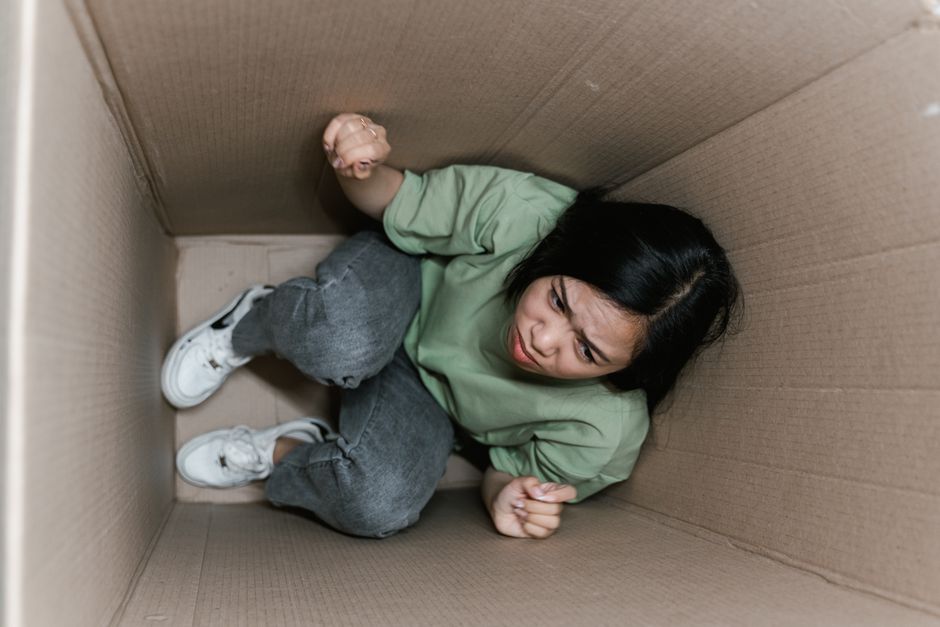
Social anxiety is more than just feeling shy before a big presentation. It is a persistent fear of being judged, embarrassed, or rejected in social situations. The good news is that social anxiety is highly treatable, and most people see meaningful improvement with the right approach. The most effective path forward combines structured therapy, gradual real-world practice, and consistent self-care strategies.
What Does Social Anxiety Actually Feel Like?
Social anxiety disorder involves intense fear in everyday situations like meeting new people, eating in public, or speaking up in a meeting. The fear is out of proportion to the actual threat. People often worry for days or weeks before an event, replay mistakes afterward, and avoid situations entirely when possible.
Physical symptoms are common. Racing heart, sweating, trembling, blushing, and nausea can all appear when facing a feared situation. These symptoms are the body’s fight-or-flight response kicking in, even when there is no real danger.
This is not a personality flaw or a sign of weakness. Social anxiety is a recognized medical condition that affects millions of people. It often begins in the teenage years and can persist into adulthood without treatment.
Why Do I Overcome Social Anxiety Better With Therapy Than Willpower?
Willpower alone rarely works because avoidance is the core problem. Every time you skip a social event or leave early, your brain learns that the situation was dangerous. This reinforces the anxiety cycle. Therapy breaks this cycle directly.
Cognitive behavioral therapy (CBT) is the most thoroughly studied treatment for social anxiety. Research consistently shows that CBT helps most people who complete it. The therapy has two main parts.
The first part addresses anxious thoughts. You learn to identify distorted thinking patterns like “everyone is staring at me” or “I will say something stupid.” Then you practice replacing those thoughts with more realistic ones.
The second part is exposure therapy. You gradually face feared situations in a structured way, starting with easier ones and building up. This teaches your brain that the feared outcome rarely happens. Over time, the anxiety drops.
Some studies suggest that exposure therapy works even better when you deliberately drop your safety behaviors. Safety behaviors are things you do to feel less anxious, like gripping a glass tightly, rehearsing sentences, or avoiding eye contact. Dropping them helps you learn that you can cope without those crutches.
Can Medication Help With Social Anxiety?
Yes, medication can be effective, especially when combined with therapy. Selective serotonin reuptake inhibitors (SSRIs) are the first-line medication treatment. These are the same class of drugs used for depression, but they also reduce anxiety symptoms.
Common SSRIs include sertraline, paroxetine, and escitalopram. They typically take several weeks to show full effect. Side effects can include nausea, sleep changes, and sexual dysfunction, though these often improve over time.
Another option is a beta-blocker like propranolol. These are sometimes used for performance anxiety specifically, such as public speaking. They block the physical symptoms of anxiety like shaking and a racing heart. They are not usually prescribed for general social anxiety.
Benzodiazepines are sometimes prescribed for short-term relief, but they carry risks of dependence and are not recommended as a long-term solution. Any medication decision should be made with a psychiatrist or primary care doctor who knows your full medical history.
Medication is not a cure. It reduces symptoms enough that therapy and exposure practice become more manageable. Most experts recommend combining medication with therapy rather than using medication alone.





What Daily Habits Help Me Overcome Social Anxiety?
Daily habits matter, but they work best alongside professional treatment. Several lifestyle factors influence anxiety levels across the board.
Sleep is foundational. Poor sleep makes emotional regulation harder and amplifies anxiety. Most adults need seven to nine hours per night. Consistent sleep schedules help more than occasional catch-up sleep on weekends.
Regular exercise has measurable anti-anxiety effects. Aerobic exercise like brisk walking, running, or cycling appears to be most effective. The exact mechanism is not fully understood, but exercise likely reduces stress hormones and increases feel-good brain chemicals.
Caffeine makes anxiety worse for many people. It mimics the physical symptoms of anxiety, including a racing heart and jitteriness. If you notice caffeine makes your social anxiety worse, consider reducing or eliminating it.
Alcohol is a trap. It may feel like it relaxes you in the moment, but it impairs judgment and can increase anxiety the next day. Using alcohol to get through social events reinforces the belief that you cannot cope without it.
How Do I Start Facing My Fears Gradually?
Gradual exposure is the most evidence-based way to reduce avoidance. The key word is gradual. Starting with your worst fear immediately can backfire and reinforce the anxiety.
Create a fear hierarchy. List social situations from least to most anxiety-provoking. A mild item might be making eye contact with a cashier. A moderate item might be asking a coworker a question. A severe item might be giving a toast at a wedding.
Work through the list one step at a time. Stay in each situation long enough for the anxiety to naturally decrease, which usually takes several minutes. Leaving too early teaches your brain that the situation was too dangerous to handle.
Repeat each step until the anxiety drops noticeably. This usually takes multiple attempts. The goal is not to feel zero anxiety. The goal is to feel the anxiety and function anyway.
Some people benefit from doing this with a therapist who can guide the process and help you process what happened. Others can make progress on their own using self-help books based on CBT principles. Both approaches have evidence behind them.
How Can I Overcome Social Anxiety in Specific Situations?
Different situations call for different strategies, but the underlying principles stay the same.
For conversations, shift your focus outward. Anxiety makes you hyperaware of your own thoughts and body sensations. Instead, focus on the other person. Ask questions, listen actively, and notice what they are saying rather than monitoring yourself.
For public speaking, preparation helps, but over-rehearsing can backfire. Practice your main points until they feel natural, then focus on the message rather than your performance. Remember that audiences generally want speakers to succeed and notice nervousness far less than speakers think.
For social events, set realistic goals. Instead of aiming to be the most talkative person in the room, aim to have one meaningful conversation or to stay for a set amount of time. Small achievable goals build confidence over time.
For eating or drinking in public, start small. Practice with a friend in a quiet restaurant before tackling a busy cafeteria. If your hands shake, try foods that do not require precise utensil use at first.
When Should I Seek Professional Help?
Seek professional help if social anxiety interferes with your work, relationships, or daily life. If you are avoiding important events, struggling at your job, or feeling isolated because of anxiety, that is a clear sign to get support.
Start with your primary care doctor. They can screen for anxiety and refer you to a mental health professional. Therapists who specialize in CBT or exposure therapy are ideal. Some offer online therapy, which research shows can be as effective as in-person treatment for many people.
If you have thoughts of harming yourself, seek help immediately. Contact a crisis line, go to an emergency room, or call 911. Suicidal thoughts are a medical emergency, and effective help exists.
Recovery takes time. Most people need several months of consistent treatment before they notice major changes. Some people need longer. Progress is rarely linear, and setbacks are a normal part of the process. The key is to keep going and to treat setbacks as learning opportunities rather than failures.
Frequently Asked Questions
How long does it take to overcome social anxiety?
Most people notice meaningful improvement within three to six months of consistent treatment. Full recovery varies widely depending on severity, treatment adherence, and individual factors.
Can I overcome social anxiety without therapy?
Some people improve with structured self-help programs based on CBT principles, but therapy is generally faster and more effective. If symptoms are severe or persistent, professional support is strongly recommended.
Is social anxiety a lifelong condition?
No, social anxiety is highly treatable and many people recover completely. Without treatment it often persists, but with therapy and practice most people see major lasting improvements.
Does social anxiety get worse with age?
Social anxiety often peaks in adolescence and young adulthood, then may decrease with age for some people. However, without treatment it can persist or worsen, especially if avoidance becomes a habit.
