
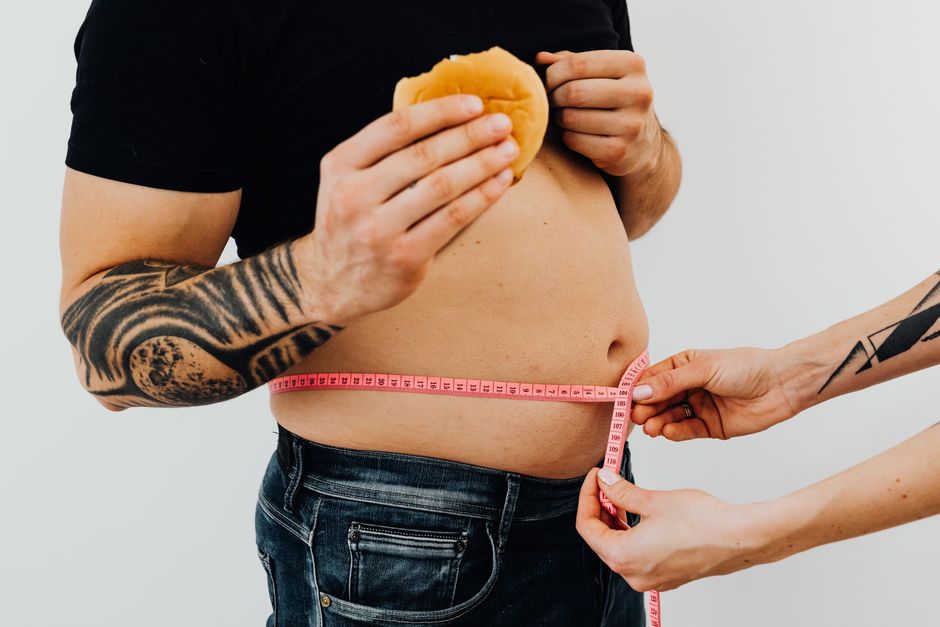
Belly fat is stubborn for a reason, and it isn’t lack of willpower. Fat stored around the abdomen behaves differently from fat on your hips or thighs. It responds to hormones, stress, sleep, and genetics in ways that make it harder to shift. The fastest honest answer is this: you cannot target belly fat with crunches or spot exercises. You reduce it by creating a calorie deficit, protecting muscle, managing stress and sleep, and being patient. Visceral fat — the deep fat around your organs — does respond to lifestyle changes, and often faster than subcutaneous fat.
Why Is Belly Fat Harder To Lose Than Other Fat?
Belly fat is not one thing. It is two distinct types of fat that behave differently.
Subcutaneous fat sits just under the skin. You can pinch it. It is the soft layer around your waist. Visceral fat lies deeper, packed around your liver, intestines, and other organs. You cannot pinch it. It is the more metabolically active and more health-relevant of the two.
Visceral fat is not inert storage. It releases inflammatory signals and free fatty acids directly into the portal vein, which feeds the liver. This is why excess visceral fat is linked to insulin resistance, elevated blood lipids, and higher cardiovascular risk. Research consistently shows these associations, independent of total body weight.
Here is the part many people miss: visceral fat is often more responsive to diet and exercise than subcutaneous fat. Studies using imaging to track fat loss have found that visceral fat decreases disproportionately during weight loss, even when total fat loss is modest. Subcutaneous belly fat — the kind you see and pinch — tends to be more stubborn, particularly in people who have lost and regained weight before.
Genetics also play a real role. Where your body preferentially stores fat is largely inherited. You can change how much fat you carry. You have far less control over where your body puts it first.
Can You Target Belly Fat With Exercise?
No. Spot reduction does not work. This is one of the most well-established findings in exercise science.
Doing hundreds of crunches strengthens abdominal muscles, but it does not burn fat from the abdomen specifically. The body mobilizes fat from stores across the whole body in response to a calorie deficit, not from the muscle you happen to be working. Studies that measured fat loss from trained versus untrained limbs during single-limb exercise found no preferential fat loss from the working limb.
What exercise does do is create the calorie deficit that drives overall fat loss, and it preserves muscle mass while you lose fat. That matters because muscle tissue burns more calories at rest than fat tissue. Losing muscle during a diet slows your metabolic rate and makes regain more likely.
Resistance training is particularly useful here. It helps preserve lean mass during a calorie deficit. Aerobic exercise increases energy expenditure and has been associated with reductions in visceral fat in multiple studies. Neither is magic. Both help.
How To Fast Burn Belly Fat: What Actually Works
There is no shortcut that bypasses a calorie deficit. Every effective approach works through the same mechanism: you take in fewer calories than you expend, and your body draws on stored fat for energy. The differences between approaches are about adherence, satiety, and preserving muscle.
What the evidence supports:
- A moderate calorie deficit. Aggressive crash dieting tends to backfire. It increases muscle loss, raises hunger hormones, and is harder to sustain. A deficit of roughly 300 to 500 calories per day is a common clinical starting point, though individual needs vary. No single deficit works for everyone.
- Adequate protein. Higher protein intake helps preserve muscle during weight loss and tends to increase satiety. General guidance for adults during weight loss often falls in the range of 1.2 to 1.6 grams per kilogram of body weight per day, though this should be individualized. People with kidney disease should consult a clinician before increasing protein.
- Resistance training. Two or more sessions per week helps maintain muscle mass while you lose fat.
- Regular aerobic activity. Brisk walking, cycling, swimming — the specific activity matters less than consistency. Some studies suggest aerobic exercise specifically reduces visceral fat, though the evidence is not uniform across all populations.
- Sleep. Short sleep is associated with higher hunger hormones and increased calorie intake. Studies have found that people who sleep less tend to eat more, often from higher-calorie foods. Seven to nine hours is the general recommendation for adults.
- Stress management. Chronic stress raises cortisol, which is associated with increased abdominal fat storage. The relationship is complex and not fully understood, but the association is consistent enough to take seriously.
What the evidence does not support: fat-burning pills, waist trainers, detox teas, and “belly blasting” devices. No clinical trial has confirmed that any of these produce meaningful fat loss. Some have caused harm.





Does Diet Or Exercise Matter More For Belly Fat?
Diet drives fat loss more than exercise does. This is not because exercise is unimportant — it is because it is much easier to eat 500 fewer calories than to burn 500 extra calories through activity.
A brisk hour-long walk burns roughly 250 to 350 calories for most adults, depending on body weight and pace. A single large muffin can contain more than that. This does not mean exercise is pointless. It means the calorie deficit is primarily built in the kitchen.
That said, exercise has benefits that diet alone does not provide. It preserves muscle, supports cardiovascular health, improves insulin sensitivity, and helps with mood and sleep. People who exercise during weight loss tend to keep more lean mass and are more likely to maintain their loss over time.
The most effective approach combines both. Neither needs to be extreme.
What About Intermittent Fasting And Keto For Belly Fat?
Both can work. Neither is superior to other approaches when calories are matched.
Intermittent fasting — whether time-restricted eating or alternate-day fasting — reduces the window in which you eat, which often leads to lower total calorie intake. Some studies suggest intermittent fasting may reduce visceral fat, but the evidence is not clearly stronger than for continuous calorie restriction. A review of the research found similar fat loss when total calories were equivalent.
Ketogenic diets reduce appetite for many people, which can make a calorie deficit easier to maintain. Some studies have found greater reductions in visceral fat on low-carbohydrate diets in the short term, but longer-term differences tend to narrow. The key variable remains total calorie intake and adherence.
The best approach is the one you can sustain. A diet that produces rapid results but leads to rebound eating is worse than a slower approach you can maintain for months.
How Long Does It Take To Lose Belly Fat?
Fat loss takes time. A realistic rate is roughly 0.5 to 1 kilogram (about 1 to 2 pounds) per week for most adults. Faster loss is possible, but it increases the risk of muscle loss and is harder to sustain.
Visible changes in belly fat typically take weeks to months, not days. Visceral fat may decrease earlier than subcutaneous fat, but you will not see that change in the mirror. Waist circumference and how your clothes fit are more reliable indicators than the scale alone, since the scale does not distinguish between fat, muscle, and water.
Plateaus are normal. They do not mean the approach has stopped working. They often reflect changes in water retention, metabolic adaptation, or simply the body’s natural resistance to continued loss. Adjustments to calorie intake or activity may be needed, but they should be modest.
Anyone with a medical condition, who is pregnant or breastfeeding, or who takes prescription medication should speak with a clinician before making significant dietary changes. No clinical guidelines currently exist for rapid weight loss in pregnancy or breastfeeding, and calorie restriction during these periods should be managed by a healthcare provider.
Does Sleep And Stress Really Affect Belly Fat?
Yes, and the effect is meaningful. Sleep and stress influence appetite hormones, food choices, and where the body stores fat.
Short sleep raises ghrelin, a hormone that increases hunger, and lowers leptin, a hormone that signals fullness. Studies have consistently found that people who sleep less eat more calories, often from foods higher in sugar and fat. Over time, this contributes to weight gain and abdominal fat accumulation.
Chronic stress raises cortisol. Cortisol promotes fat storage, particularly in the abdominal region, and increases appetite for high-calorie foods. The relationship between cortisol and belly fat is well documented in conditions like Cushing’s syndrome, where cortisol excess causes pronounced central obesity. In everyday stress, the effect is smaller but real.
Neither sleep nor stress management will burn belly fat on their own. But neglecting them makes everything else harder.
Frequently Asked Questions
Can you lose belly fat in a week?
No. Meaningful fat loss takes weeks to months, not days. Any rapid drop in weight in a week is mostly water and glycogen, not fat.
Do crunches burn belly fat?
No. Crunches strengthen abdominal muscles but do not reduce fat from the abdomen. Fat loss happens across the whole body through a calorie deficit.
What is the fastest way to reduce visceral fat?
A sustained calorie deficit combined with regular aerobic exercise and adequate sleep has the strongest evidence behind it. No single method is proven to be fastest for everyone.
Can stress cause belly fat?
Chronic stress is associated with increased abdominal fat storage, largely through cortisol. The effect is real but smaller than the effect of overall calorie intake.
