
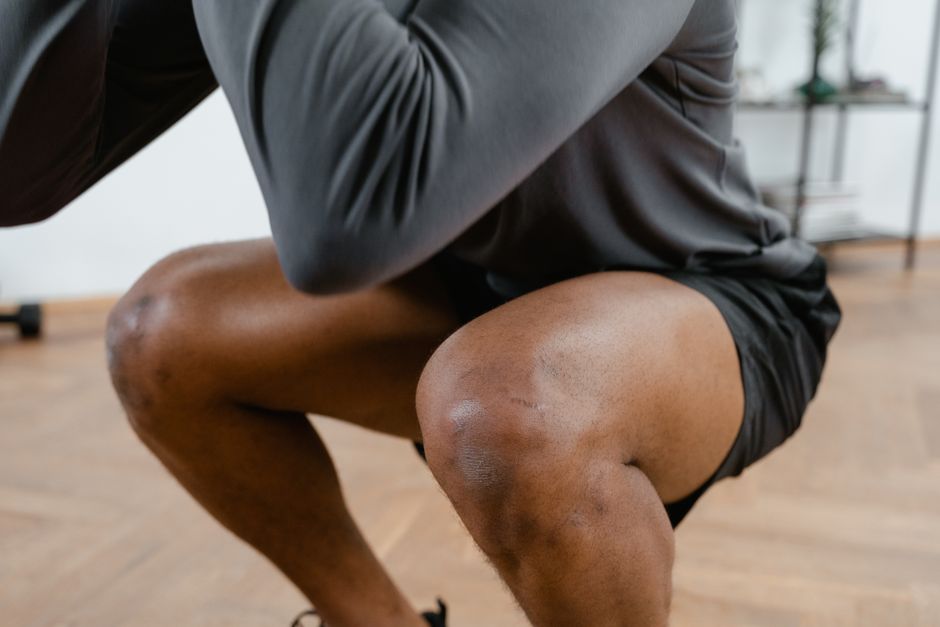
You do not need to run, jump, or squat deep to lose weight. People with knee pain lose weight every day using low-impact exercise, and the research on this is solid. The key is choosing movements that burn calories without loading the joint, then building strength around the knee so it tolerates more over time. Weight loss itself often helps knee pain, which creates a helpful cycle once you get it started.
How To Exercise With Bad Knees To Lose Weight
Start with low-impact cardio that keeps both feet on the ground or in the water. Walking on flat ground, cycling, swimming, and water aerobics all raise your heart rate without the repeated pounding that irritates a damaged knee.
Weight loss comes down to burning more calories than you take in. Exercise helps, but it works best alongside changes to what you eat. A common mistake is assuming exercise alone will do it. For most people, food changes drive the majority of weight loss, and exercise protects muscle and heart health while adding a modest burn.
The other half of the plan is strengthening the muscles around the knee. Strong quadriceps and hamstrings absorb force that would otherwise hit the joint. This is not just theory. Research consistently shows that structured strength training reduces knee pain and improves function in people with knee osteoarthritis.
Here is what a practical week can look like:
- Three to five days of low-impact cardio, 20 to 40 minutes each
- Two to three days of strength work for the legs, hips, and core
- One or two rest or gentle-movement days
You do not need to hit these numbers in week one. Start where your knee allows and add a little each week.
Which Cardio Is Safest for Painful Knees?
Water exercise is the gentlest option because buoyancy removes most of your body weight from the joint. Walking in chest-deep water gives you resistance and cardio with very little impact. Swimming and water aerobics are both widely recommended by clinicians for people with knee arthritis.
Stationary cycling is another strong choice. Set the seat high enough that your knee stays slightly bent at the bottom of the pedal stroke. A seat that is too low forces the knee into a deep bend under load, which tends to cause pain.
Walking is fine for many people, especially on flat, even surfaces. Hills and stairs load the knee more. If walking hurts, shorten the distance, slow down, or switch to water or cycling for a while.
Elliptical machines and rowing machines can work, but they are not right for everyone. Some people with knee pain tolerate them well and others do not. Trial and error is normal here.
What about running? Some people with mild knee issues can run without problems. But if running is what caused or worsened your pain, it is not the tool to use while you are trying to lose weight. There are lower-risk ways to burn the same calories.
Does Losing Weight Actually Help Knee Pain?
Yes, and this is one of the better-supported findings in this area. Excess body weight puts extra force through the knee with every step. Losing weight reduces that load.
Research on people with knee osteoarthritis has found that weight loss is associated with reduced pain and improved physical function. The effect tends to be larger when weight loss is combined with exercise than with either one alone. Some studies indicate that losing a meaningful amount of weight can reduce pain enough to make activity easier, which then supports more weight loss.
I want to be careful about specific numbers here. The exact amount of weight loss needed to produce a given reduction in pain varies between people and studies. What the evidence supports is the direction: less weight, less load, generally less pain. Your own response may differ.
One clarification worth making: weight loss does not reverse structural damage in the knee. Cartilage that is worn does not grow back from diet and exercise. What improves is usually pain, function, and how well you move. That distinction matters if you are expecting a cure.




What Strength Exercises Are Safe With Bad Knees?
Strength training is where a lot of people accidentally make things worse. The problem is usually not the exercise itself but the load, the range of motion, or progressing too fast.
Start with exercises that keep the knee in a comfortable range and do not require deep bending under weight. Good starting points include:
- Straight-leg raises, lying on your back
- Glute bridges
- Sit-to-stand from a chair, using your arms as needed
- Wall sits held for short periods, only to the depth that feels okay
- Step-ups onto a low step
These build the quadriceps, glutes, and hamstrings without forcing the knee into a deep, loaded bend. As strength improves, you can add resistance or range slowly.
Two rules matter more than the specific exercise. First, some muscle soreness after training is normal, but sharp pain during the movement is not. Second, progress by small increments. Adding weight or depth too quickly is a common cause of flare-ups.
If you have access to a physical therapist, a short course of guided strengthening is one of the most reliable ways to build a program that fits your knee. This is standard clinical practice for knee osteoarthritis, and it is well supported.
How Do You Manage Pain So You Can Keep Going?
Flare-ups will happen. How you handle them determines whether you keep exercising or quit.
On a bad day, reduce rather than stop. Cut the duration, lower the resistance, or switch to water exercise. Complete rest for more than a day or two tends to make knees stiffer and weaker, which makes the next session harder.
Ice after activity can help calm a sore knee. Heat before activity can help loosen stiff muscles. Both are common practice and generally safe, though the evidence for either is not as strong as people assume. Use what helps you move.
If your knee is swollen, hot, locking, or giving way, that is a reason to see a doctor rather than push through. Those signs point to something that may need evaluation.
Over-the-counter pain relievers are an option for some people, but check with a doctor or pharmacist first, especially if you take other medications or have heart, kidney, or stomach conditions. This is not a decision to make on your own if you have any of those.
How Much Exercise Do You Actually Need?
Federal physical activity guidelines for adults call for at least 150 minutes of moderate-intensity aerobic activity per week, plus muscle-strengthening activity on two or more days per week. That is the target for general health, not a starting point.
If you are starting from a painful knee and low fitness, 150 minutes may be too much at first. Begin with what you can tolerate, even if that is 10 minutes three times a week, and add gradually. The guidelines are a destination, not a gate you have to pass on day one.
For weight loss specifically, exercise alone usually produces modest results. Combining activity with a reduced-calorie diet is what moves the needle. This is well established across weight-loss research.
When Should You See a Doctor First?
See a doctor before starting an exercise program if you have significant knee swelling, a knee that locks or gives way, pain that wakes you at night, or a recent injury. These can signal problems that need treatment before exercise.
You should also get medical clearance if you have heart disease, uncontrolled blood pressure, diabetes, or any condition that affects how much you can safely exert yourself. This is standard advice, not a formality.
For most people with ordinary knee pain from wear and tear, low-impact exercise is safe and encouraged. A doctor or physical therapist can confirm what applies to you.
Frequently Asked Questions
Can I lose weight with bad knees without running?
Yes. Walking, cycling, swimming, and water aerobics all burn calories without the impact of running. Pairing them with a reduced-calorie diet is what drives most of the weight loss.
What is the best exercise for knee pain and weight loss?
Water exercise and stationary cycling are the safest for most people with knee pain. Both provide cardio with low joint impact, and both are widely recommended by clinicians for knee arthritis.
Will losing weight stop my knee pain?
Weight loss is associated with reduced knee pain and better function in people with knee osteoarthritis, especially when combined with exercise. It does not repair cartilage damage, so it may reduce pain without fully resolving it.
Should I exercise if my knee hurts?
Mild soreness during activity is usually fine, but sharp pain is a signal to stop and adjust. If your knee is swollen, locking, or giving way, see a doctor before continuing.
