
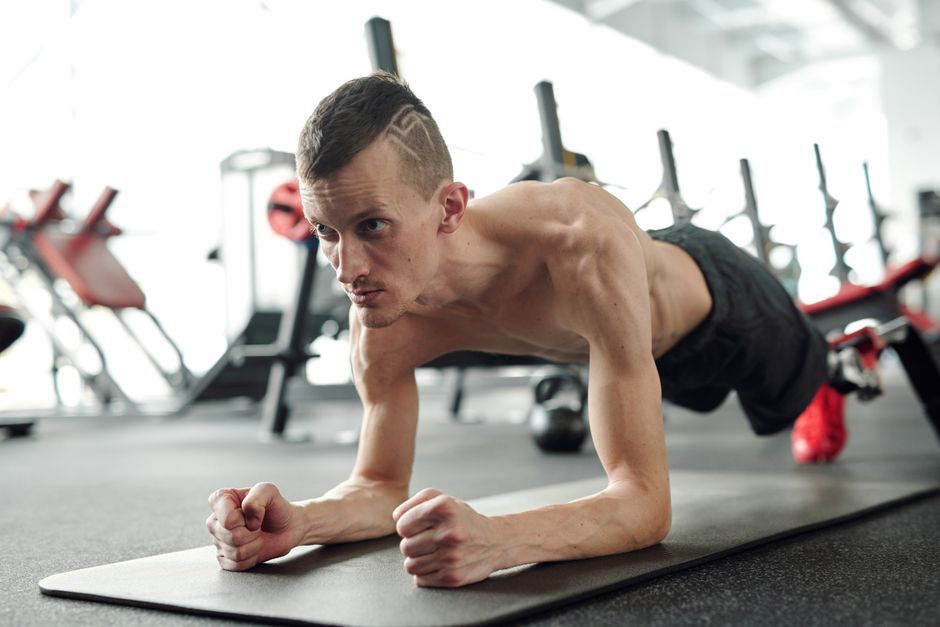
The S plank is a side plank variation that forms an S-shape with your body, challenging your balance and core stability far more than a standard plank. To perform it, you lie on your side, lift your hips off the floor, and extend your top arm overhead while raising your top leg, creating the S curve. This move targets your obliques, glutes, and shoulders, and it requires deliberate control rather than speed to be done correctly.
What Is an S Plank and What Muscles Does It Work?
The S plank is exactly what it sounds like: your body traces the shape of the letter S. Unlike a straight side plank, your torso and legs bend at specific points to create the curve. This changes where the tension sits and forces your muscles to work in a less stable position.
The primary muscles involved are the obliques on the side facing the floor. Your gluteus medius on the top leg works hard to keep the leg elevated. The deep core stabilizers, including the transverse abdominis, fire constantly to keep your spine from rolling forward or backward. Your shoulder stabilizers and the muscles along your spine also engage to hold the position.
Because the S shape puts your joints in a non-linear position, your body must constantly adjust. This makes it a more advanced exercise than a standard side plank. If you have not mastered a standard side plank for at least 30 seconds on each side, you should build that foundation first.
How To Do S Plank: Step-by-Step Instructions
Find a flat, comfortable surface. A yoga mat works well. Start by lying on your right side with your legs stacked. Prop yourself up on your right forearm with your elbow directly under your shoulder. Your forearm should point forward, and your hand can be flat or in a fist.
- Lift your hips off the floor into a standard side plank position. Keep your body in a straight line from head to feet.
- Raise your left leg as high as you comfortably can without tipping your torso forward. Your leg stays straight.
- Reach your left arm straight up toward the ceiling, then arc it over your head toward the floor behind you. Your palm faces down.
- Allow your torso to bend slightly at the waist so your body forms a gentle S curve from your head to your raised foot.
- Hold this position for 10 to 20 seconds. Lower your hips and leg with control, then switch sides.
The key is the shape. If your body looks like a straight line with a leg in the air, you are doing a standard side plank with a leg raise, not an S plank. The curve in your torso is what defines the move.
Common Mistakes and How To Fix Them
Most people make the same few errors when first attempting the S plank. The most common is letting the hips drop. This removes the tension from your obliques and puts strain on your lower back. Keep your hips lifted so your body maintains its curve without sagging.
Another frequent mistake is rushing the setup. The S plank is not a dynamic movement. If you fling your leg up and swing your arm over quickly, you lose the muscle engagement. Move slowly and place each limb deliberately.
Holding your breath is also common. People tense up and forget to breathe. This raises your blood pressure and makes the hold feel harder than it is. Breathe steadily and rhythmically throughout the hold.
Finally, do not let your top shoulder roll forward. Keep both shoulders stacked and open. If your top shoulder collapses toward the floor, you lose the stability work in your upper body and put unnecessary stress on your neck.



How Long Should You Hold an S Plank?
There is no official standard for S plank hold times because it is a relatively new variation without extensive research behind it. General plank research shows that holding a standard plank for longer than 60 seconds offers diminishing returns for most people. The same logic applies here.
For most exercisers, holding the S plank for 15 to 30 seconds per side is a solid target. If you can hold it for 30 seconds with perfect form, you are getting a strong training effect. Going beyond 45 seconds usually means your form is breaking down, even if you do not feel it yet.
Quality beats duration. A 15-second hold with a perfect S shape trains your core more effectively than a 40-second hold with sagging hips and a collapsed shoulder. If your form starts to slip, end the set.
How To Progress the S Plank Safely
Once you can hold the S plank for 30 seconds with good form, you have options to make it harder. You do not need to hold it longer. Instead, add resistance or instability.
You can place a light dumbbell on your top hip while holding the position. Start with a weight you can control for 10 to 15 seconds. Do not use heavy weight here. The goal is stability, not maximum load.
Another progression is lifting your bottom knee slightly off the floor while maintaining the S shape. This shifts more weight onto your forearm and increases the demand on your shoulder stabilizers. This is significantly harder than it sounds and should only be attempted after you have mastered the basic version.
You can also perform the S plank with your bottom arm fully extended instead of on your forearm. This increases the lever arm and makes the exercise harder on your shoulder and core. Only try this if you have no shoulder issues and can keep your wrist and elbow healthy in this position.
Who Should Avoid the S Plank?
The S plank places significant rotational stress on the spine and weight on the shoulder joint. People with current shoulder pain, especially rotator cuff issues, should avoid this exercise. The extended arm position and the need to stabilize against gravity can aggravate existing shoulder problems.
People with low back pain should approach this exercise with caution. The S curve requires spinal flexion and lateral bending simultaneously. If you have a herniated disc or nerve-related back pain, this position may worsen your symptoms. A standard side plank or a bird dog exercise is a safer alternative for building core strength.
Pregnant women should not perform the S plank, particularly in the second and third trimesters. The combination of lying on the side with spinal rotation and balance demands is not recommended. Safer core exercises during pregnancy include pelvic tilts and seated core work. Always check with your healthcare provider before starting any new exercise routine during pregnancy.
If you feel sharp pain anywhere during the S plank, stop immediately. Muscle fatigue and a burning sensation are normal. Sharp or shooting pain is not.
How Does the S Plank Compare to Other Core Exercises?
The S plank is not a replacement for the standard plank. It is an addition. The standard plank trains endurance and isometric strength in a straight line. The S plank adds a balance and coordination challenge that the standard version does not provide.
Compared to the side plank, the S plank demands more from your glute medius because the top leg is elevated and held in space. The side plank keeps both legs stacked on the floor. The S plank also requires more shoulder stability because your top arm is extended overhead rather than resting on your hip.
Exercises like the dead bug and bird dog train core stability with movement. The S plank is isometric, meaning you hold still. These different types of core training complement each other. A well-rounded core routine includes both held positions and moving exercises.
Frequently Asked Questions
Is the S plank harder than a regular side plank?
Yes, the S plank is harder because the S shape reduces your base of support and adds balance demands. Your muscles must work harder to prevent your body from rolling or collapsing.
How many S planks should I do per workout?
Start with 2 to 3 sets per side, holding each for 10 to 20 seconds. Increase the hold time or add sets only when your form remains perfect for the entire duration.
Can the S plank help with lower back pain?
No clinical evidence confirms that the S plank helps with lower back pain, and the spinal rotation involved may worsen some conditions. If you have back pain, use a standard side plank or bird dog exercise instead and consult a physical therapist.
What is the difference between an S plank and a side plank?
A side plank keeps your body in a straight line from head to feet, while an S plank bends your torso and lifts your top leg to create a curve. The S plank requires more balance, shoulder stability, and glute strength.
