

Describing a rash on a physical exam is a skill that relies on a consistent vocabulary for shape, color, texture, and distribution. You start by naming the primary lesion type, like a macule, papule, or plaque, then add modifiers for color, border, and scale. The location on the body and the pattern of spread complete the picture. This structured approach ensures any clinician reading your notes sees the same rash you do.
What Is the First Step in Describing a Rash?
The first step is always identifying the primary lesion. This is the basic building block of the rash. You look at the earliest spots or the most common ones. Is it flat or raised? If it is flat and less than one centimeter, it is a macule. If it is raised and small, it is a papule. Larger raised areas are plaques. Fluid-filled bumps are vesicles or bullae depending on size.
Many descriptions fail because the writer jumps to color or shape without naming the lesion type first. A clinician reading “red spots on the arms” has no idea if those spots are flat or raised. That changes the list of possible causes entirely. Start with the lesion. Everything else comes after.
Do not confuse primary lesions with secondary changes like crusting or scaling. Those come later in the description. The primary lesion is the original spot. Secondary changes happen after scratching or healing.
How Do You Describe the Shape and Border of a Rash?
Shape and border tell you a lot about what is happening under the skin. Round or oval shapes are common. Annular means ring-shaped with a clear center. Target or iris lesions have concentric rings like a bullseye. Serpiginous means snake-like and is a classic sign of certain parasitic infections.
Borders matter just as much. Well-defined borders mean you can clearly see where the rash ends and normal skin begins. Ill-defined or blurred borders suggest inflammation spreading into surrounding tissue. Active borders with a raised edge and a clearing center are typical of fungal infections like ringworm.
One non-obvious point: the border description is often more helpful than the shape for narrowing down diagnoses. A well-defined border on a red, scaly patch on the elbow strongly suggests psoriasis. An ill-defined border on the same spot suggests eczema. The shape alone would not tell you that.
How To Describe a Rash on Physical Exam: Color and Distribution
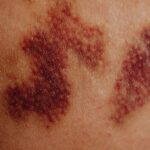
Color is not just “red” or “pink.” You need to be specific. Erythematous means red from blood vessel dilation. Purpuric means purple or red that does not blanch when pressed, which points to bleeding under the skin. Violaceous means a deep purple color often seen in lichen planus. Hyperpigmented or hypopigmented describes darker or lighter patches.
Distribution is where the rash lives on the body. Symmetrical means both sides look the same. Asymmetrical means one side only. Acral means on the hands and feet. Flexural means in the elbow or knee creases. Extensor means on the outer elbows or knees. Dermatomal follows a nerve pathway, which is classic for shingles.
A complete description always includes both color and distribution together. For example: “Erythematous papules on the flexural surfaces of both arms” is far more useful than “red bumps on the arms.”




What Does the Texture and Surface Tell You?
Texture is often overlooked but it provides some of the most specific clues. Run your fingers over the rash if safe to do so. Is it smooth or rough? Is there scale that flakes off? Is the scale silvery like in psoriasis or greasy like in seborrheic dermatitis?
Surface changes include crusting, oozing, fissures, and excoriation from scratching. Lichenification means the skin has thickened from chronic rubbing, giving it a leathery look. Atrophy means the skin looks thin and papery.
One common mistake is describing texture only in subjective terms like “looks dry.” Dry is not a precise clinical term. Instead, say “fine white scale on an erythematous base” or “hyperkeratotic plaques with deep fissures.” That paints an accurate picture.
How Do You Document the Rash in Medical Notes?
Documentation follows a standard order so anyone reading the note can find the information quickly. The typical format is: location, distribution, primary lesion, secondary changes, color, shape, border, and texture. You can write it in paragraph form or use a bulleted list in the physical exam section.
Here is a comparison of a weak note versus a strong note:
| Weak Description | Strong Description |
|---|---|
| Red rash on legs, looks itchy | Bilateral lower legs: numerous erythematous papules with excoriation, well-defined borders, no scale. Distribution is symmetrical and spares the feet. |
| Ringworm on arm | Right forearm: single annular plaque with raised, scaly active border and central clearing. Erythematous with fine white scale. 3 cm in diameter. |
The strong version uses precise terms for every feature. It does not guess at the diagnosis. It describes what is seen and lets the diagnosis follow from the description. That is the whole point of describing a rash on physical exam.
What Are Common Mistakes When Describing a Rash?
The most common mistake is using a diagnosis as a description. Writing “eczematous rash” tells the reader you already decided it is eczema. But you may be wrong. Describe the features and let the diagnosis come later. Write “erythematous papules with scale on flexural surfaces” instead.
Another mistake is missing the secondary changes. A rash that has been scratched for days will look different from the original spots. You must describe both the primary lesion and the secondary changes. Otherwise the reader cannot tell if the crusting was always there or came from scratching.
Missing the distribution pattern is also common. A rash on the trunk that spares the face is different from one that covers everything. Photodistribution means it appears on sun-exposed areas. Intertriginous means in skin folds. These patterns are powerful clues that many descriptions skip.
Here are key things to include every time:
- Primary lesion type (macule, papule, plaque, vesicle, etc.)
- Color and whether it blanches
- Border definition (well-defined or ill-defined)
- Shape (round, annular, target, etc.)
- Texture and surface changes (scale, crust, lichenification)
- Distribution and symmetry
Frequently Asked Questions
Frequently Asked Questions
What is the most important feature to describe in a rash?
The primary lesion type is the most important feature because it determines the category of rash you are looking at.
How do you describe a rash that changes over time?
Document the current features and note any changes from previous exams, such as new lesions, color shifts, or spreading patterns.
What does it mean if a rash blanches when pressed?
Blanching means the redness temporarily fades under pressure, which usually indicates the color comes from dilated blood vessels rather than bleeding under the skin.
Should I use medical terms or plain language in notes?
Use standard medical terminology for accuracy but include plain language in parentheses if needed for clarity or patient communication.
