
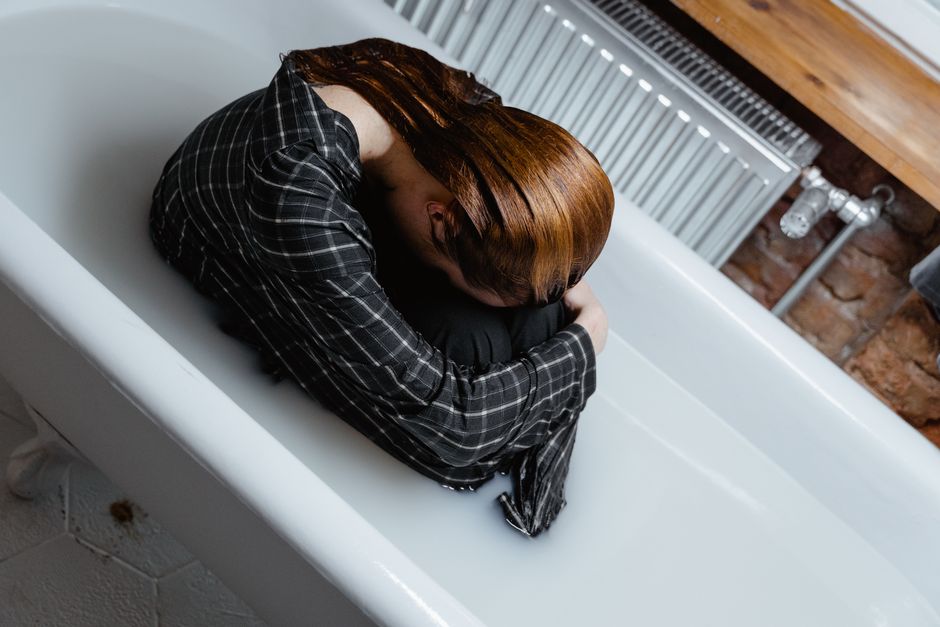
Anxiety often gets louder when you are by yourself. The quiet removes distractions, so your thoughts have more room to spiral. The good news is that you do not need another person in the room to calm your nervous system down. You can use your own body, your breathing, and a few simple habits to bring the feeling back to a manageable level. This guide walks through practical steps you can start using today, plus when it makes sense to reach out for professional help.
Why Does Anxiety Feel Worse When You Are Alone?
Being alone does not create anxiety, but it can remove the things that usually keep it in the background. When you are around other people, your attention has somewhere to go. Alone, that buffer is gone.
There is a physiological reason for this too. Anxiety triggers the body’s stress response, sometimes called fight-or-flight. Your heart rate climbs, breathing gets shallow, and muscles tense. This system evolved to protect you from danger. It does not distinguish well between a real threat and a worried thought.
Without another person to talk to or a task to focus on, the mind tends to fill the space with “what if” thinking. That loop feeds the physical symptoms, and the physical symptoms feed the loop. Recognizing this cycle is the first step to interrupting it.
It also helps to know that being alone is not the same as being lonely. Some people feel calm alone. Others feel anxious the moment the door closes. Both are normal responses, and both can be managed.
What Is the Fastest Way to Calm Anxiety When You Are Alone?
Slow, deliberate breathing is the fastest tool you have, because it works directly on the nervous system. When you breathe out longer than you breathe in, you activate the parasympathetic branch of the nervous system, which is the part responsible for calming you down.
Try this pattern:
- Breathe in through your nose for a count of four.
- Hold gently for a count of four.
- Breathe out slowly through your mouth for a count of six.
- Repeat for about one to two minutes.
If counting feels like too much, simply make your exhale longer than your inhale. That alone can help. You are not trying to force relaxation. You are giving your body a signal that the emergency is over.
One detail people often miss: the exhale is the active part. A long, slow breath out does more to settle the body than a deep breath in. If you only remember one thing, remember to breathe out slowly.
How Do You Deal with Anxiety When Alone at Night?
Nighttime anxiety is common because the day’s distractions are gone and you are tired, which makes thoughts harder to manage. Lying in the dark with nothing to do gives worry a clear runway.
A few approaches tend to help:
- Get out of bed if you are wide awake and anxious. Staying there while your mind races can train your brain to link the bed with worry.
- Write down what is on your mind. Putting a worry on paper can reduce how often it loops back.
- Keep the room cool and dim. Bright light, including phone screens, can signal your body to stay alert.
- Avoid caffeine in the afternoon and evening if you are prone to nighttime anxiety.
If you wake in the middle of the night with your heart pounding, remind yourself that this is a stress response, not a sign that something is wrong with your heart. That reframe alone can lower the intensity.
If nighttime anxiety happens most nights for weeks and starts to affect your sleep and daily life, that is a good reason to talk to a doctor or mental health professional. Persistent sleep disruption is worth taking seriously.





What Can You Do in the Moment When Panic Starts to Build?
When anxiety spikes, your thinking brain gets partly offline. That is why logic alone often does not work in the moment. Grounding techniques work better because they use your senses to pull attention back to the present.
A common method is the 5-4-3-2-1 technique:
- Notice five things you can see.
- Notice four things you can touch.
- Notice three things you can hear.
- Notice two things you can smell.
- Notice one thing you can taste.
This is not a cure. It is a way to interrupt the spiral long enough for your body to settle. Some people find it works well. Others find it does little. If it does not help you, that does not mean you are doing it wrong — it means you may need a different tool.
Other options include holding something cold, like an ice cube, or pressing your feet firmly into the floor and noticing the pressure. These give your nervous system a concrete sensation to focus on instead of the anxious thought.
Which Daily Habits Reduce Anxiety Over Time?
In-the-moment tools help you get through a spike. Daily habits help lower how often those spikes happen. These two work together.
Movement is one of the most reliable. Regular physical activity is associated with lower anxiety in many studies, though the exact size of the effect varies. You do not need intense exercise. A daily walk counts.
Sleep matters too. Ongoing sleep problems are closely linked with anxiety, and the relationship runs both ways. Protecting a consistent sleep schedule is one of the most useful things you can do.
Limiting alcohol and caffeine can help as well. Both can mimic or worsen anxiety symptoms in some people, especially at higher amounts.
It also helps to have a plan for alone time rather than leaving it open. A loose structure — a show, a hobby, a call with a friend — gives your attention somewhere to land.
When Should You Get Professional Help for Anxiety?
Self-help steps are useful, but they are not a substitute for treatment when anxiety is severe or lasting. Knowing when to reach out matters.
Consider talking to a doctor or mental health professional if:
- Anxiety is interfering with work, relationships, or daily tasks.
- You are avoiding things you used to do.
- Symptoms have lasted for weeks or longer.
- You are having panic attacks.
- You are using alcohol or other substances to cope.
Effective treatments exist. Therapy approaches such as cognitive behavioral therapy have strong evidence for anxiety disorders, and medications are also used in many cases. A clinician can help you figure out what fits your situation.
If you ever have thoughts of harming yourself, reach out right away. In the US, you can call or text 988 to reach the Suicide and Crisis Lifeline. This is available 24 hours a day.
Getting help is not a sign that self-help failed. It is simply the next step when the tools you have are not enough on their own.
Frequently Asked Questions
Can anxiety go away on its own?
Mild, short-term anxiety often eases on its own, especially when it is tied to a specific stressor. Anxiety that lasts for weeks or interferes with daily life is less likely to resolve without support, so it is worth talking to a professional.
What is the best breathing technique for anxiety?
Slow breathing where the exhale is longer than the inhale is the most widely recommended approach. A common pattern is breathing in for four counts and out for six, repeated for one to two minutes.
Is it normal to feel anxious when home alone?
Yes, it is common, especially if you are already prone to anxiety or if being alone gives your thoughts more room. If it happens often or feels overwhelming, it may be worth discussing with a doctor or therapist.
Does exercise really help with anxiety?
Regular physical activity is linked with lower anxiety in many studies, though the effect varies from person to person. Even a daily walk can be a useful part of a broader plan.
