
If your ears feel stuffed, the fastest and safest relief depends on the cause. For pressure from altitude changes or congestion, simple techniques like swallowing, yawning, or the Valsalva maneuver usually open the eustachian tubes within seconds. For blocked ears from earwax, use over‑the‑counter softening drops or gentle irrigation — never insert cotton swabs or objects into the ear canal. If symptoms persist beyond two to three days, or if you have pain, fever, or hearing loss, see a doctor to rule out infection or other problems. Do not try to force the ears open with violent actions; safe methods are effective when used correctly.
What causes ears to feel stuffed?
Stuffed ears happen when the eustachian tube — the small channel connecting your middle ear to the back of your nose and throat — becomes blocked or does not open properly. The tube normally equalizes air pressure inside the ear with outside pressure. When it fails, the eardrum cannot move freely, creating a sensation of fullness, muffled hearing, or even mild pain.
Common causes include:
- Eustachian tube dysfunction — often triggered by colds, flu, sinus infections, or allergies. Swelling of the nasal lining and mucus can block the tube.
- Altitude changes — during takeoff and landing in an airplane, driving in mountains, or using an elevator in a tall building. Rapid pressure changes overwhelm the tube’s ability to equalize.
- Earwax (cerumen) buildup — wax hardens or accumulates deep in the ear canal, physically blocking sound. This is one of the most common reversible causes of muffled hearing.
- Middle ear infection (otitis media) — fluid or pus collects behind the eardrum, often with pain and fever.
- Swimmer’s ear (otitis externa) — infection in the outer ear canal, causing swelling and discharge.
- Rare causes — patulous eustachian tube (the tube stays open when it shouldn’t), tumors, or temporomandibular joint (TMJ) problems. These need medical evaluation.
Knowing the cause matters because the right treatment for a pressure block is different from the right treatment for wax or infection.
How To Clear Stuffed Ears Fast And Safely?
The fastest method depends on whether the blockage is pressure‑related or wax‑related. For pressure, equalization techniques work within seconds. For wax, softening drops take 15–30 minutes. For congestion, decongestants may take 30–60 minutes. Never force anything into your ear.
If your ears feel stuffed due to pressure changes or congestion:
- Swallow or yawn — repeatedly. This activates muscles that open the eustachian tube. Chewing gum or sucking on hard candy can also help.
- Valsalva maneuver — pinch your nostrils shut, close your mouth, and gently blow as if trying to exhale through your nose. You should hear or feel a pop in your ears. Do not blow too hard — force can damage the eardrum or inner ear. Stop if you feel pain. If this does not work after two gentle attempts, stop and try other methods.
- Toynbee maneuver — pinch your nose and swallow. This is safer than Valsalva for some people because it creates less pressure.
- Warm compress — place a warm, damp cloth over the affected ear for 5–10 minutes. The warmth may help open the eustachian tube and ease discomfort.
- Decongestants — oral decongestants (pseudoephedrine) or nasal sprays (oxymetazoline) can shrink swollen nasal tissue and help the eustachian tube open. Use nasal sprays for no more than three days to avoid rebound congestion. Oral decongestants are not recommended for people with high blood pressure or heart conditions without consulting a doctor.
- Steam — inhaling steam from a bowl of hot water (carefully) or a hot shower can thin mucus and reduce swelling.
If your ears feel stuffed due to earwax:
- Over‑the‑counter ear drops — products containing carbamide peroxide (e.g., Debrox) soften wax. Place 5–10 drops in the affected ear, wait 15–30 minutes, then tilt your head to let the wax and liquid drain out. Do not use if you suspect a perforated eardrum or if you have ear pain, discharge, or a history of ear surgery.
- Mineral oil or baby oil — 2–3 drops can soften wax if commercial drops are not available. This is slower than carbamide peroxide.
- Gentle irrigation — use a bulb syringe filled with warm (not hot) water. After softening drops, gently flush the ear canal while tilting your head. Never use high‑pressure devices such as jet irrigators intended for teeth. If water does not drain out or you feel pain, stop and see a doctor.
- Hydrogen peroxide (3% solution) — some people use it diluted with equal parts water. It can bubble and loosen wax. However, it can be irritating to the ear canal skin, especially if used repeatedly. Limit to one or two uses. If you have a perforated eardrum, do not use it.
Important safety note: Never use cotton swabs, bobby pins, keys, or any object to clean your ear. This pushes wax deeper and can injure the eardrum or ear canal.
What should I avoid when my ears are stuffed?
Many things people try for stuffed ears can actually make the problem worse or cause injury. Avoid these:
- Cotton swabs (Q‑tips) — they push wax deeper, making impaction more likely. They can also scratch the ear canal and lead to infection.
- Forceful Valsalva maneuvers — blowing too hard can rupture the eardrum or cause a perilymph fistula (a leak of inner ear fluid). If you feel pain or hear a pop that does not relieve pressure, stop immediately.
- Ear candles — there is no evidence they work, and they can cause burns, wax blockage, and eardrum perforation. The FDA has warned against them.
- Nasal irrigation — if you have a perforated eardrum, saline rinses can introduce infection into the middle ear. Only use neti pots or squeeze bottles if you are certain your eardrum is intact and you are using sterile or distilled water.
- Lying flat — if the cause is congestion, lying down can worsen the sensation. Sleeping with your head elevated may help.





When should I see a doctor for stuffed ears?
Most stuffed ears resolve on their own or with home care within a few days. But some situations require professional evaluation:
- The feeling lasts longer than 2–3 days without improvement
- You have severe ear pain, especially if it comes on suddenly
- You have fever, dizziness, nausea, or a spinning sensation (vertigo)
- You notice fluid or pus draining from the ear
- You have sudden hearing loss in one ear
- You have a history of ear surgery (tympanoplasty, mastoidectomy, etc.) or a known perforated eardrum
- You have had a head injury
- You are immunocompromised (e.g., from chemotherapy, diabetes, HIV)
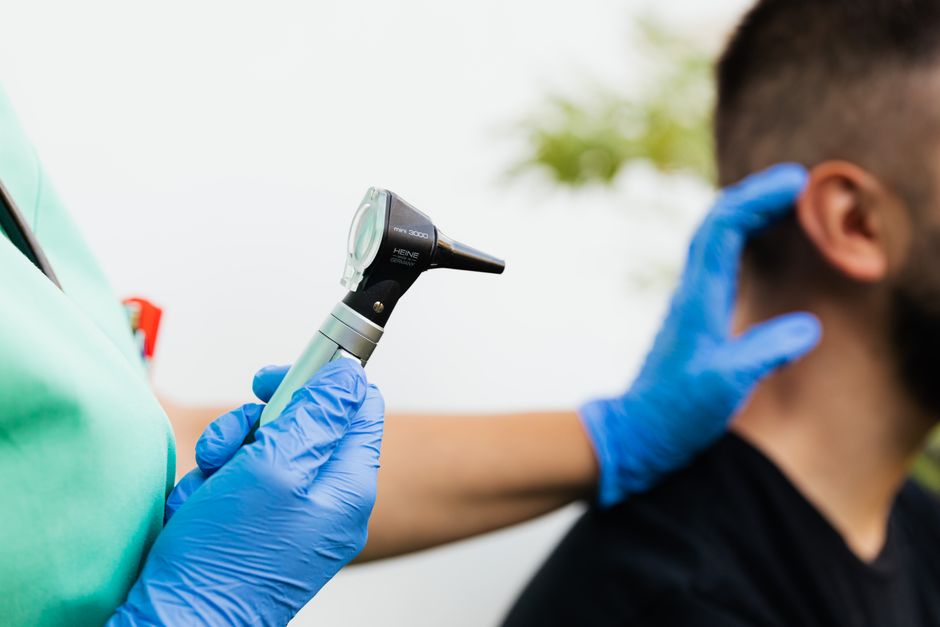
A healthcare provider can look into your ear with an otoscope to see if wax, fluid, or infection is present. They may also perform a tympanogram to check how well your eardrum moves. Treatment will depend on the underlying cause and may include antibiotics for infection, wax removal by suction or curette, or referral to an ear, nose, and throat (ENT) specialist.
Are there treatments for chronic eustachian tube dysfunction?
Some people experience repeated or ongoing problems with eustachian tube function, especially those with allergies, chronic sinusitis, or anatomical issues. Home strategies like nasal steroid sprays (e.g., fluticasone) — not just during acute blockage but used daily for several weeks — may help reduce inflammation and improve tube opening. Some clinicians recommend auto‑inflation devices (like the Otovent balloon) that you blow into through your nose to open the tubes. Research is limited but some studies suggest benefit in children and adults.
For persistent cases not responding to medical treatment, ENT specialists may consider:
- Myringotomy — a small incision in the eardrum to drain fluid and relieve pressure. The hole usually heals in days to weeks.
- Ear tube insertion (tympanostomy tubes) — small tubes placed in the eardrum to keep it open and equalize pressure. This is common in children with recurrent infections but less common in adults.
- Balloon dilation of the eustachian tube — a balloon catheter is inserted through the nose into the eustachian tube and inflated to widen it. Early evidence suggests it may help some people, but long‑term data are still evolving. Not all people are candidates.
These procedures carry risks (infection, scarring, persistent perforation, hearing changes). They are not first‑line options and should be discussed carefully with a specialist after more conservative treatments have failed.
Frequently Asked Questions
Can I use hydrogen peroxide for earwax?
Yes, 3% hydrogen peroxide diluted with equal parts warm water can soften earwax. However, it can irritate the ear canal if used too often, and it should never be used if you have a perforated eardrum or ear infection.
Is it safe to fly with a stuffed ear?
It is usually safe if you can equalize pressure using chewing, swallowing, or the Valsalva maneuver. If you have a known ear infection or your eardrum is already perforated, flying may cause pain or worsen the condition — check with your doctor before traveling.
How long does a stuffed ear last after a cold?
Most people feel normal within a few days to a week after cold symptoms resolve. If the stuffed sensation lasts more than two weeks, see a doctor to rule out a middle ear effusion (fluid behind the eardrum) or sinusitis.
What is the Valsalva maneuver and is it safe?
The Valsalva maneuver is performed by pinching your nose shut, closing your mouth, and gently blowing until you feel a pop in your ears. It is safe for most people when done gently, but forceful blowing can rupture the eardrum or cause inner ear injury. Stop immediately if you feel pain or dizziness.
