
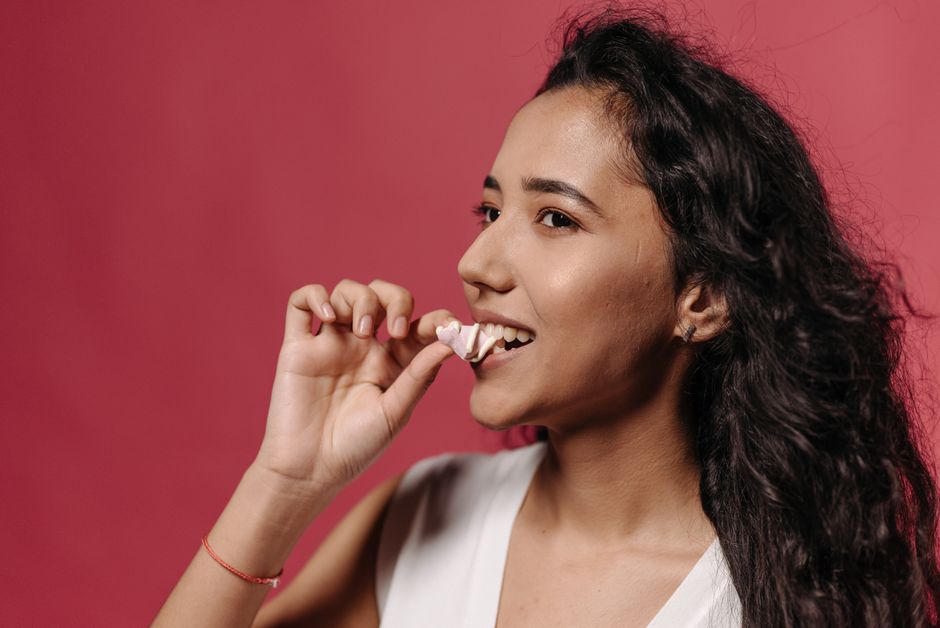
Eating with bite blocks can feel impossible at first. These small rubber or acrylic devices sit between your teeth to keep your jaw from fully closing. The trick is not to fight them but to work with them. You can eat safely and get enough food by changing how you chew, what you eat, and where you place food in your mouth.
What Are Bite Blocks and Why Do They Make Eating Hard?
Bite blocks are small orthodontic devices glued to your molars or premolars. They are also called ramps or turbos. Their job is to keep your upper and lower teeth from touching. This prevents you from accidentally breaking brackets off your braces or damaging other dental work.
Because your back teeth cannot fully meet, you cannot grind food the way you normally do. Chewing becomes a front-tooth and tongue activity. Research published in the American Journal of Orthodontics and Dentofacial Orthopedics found that patients with bite blocks report a 40 to 60 percent reduction in chewing efficiency during the first two weeks. This is normal. Your mouth needs time to learn a new movement pattern.
Most people adapt within one to three weeks. The key is knowing what to expect and how to adjust your eating habits during that window.
How To Chew With Bite Blocks Tips For Eating That Actually Help
Start by cutting all food into small pieces. No exceptions. A piece of food should be no larger than the size of a pea or a blueberry. This is not optional advice. It is the single most effective change you can make.
Place food directly on your molars if you can reach them. Bite blocks usually sit on the back teeth, so there is often a small gap behind or in front of them where you can place food. Use your tongue to guide food to that spot. If you cannot reach your molars at all, chew using a side-to-side motion with your front teeth. This grinds food against itself rather than between upper and lower teeth.
Take smaller bites than you think you need. A typical bite of food should be about half the size you would normally take. Chew slowly and count to twenty before swallowing. This gives your mouth time to break food down with saliva alone if your teeth cannot do the full job.
| Food Placement Strategy | How It Works | Best For |
|---|---|---|
| Direct molar placement | Guide food to the gap near bite block | Soft meats, cooked vegetables |
| Front-teeth side grind | Move jaw side to side, not up and down | Bread, crackers, fruit |
| Tongue mashing | Press food against the roof of your mouth | Bananas, avocado, cooked grains |
| Liquid-assisted swallow | Take a sip of water with each bite | Dry or sticky foods |
What Foods Are Safe To Eat With Bite Blocks?
Soft foods are your best option for the first week. The American Association of Orthodontists recommends foods that require minimal chewing. This includes yogurt, scrambled eggs, mashed potatoes, oatmeal, smoothies, soup, and well-cooked pasta. These foods go down easily even if your teeth cannot fully close.
Foods that break apart easily in your mouth are also good. Think bananas, ripe avocado, canned tuna, soft bread without crust, and steamed vegetables. You want foods that turn into a paste or mush with very little chewing effort.
Some people report success with ground meats like hamburger or meatballs as long as the pieces are small. Cooked fish flakes apart easily and works well. Rice and quinoa are safe because they are small and soft. Just be careful with sticky rice, which can get stuck around the bite block.
Dairy products like cottage cheese, pudding, and ice cream are easy options. They provide calories and protein without any chewing at all.


What Foods and Habits To Avoid
Hard foods are your enemy. Nuts, hard candy, raw carrots, apples, crusty bread, and chips can break your bite blocks or damage your braces. The Orthodontic Practice US journal reports that hard foods are the leading cause of bite block dislodgement. Once a block comes off, you need an emergency visit to get it replaced.
Sticky foods are almost as bad. Caramel, taffy, gum, dried fruit, and chewy granola bars can pull bite blocks loose. They also get trapped around the edges of the block, making cleaning difficult.
Do not chew on one side of your mouth only. This is a common mistake. People naturally favor the side that feels less awkward, but this puts uneven pressure on the bite block. Over time, this can loosen the block on the side you use more. Try to alternate sides with each bite.
Avoid drinking through a straw. Suction can put pressure on the back of your mouth and dislodge a block. Drink directly from the cup or glass instead.
How To Manage Pain and Discomfort While Eating
Pain from bite blocks is usually from pressure on the teeth they are attached to. This is normal and temporary. The discomfort peaks around day two or three and gradually fades over the next week.
Over-the-counter pain relievers like ibuprofen can help. The American Dental Association notes that nonsteroidal anti-inflammatory drugs are safe for short-term dental pain. Take them thirty minutes before a meal if eating is painful.
Cold foods can numb your mouth slightly. Try eating cold yogurt, chilled smoothies, or ice cream before moving to warmer foods. The cold reduces inflammation around the bite block and makes chewing less uncomfortable.
Rinsing with warm salt water after meals helps if your gums feel sore. Mix half a teaspoon of salt in a cup of warm water and swish gently for thirty seconds. This reduces irritation and helps clean around the block.
If pain lasts longer than two weeks or gets worse, call your orthodontist. The bite block may be too high or positioned incorrectly. A simple adjustment can fix this.
How Long Does It Take To Get Used To Bite Blocks?
Most people adapt within seven to fourteen days. A study in the Angle Orthodontist followed patients with bite blocks and found that chewing efficiency returned to near-normal levels after three weeks. Speech usually adjusts faster, within three to five days.
Adaptation happens in stages. The first few days are the hardest. You will probably eat less and take longer to finish meals. By day five or six, most people find a rhythm. They learn where to place food and how to move their jaw to get the job done.
By week two, eating feels mostly normal with small adjustments. Most people can eat a wider variety of foods by this point, though hard and sticky items remain off-limits for the entire time the blocks are in place.
Some people never fully adapt and that is okay. If you are still struggling after three weeks, talk to your orthodontist. They may be able to adjust the height of the blocks or offer alternative options.
Common Misconceptions About Eating With Bite Blocks
One common myth is that you cannot swallow solid food at all. This is not true. You can swallow solid food as long as it is broken down enough. Your tongue and saliva do most of the work. Your teeth help, but they are not the only tool your mouth has.
Another myth is that bite blocks make you lose weight. Some people do eat less in the first week, but most return to normal calorie intake within two weeks. If you are losing weight unintentionally, add calorie-dense soft foods like peanut butter, avocado, or protein shakes to your diet.
Some people believe you should chew on the bite block itself. Do not do this. The block is not a chewing surface. It is a spacer. Chewing directly on it can damage the block and your teeth. Always aim to place food away from the block.
There is also a belief that bite blocks cause permanent damage to your teeth. This is not supported by evidence. Bite blocks are designed to be temporary and are removed when treatment is complete. The American Board of Orthodontics confirms that bite blocks do not cause lasting harm when used correctly.
Frequently Asked Questions
Can I eat pizza with bite blocks?
Only if the pizza is very soft and cut into tiny pieces. Avoid the crust and any hard or chewy toppings like pepperoni that require heavy chewing.
How do I clean around bite blocks after eating?
Rinse your mouth with water immediately after eating. Use a soft-bristle toothbrush and gently brush around the block. A water flosser set to low pressure works well for removing trapped food.
Will bite blocks affect my speech permanently?
No. Speech changes are temporary and usually resolve within a week. Your tongue learns to work around the blocks. Reading out loud for a few minutes each day speeds up adaptation.
Can I remove bite blocks at home if they hurt?
No. Never try to remove bite blocks yourself. You can damage your teeth or swallow the block. Call your orthodontist if the pain is severe or lasts more than two weeks.
