
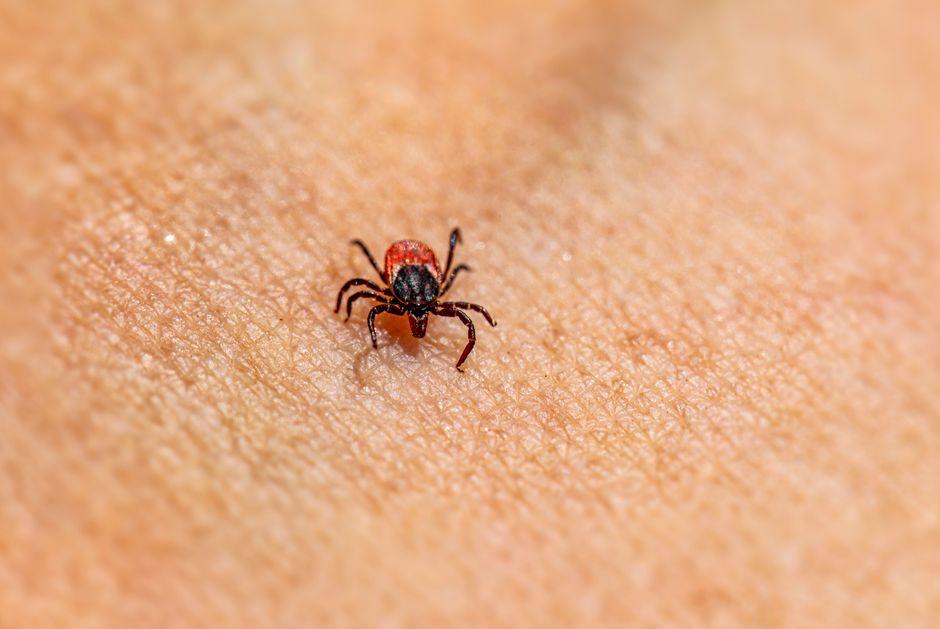
Ticks do not choose people the way a mosquito might zero in on one person at a backyard barbecue. They cannot see you from across a field, and they do not hunt by sight. What actually happens is more mechanical. A tick waits on a blade of grass or a leaf, holding its front legs out to sense the world around it. When you brush past, it grabs on. From there, whether you get bitten depends on a mix of where you went, what you wore, how you smelled, and how long you stayed. Some people really do seem to collect more ticks than others. The reasons are mostly about exposure and body chemistry, not bad luck or a special “tick magnet” trait.
Why Do Ticks Bite Some People And Not Others?
The single biggest factor is exposure. Ticks live in specific places — tall grass, leaf litter, brushy edges, and wooded areas with moisture and shade. If your hike, job, or yard work puts you in those spots more often, you will encounter more ticks. Someone who walks a paved trail most days simply meets fewer of them than someone who clears brush on weekends.
Body chemistry matters too, but in a quieter way. Ticks detect heat, carbon dioxide, and certain chemicals we release through our skin and breath. Everyone gives off these signals, but the amounts vary from person to person. Some research suggests that individual differences in skin chemistry and the microbes living on our skin may affect how attractive a person is to ticks. This is a real area of study, but the evidence is still developing. It is not the dominant reason one person gets bitten more than another.
What is well established is that ticks cannot jump, fly, or drop from trees onto your head. They crawl. They climb onto you from vegetation at roughly knee to waist height, then move upward looking for a place to attach. A bite usually happens somewhere warm and hidden — behind the knee, in the groin, under the arms, in the hairline, or along the waistband.
Does Blood Type or Body Chemistry Attract Ticks?
Blood type is one of the most repeated claims about tick attraction, and the evidence is thin. A small number of studies have looked at whether ticks prefer certain blood types, and the results have not been consistent enough to support a firm conclusion. You should not plan your tick prevention around your blood type.
Body chemistry is a more reasonable place to look, but stay cautious about how much it explains. Ticks respond to:
- Carbon dioxide — the gas you exhale, which ticks can sense from a distance
- Body heat — warmth signals a nearby host
- Skin chemicals — compounds like lactic acid and ammonia that vary between people
- Movement and vibration — a moving target is easier to detect than a still one
These signals are real and well documented in tick biology. What is less clear is how much normal person-to-person variation in these signals changes your actual bite risk in the real world. The honest position: chemistry plays a role, but it is probably a smaller role than simply being in tick habitat.
Do Certain Clothes or Colors Make You a Target?
Color is not a strong driver of tick bites, but clothing choices do change your risk in practical ways. Ticks grab onto fabric and skin as you pass through vegetation. What you wear affects how easily they reach your skin and how easily you can spot them afterward.
Light-colored clothing does not repel ticks. Its value is that it makes crawling ticks easier to see before they attach. Long sleeves and long pants tucked into socks create a barrier that slows a tick down. The barrier is not perfect, but it adds time and friction.
Treating clothing with the insecticide permethrin is one of the more effective steps supported by evidence. When used according to label directions, permethrin-treated clothing has been shown to reduce tick bites. This is different from spraying repellent on your skin. Follow the product label carefully, and keep treated clothing away from cats, since permethrin is toxic to them.





Does Skin Microbiome or Sweat Play a Role?
Sweat and skin bacteria are an active area of tick research, and it is worth separating what is known from what is speculated. We know ticks sense chemicals. We know human sweat contains compounds like lactic acid that attract some biting insects. Whether the specific mix of bacteria on your skin meaningfully changes your tick bite rate is not settled.
Some studies suggest the community of microbes on your skin can influence how attractive you are to certain biting arthropods. This work is more developed for mosquitoes than for ticks. Applying it confidently to ticks would be overstating the evidence.
A practical takeaway that does not depend on this debate: showering soon after being outdoors can help you find and wash off ticks that have not yet attached. It is a simple step regardless of how the chemistry works.
Do Repellents and Prevention Actually Work?
Some prevention steps have solid evidence behind them, and others are more about common sense. Here is how the main options stack up.
| Method | What the evidence supports |
|---|---|
| Permethrin-treated clothing | Shown to reduce tick bites when used per label |
| EPA-registered repellents (such as DEET or picaridin) | Effective against ticks when applied as directed |
| Light-colored, long clothing | Helps you spot and slow ticks; not a repellent |
| Staying on trails, avoiding tall grass | Reduces exposure to tick habitat |
| Essential oils and home remedies | Limited or no reliable evidence for tick protection |
For skin repellents, products registered with the Environmental Protection Agency have been evaluated for effectiveness. Follow the label for how often to reapply. Do not assume a natural or “chemical-free” product works just because it smells strong. Many have not been tested against ticks at all.
Checking yourself is the step people skip most often. A tick usually needs to stay attached for many hours before it can transmit the bacteria that cause Lyme disease, so finding and removing ticks promptly matters. Check your whole body, including places you cannot easily see. A mirror or a second person helps.
Are Some People Naturally More Resistant to Ticks?
There is no established evidence that some people are immune to tick bites. What people sometimes notice is that they get bitten less often, and that usually comes back to behavior and location rather than biology. If you spend less time in tick habitat, wear protective clothing, and check yourself, you will find fewer attached ticks. That can feel like resistance. It is really risk reduction.
One point worth correcting: the idea that ticks prefer one person because of “sweet blood” is folklore. There is no scientific basis for the phrase. The real drivers are exposure, the tick’s sensory cues, and how well you protect yourself.
It is also worth knowing that not everyone reacts to a tick bite the same way. Some people develop an itchy red bump. Others notice nothing. A tick can feed and drop off without you ever feeling it. That is one reason checking after time outdoors is more reliable than waiting for symptoms.
Frequently Asked Questions
Why do ticks bite me but not my partner?
Most often it comes down to exposure — where each of you went and what you wore. Body chemistry and skin signals play a smaller, less certain role.
Does blood type attract ticks?
The evidence for blood type affecting tick attraction is weak and inconsistent. You should not rely on blood type to predict your risk.
Are ticks attracted to certain colors?
Color is not a strong driver of tick bites. Light-colored clothing helps mainly because it makes crawling ticks easier to spot.
How do I keep ticks off me?
Use EPA-registered repellents, consider permethrin-treated clothing per label directions, stay out of tall grass, and check your whole body after being outdoors.
