
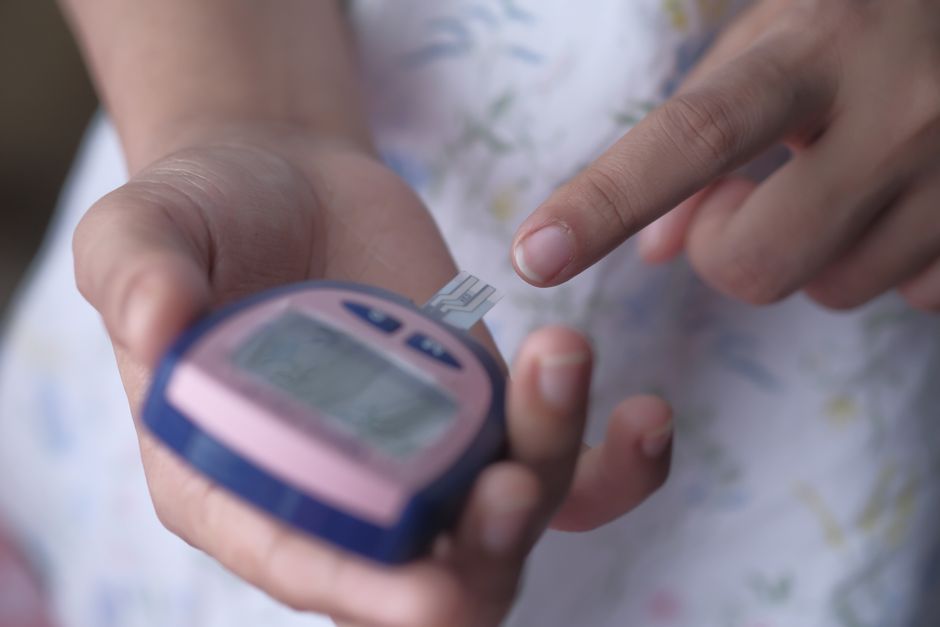
Checking your blood sugar at home comes down to one of two methods: a fingerstick glucose meter that gives a reading in about five seconds, or a continuous glucose monitor (CGM) that reads sugar from a small sensor under your skin. The fingerstick method is the most common and the easiest to start with. Wash and dry your hands, insert a test strip, prick the side of a fingertip with a lancet, touch the blood drop to the strip, and read the number. That whole process takes under a minute once you have done it a few times.
What Supplies Do You Need To Check Your Sugar Level At Home?
A basic glucose meter kit contains four things: the meter itself, test strips, a lancing device, and lancets. You will also want a logbook or a phone app to record results. That is the full list for fingerstick testing.
Test strips are specific to your meter model. A strip made for one brand will not work in another. This matters because pharmacies sometimes substitute a different brand when yours is out of stock. Check that the strips match your meter before you buy.
Lancets are small sterile needles that fit into the lancing device. Most people reuse a lancet several times, though manufacturers label them for single use. If you share a lancing device with anyone else, that is a genuine infection risk. Do not do it.
CGMs work differently. A small sensor attaches to your upper arm or abdomen and stays in place for a set number of days, depending on the brand. A transmitter sends readings to a receiver or phone app. No fingersticks are needed for routine readings, though most CGM systems still ask you to confirm with a fingerstick before making treatment decisions if your symptoms do not match the sensor reading.
How To Check Your Sugar Level At Home Step By Step
Follow these steps for a fingerstick reading.
- Wash your hands with soap and warm water. Dry them completely. Food residue, lotion, or moisture can skew the reading.
- Insert a test strip into the meter. Most meters turn on automatically.
- Load a fresh lancet into the lancing device. Adjust the depth setting if needed — thinner skin needs a shallower setting.
- Press the device against the side of a fingertip, not the center. The sides have more blood flow and fewer nerve endings, so it hurts less.
- Press the release button. A small drop of blood forms.
- Touch the strip’s sample area to the blood drop. Do not smear or squeeze hard — squeezing forces out tissue fluid that dilutes the sample.
- Wait for the meter to display the result. Most take about five seconds.
- Record the number, along with the date and time.
If you do not get enough blood, lower the lancet depth setting or try a different finger. Do not jab the same spot repeatedly.
How Do You Use A Continuous Glucose Monitor?
A CGM uses a thin filament inserted just under the skin. It measures glucose in the fluid between your cells, not in your blood directly. That difference matters. Interstitial fluid glucose lags behind blood glucose by roughly 5 to 15 minutes, and the gap widens when your sugar is changing fast — after a meal, during exercise, or if you are correcting a low.
To place a sensor, you clean the site, attach the applicator, and press it against your skin. The needle retracts and leaves the filament in place. Most sensors last between 7 and 14 days depending on the brand. You scan the sensor with a reader or check your phone app.
Calibration requirements vary by device. Some need fingerstick calibration, some do not. Follow the instructions for your specific model.
Because of the lag, never treat a low blood sugar based on a CGM reading alone if you feel symptoms. Confirm with a fingerstick first. This is a standard recommendation across CGM manufacturers and clinical guidance.



When Should You Check Your Blood Sugar?
Timing depends on why you are checking and what your doctor has asked you to track. There is no single schedule that fits everyone.
Common times include:
- When you wake up, before eating (fasting)
- Right before a meal
- Two hours after the first bite of a meal
- Before bed
- Before and after exercise
- Any time you feel symptoms of low or high blood sugar
If you take insulin, your doctor will likely give you a specific schedule. If you have type 2 diabetes and manage it with diet, exercise, or non-insulin medications, your schedule may be lighter. Ask your care team what they want you to track and how often.
People without diabetes who are checking out of curiosity should know that a single home reading does not diagnose anything. Diagnosis requires specific testing through a lab or a doctor’s office.
What Do The Numbers Mean?
For adults without diabetes, fasting glucose generally falls between 70 and 99 mg/dL. A fasting level of 100 to 125 mg/dL falls in the prediabetes range. A fasting level of 126 mg/dL or higher on two separate tests supports a diabetes diagnosis.
Two hours after a meal, a level below 140 mg/dL is typical for people without diabetes.
| Reading | Typical Range (Adults Without Diabetes) |
|---|---|
| Fasting | 70–99 mg/dL |
| 2 hours after a meal | Below 140 mg/dL |
| Prediabetes (fasting) | 100–125 mg/dL |
| Diabetes range (fasting) | 126 mg/dL or higher on two tests |
If you have diabetes, your target ranges may be different. The American Diabetes Association generally recommends a pre-meal target of 80–130 mg/dL and a peak after-meal target below 180 mg/dL for many adults, though targets are individualized. Older adults, people with certain health conditions, and pregnant women often have different goals. Ask your doctor what range applies to you.
A low reading — generally below 70 mg/dL — needs prompt attention. If you take insulin or certain diabetes medications and your reading is below 70 mg/dL, follow your doctor’s plan for treating low blood sugar. That usually means eating or drinking about 15 grams of fast-acting carbohydrate, waiting 15 minutes, and rechecking. This is the standard “15-15 rule,” and it is widely used in clinical practice.
Why Home Readings Can Be Wrong
Home glucose meters are not perfectly precise. Regulators in the US allow a margin of error of up to 15 percent compared to lab results for most readings, and up to 20 percent for lower values. That means a reading of 100 mg/dL on your meter could correspond to a lab value anywhere from roughly 85 to 115 mg/dL.
Common causes of inaccurate readings include:
- Unwashed hands, especially after handling fruit or juice
- Wet hands from incomplete drying
- Expired or improperly stored test strips
- Strips exposed to heat or humidity
- Too small a blood sample
- Squeezing the fingertip too hard
- Anemia or dehydration, which can affect some meter types
- Very high or very low hematocrit levels
If a reading does not match how you feel, wash your hands and test again with a new strip. If it still seems wrong, use a control solution if your meter came with one, or compare against a lab result at your next appointment.
What Is The Best Time To Check Blood Sugar At Home?
For most people tracking fasting glucose, the best time is right after waking up and before eating or drinking anything except water. Fasting readings are the most standardized and easiest to compare day to day.
If you want to know how a specific meal affects you, check right before the meal and again two hours after the first bite. That pair of readings tells you more than either one alone.
For people on insulin, the schedule is usually set by a doctor and may include checks before every meal and at bedtime. Do not change your testing schedule on your own if you take insulin.
Can You Check Blood Sugar Without Pricking Your Finger?
Yes, with a CGM. That is the main alternative to fingersticks. A CGM still requires a small sensor insertion, but there is no daily finger prick for routine readings.
Some CGM systems are approved for people without diabetes who want to track glucose patterns. They are not diagnostic tools, and they are not a substitute for lab testing. They also cost more than fingerstick supplies, and insurance coverage varies widely.
There is no reliable way to check blood sugar by looking at your skin, tasting your urine, or using a phone camera. Those methods are not accurate and no clinical evidence supports them.
When To Call Your Doctor
Contact your doctor if your home readings are consistently outside your target range, if you have readings below 70 mg/dL or above 300 mg/dL, or if you have symptoms that do not match your meter. Symptoms like confusion, rapid breathing, fruity-smelling breath, or fainting need emergency care, not a home check.
Bring your meter and log to appointments. Patterns over weeks are more useful to your doctor than any single reading.
Frequently Asked Questions
Can I check my blood sugar at home without a meter?
No. A glucose meter or a continuous glucose monitor is required to get a blood sugar reading at home. No reliable method exists without one of these devices.
How accurate are home blood sugar meters?
US regulators allow home meters a margin of error of up to 15 percent compared to lab results for most readings, and up to 20 percent at lower values. Accuracy improves when your hands are clean and dry and your strips are stored correctly.
What is a normal blood sugar level 2 hours after eating?
For adults without diabetes, a reading below 140 mg/dL two hours after a meal is typical. People with diabetes often have a different after-meal target set by their doctor.
Should I check my blood sugar if I do not have diabetes?
Routine home checking is not recommended for people without diabetes unless a doctor asks for it. A single home reading cannot diagnose diabetes or prediabetes.
