
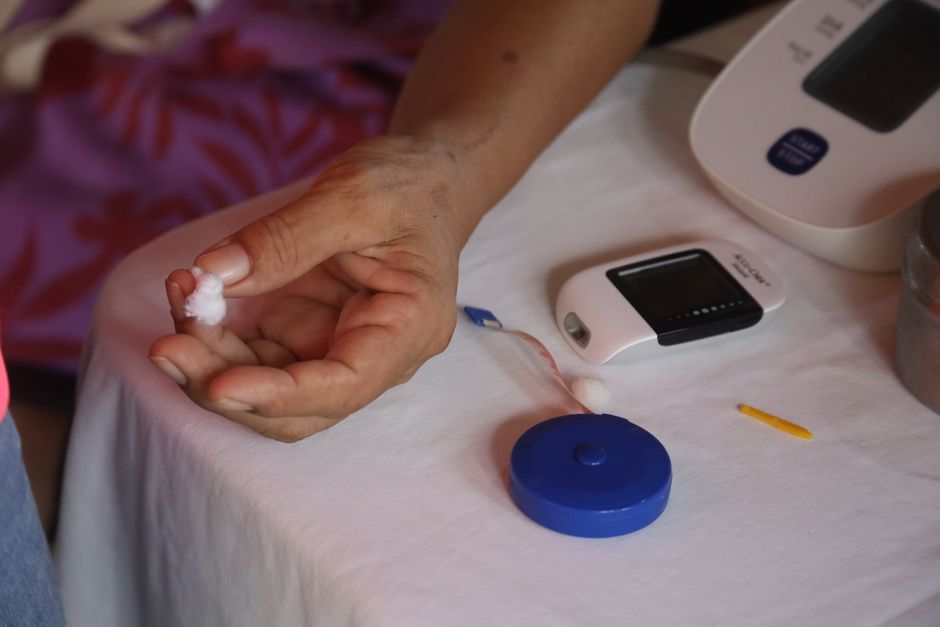
You can’t feel high cholesterol, which is why a blood test is the only way to know your numbers. A standard fasting or non-fasting lipid panel measures total cholesterol, LDL, HDL, and triglycerides. Most healthy adults need this test every 4 to 6 years, but people with risk factors or existing heart disease need it more often.
That short answer covers the basics. The details matter more than most people realize — which number predicts risk best, whether you truly need to fast, and why two people with the same total cholesterol can get very different advice from their doctors.
What Does A Cholesterol Test Actually Measure?
A standard lipid panel reports four numbers, and each one tells a different part of the story.
- Total cholesterol — the sum of all cholesterol carried in your blood. On its own, it’s the least useful number because it lumps together the “good” and “bad” fractions.
- LDL cholesterol — low-density lipoprotein, often called “bad” cholesterol. Higher LDL is causally linked to plaque buildup in arteries. This is the number most treatment decisions revolve around.
- HDL cholesterol — high-density lipoprotein, the “good” cholesterol. Higher HDL has long been associated with lower heart risk, though trials that raised HDL with drugs did not reduce heart attacks. That has made researchers cautious about treating HDL as a target.
- Triglycerides — a type of fat in the blood. High levels are linked to heart risk and can also signal other issues like poorly controlled diabetes.
Desirable ranges for adults generally sit below 200 mg/dL for total cholesterol, below 100 mg/dL for LDL, and above 40 mg/dL for HDL in men and 50 mg/dL in women. Triglycerides are usually considered normal below 150 mg/dL. These are reference points, not personal targets — your doctor interprets them against your full risk picture.
One clarification worth knowing: a lipid panel does not measure the size or number of LDL particles, and some research suggests particle count may predict risk better than LDL cholesterol alone. That testing exists but is not routine, and its role in everyday care is still debated.
Do You Really Need To Fast Before A Cholesterol Test?
For most people, no. Major guidelines have shifted toward non-fasting lipid testing for routine screening, because the differences in most lipid values after eating are small and don’t meaningfully change risk assessment.
Triglycerides are the exception. They rise noticeably after a meal, so if your doctor specifically wants an accurate triglyceride reading — or if your triglycerides have been high before — you may be asked to fast for 9 to 12 hours. Follow your clinician’s instructions rather than deciding on your own.
If you are told to fast, water is fine. Black coffee is generally considered acceptable by most labs, but check with yours, since policies vary.
Where Can You Get Your Cholesterol Checked?
Your primary care provider’s office is the standard starting point. A lipid panel is a routine blood draw, usually done at a lab or clinic, and results typically come back within a few days.
Other options include:
- Community health screenings and workplace wellness events, which often use fingerstick tests. These are useful for a rough snapshot but less precise than a full venous blood draw.
- Retail clinics and pharmacy-based testing, which have become more common and typically provide results you then review with a clinician.
- At-home test kits, which require you to collect a fingerstick sample and mail it to a lab. Convenience is real, but accuracy varies by product, and a result without a clinician to interpret it in context has limited value.
Whoever draws the blood, the interpretation matters as much as the number. A result is only useful when read alongside your age, blood pressure, smoking status, diabetes status, and family history.



How Often Should You Check Your Cholesterol?
For adults without known heart disease or major risk factors, cholesterol screening every 4 to 6 years is a common recommendation. Some guidelines suggest starting routine screening in the 20s and repeating it at least every 5 years, with more frequent checks as risk factors accumulate.
More frequent testing is generally appropriate if you:
- Have known heart disease, diabetes, or chronic kidney disease
- Have a strong family history of early heart disease or very high cholesterol
- Are taking cholesterol-lowering medication, in which case testing is typically done a few months after starting and then periodically to confirm response
- Have had previously abnormal results that are being monitored
There is no single universal schedule. The right interval depends on your baseline numbers and your overall cardiovascular risk, which is why the “how often” question is best answered by your own clinician rather than a general rule.
What Other Tests Might Your Doctor Order?
A lipid panel is the foundation, but it isn’t always the whole picture. Depending on your results and history, your doctor may add:
- Apolipoprotein B (ApoB) — a measure of the number of atherogenic particles in your blood. Some cardiology guidelines now include it as an optional or preferred marker in certain patients, particularly those with high triglycerides or metabolic conditions.
- Lipoprotein(a) — a genetically determined particle that can raise risk independently of LDL. Many guidelines now recommend testing it at least once in a lifetime, since it doesn’t change much over time.
- hs-CRP — a marker of inflammation that can refine risk estimates in some people.
- Lipid particle size or NMR testing — used in some specialty settings but not standard for routine screening.
These add-ons are not necessary for everyone. They tend to be most useful when standard results don’t fully explain your risk or when a family history suggests something more is going on.
Why The Same Cholesterol Number Means Different Things For Different People
Two people can both have an LDL of 130 mg/dL and receive completely different advice. That’s not inconsistency — it reflects how risk is calculated.
A 40-year-old with no other risk factors and an LDL of 130 may be advised to focus on diet, exercise, and rechecking in a few years. A 60-year-old smoker with diabetes and the same LDL may be advised to start medication right away. The number is identical; the context is not.
This is why risk calculators — which combine age, blood pressure, cholesterol, smoking, and diabetes — matter more than any single reading. Your doctor uses these tools to estimate your 10-year risk of a heart attack or stroke, and treatment decisions follow from that estimate.
It also explains why “my cholesterol is normal” is an incomplete statement. Normal for whom, at what age, with what other risk factors? The answer changes the meaning entirely.
What Should You Do With Your Results?
Get a copy of your actual numbers, not just a summary that says “normal” or “borderline.” Knowing your LDL, HDL, triglycerides, and total cholesterol lets you track changes over time and ask better questions.
Ask your clinician three things: what is my estimated cardiovascular risk, what does my LDL mean in that context, and what is the plan for rechecking. Those three answers turn a lab result into something actionable.
If your numbers are elevated, the conversation should cover lifestyle factors — diet patterns, physical activity, smoking, weight — and, when appropriate, medication. Whether and when to start medication is a decision that depends on your overall risk, not on a single threshold. That conversation belongs with your doctor.
Frequently Asked Questions
Can I check my cholesterol at home?
Yes, at-home test kits are available and use a fingerstick blood sample that you mail to a lab. Accuracy varies by product, and the results still need to be interpreted by a clinician alongside your other risk factors.
How long do you have to fast for a cholesterol blood test?
If your doctor asks you to fast, the usual instruction is 9 to 12 hours. Many guidelines now allow non-fasting testing for routine screening, but triglycerides are most accurate when fasting.
What is a normal cholesterol level by age?
Reference ranges are generally the same for all adults — total cholesterol below 200 mg/dL and LDL below 100 mg/dL are commonly cited as desirable. Risk interpretation changes with age even when the numbers don’t.
How often should you check cholesterol if you are on statins?
Testing is typically done a few months after starting or adjusting a statin, then periodically to confirm the medication is working. Your doctor will set the exact schedule based on your response and risk level.
