
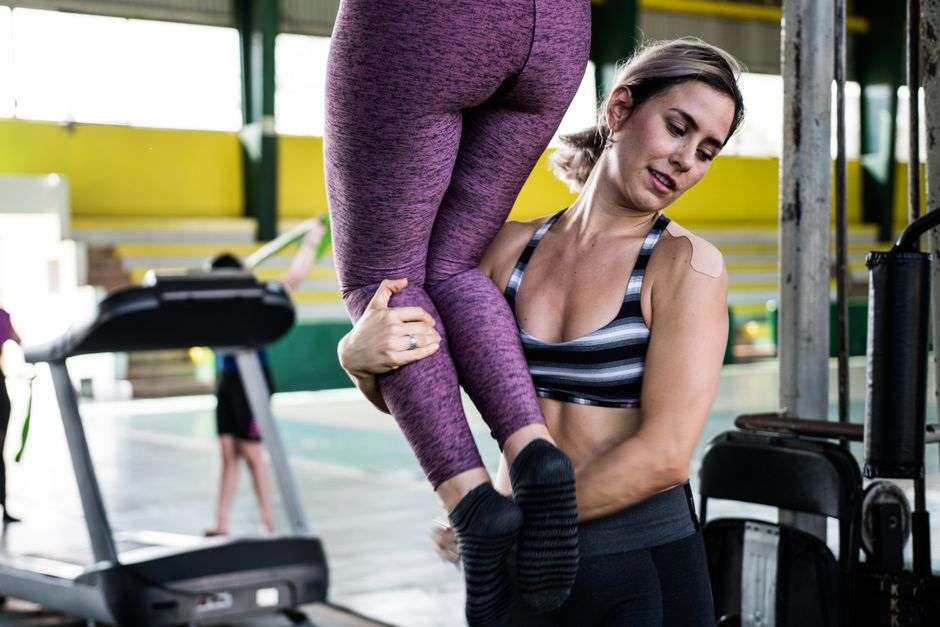
Carrying someone over your shoulder is a technique used to move a person who cannot walk on their own. It is sometimes called a fireman’s carry. It works best for a conscious person who is too weak or injured to stand, and it should never be used on someone with a suspected neck or spine injury.
How To Carry Someone Over Your Shoulder Safely
The move has two parts: getting the person onto your shoulders, and walking without losing balance or dropping them.
Stand on the person’s weaker side. Kneel or squat down close to them. Take their far arm and pull it across your own shoulders so their body leans toward you. Slide your head under their armpit and let their chest rest across the back of your shoulders. Their weight should sit high across your upper back, not on your neck.
Hold their far wrist with one hand and wrap your other arm around the back of their thighs or knees. Rise slowly by pushing through your legs, not your back. Keep your feet about shoulder-width apart. Take short, steady steps and keep your eyes forward. If you feel your balance going, lower the person to the ground rather than trying to correct mid-stride.
The person should stay as relaxed as they can. A stiff, tense body is much harder to balance than a limp one.
When Is the Fireman’s Carry the Right Choice?
This carry is a last resort for moving someone who cannot walk and cannot be moved another way. It is not a first-choice technique for most situations.
It can work when the person is conscious, breathing normally, and has no sign of a head, neck, or back injury. It can also work when you are alone and no stretcher, chair, or second helper is available.
It is the wrong choice in several common situations:
- Suspected spinal, neck, or head injury — moving the person can make damage worse
- Unconscious or unresponsive person — they cannot help you balance and their airway is at risk
- Suspected broken bones in the arms, ribs, or pelvis — the position puts pressure on those areas
- Breathing difficulty — the weight across the chest can make it harder to breathe
- Pregnancy — the pressure on the belly is a concern
- You are much smaller or weaker than the person — a dropped person can be seriously hurt
In any of these cases, call for emergency help and keep the person still until trained help arrives.
What Are the Risks of Carrying Someone on Your Shoulder?
The biggest risk is dropping the person. A fall from shoulder height can cause a head injury, a broken bone, or a spinal injury — especially in someone already hurt.
For the person being carried, the position puts pressure on the chest and belly. Breathing can become harder. If they have a full stomach, there is a risk of vomiting and choking, since their head is low and forward. That risk is one reason this carry is not used on unconscious people.
For the person doing the carrying, the load is heavy and off-center. The lower back, knees, and shoulders take most of the strain. Twisting while lifting is a common way to pull a back muscle or injure a disc.
There is also a communication problem. Once someone is over your shoulder, you cannot see their face. You may not notice if they stop breathing, turn pale, or lose consciousness. Check on them often, and stop if anything changes.





How Do You Lift Someone Without Injuring Your Back?
Your legs do the lifting, not your back. This is the same rule that applies to lifting anything heavy.
Kneel or squat with your feet apart and your back straight. Keep the person’s weight close to your body. Tighten your stomach muscles as you stand. Push up through your thighs and hips in one smooth motion. Do not jerk or twist.
If you feel a sharp pain in your back during the lift, stop. Putting the person down safely is better than pushing through an injury that could leave you unable to help anyone.
Two people make this far safer than one. If a second person is available, use a two-person technique or a chair carry instead. The shoulder carry is mainly a solo option.
What Should You Check Before You Move Anyone?
Before you lift, check three things: whether the person is awake, whether they are breathing normally, and whether they have any obvious injury.
If the person is not responding, call emergency services first. If they are not breathing normally, start CPR if you are trained and willing. Do not carry an unresponsive person over your shoulder.
Look for signs of a spinal injury. These include neck or back pain, numbness or tingling in the arms or legs, weakness, or loss of bladder or bowel control. If any of these are present, do not move the person unless they are in immediate danger, such as a fire. Wait for trained help.
Ask the person what hurts and whether they can feel their arms and legs. A conscious person can often tell you what is wrong. If they say they cannot move their legs or cannot feel them, keep them still.
What Are Safer Alternatives to the Shoulder Carry?
Several other carries are safer in many situations. The right one depends on whether the person is awake, how badly they are hurt, and how many helpers you have.
- Two-person seat carry: Two people link arms to form a seat. This spreads the weight and keeps the person upright and visible.
- Chair carry: Two people lift a sturdy chair with the person seated in it. Good for moving someone down stairs or through tight spaces.
- Drag or blanket pull: For a person who cannot be lifted, pulling them on a blanket or by the shoulders keeps them low to the ground. This is often used to move someone out of danger.
- Wait for EMS: If there is no immediate danger, the safest choice is often to keep the person still and let trained responders move them with a stretcher.
The shoulder carry is fast and needs only one person. That is its main advantage. It is not the gentlest or safest method for most injuries.
Key Facts at a Glance
| Situation | Shoulder carry suitable? |
|---|---|
| Conscious, no spine or head injury, no other option | Possibly, if you are strong enough |
| Suspected neck or back injury | No — keep them still |
| Unconscious or not breathing normally | No — call for help, start CPR if trained |
| Pregnant | No — pressure on the belly |
| Two or more helpers available | Use a two-person or chair carry instead |
| Immediate danger such as fire | Move them by the fastest safe method |
The single most important rule: if the person might have a spinal injury and there is no immediate danger, do not move them. Wait for help.
Frequently Asked Questions
Can you carry an unconscious person over your shoulder?
No. An unconscious person cannot help you balance, and their head-down position raises the risk of choking if they vomit. Call emergency services and keep them still instead.
Is the fireman’s carry safe for someone with a back injury?
No. Moving someone with a suspected spinal injury can make the damage worse. Keep them still and wait for trained responders unless there is immediate danger like a fire.
How much weight can one person safely carry on their shoulder?
There is no fixed safe weight, because it depends on the carrier’s strength and the person’s size. If you are much smaller than the person, do not attempt the carry alone.
What should you do if you start to lose balance while carrying someone?
Lower the person to the ground right away instead of trying to correct your balance mid-step. A controlled lowering is far safer than a fall from shoulder height.
