
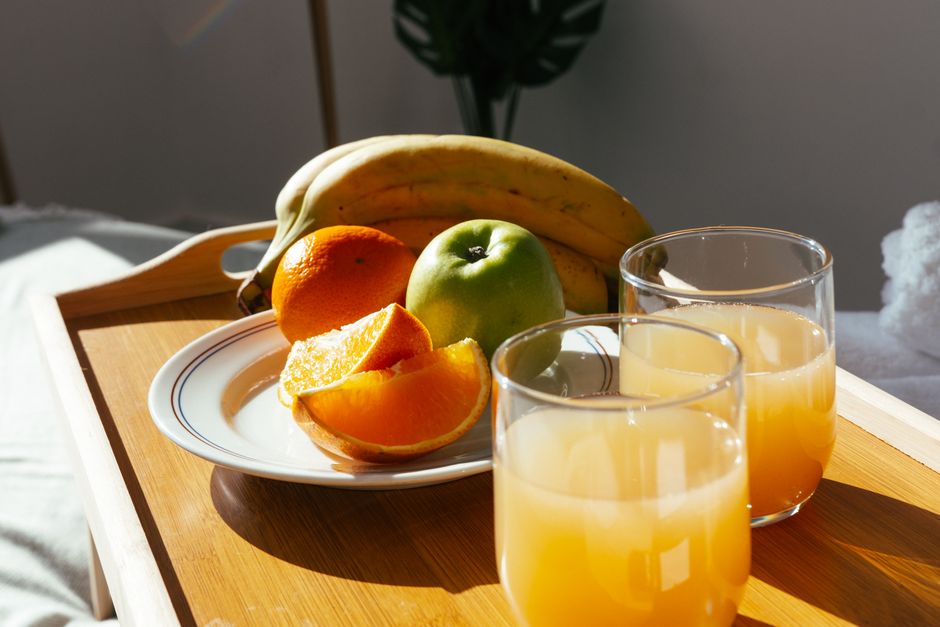
Carrying a full tray of drinks without spilling is a skill based on physics, not luck. The core trick is to keep the tray level and move your body smoothly beneath it, rather than letting the tray swing with your arms. Focus your eyes on the far edge of the tray, take short, deliberate steps, and let your shoulders and arms act as a stable platform, not a carrying handle.
Why Do Drinks Spill When You Walk?
Spilling happens because of momentum and inertia. When you start walking, your body moves forward, but the liquid in the glasses wants to stay still. This causes the liquid to slosh backward. When you stop, the liquid sloshes forward. Every change in your speed or direction creates a wave inside each glass.
Your arms make this worse. If you hold the tray away from your body or at the end of your arms, the tray acts like a pendulum. Every step you take swings the tray slightly, which adds more energy to the liquid. The combination of your walking rhythm and the natural sway of your arms creates a wave that eventually crests over the rim of the glass.
The solution is not to hold the tray tighter. Gripping harder tenses your arm muscles, which makes the shaking worse. The goal is to absorb the motion of your body so the tray remains as still as possible.
What Is The Best Way To Hold A Drink Tray?
The most stable position is to carry the tray on your open palm, not with your fingers gripping the edge. Rest the center of the tray on the flat part of your hand, just below your fingers. Keep your wrist straight and your elbow bent at about a 90-degree angle. This positioning aligns the bones of your forearm directly under the tray, creating a solid column of support.
Keep the tray close to your body. The closer the tray is to your center of mass, the less leverage your body movements have over it. Holding the tray out at arm’s length turns every small muscle twitch into a large movement at the tray’s edge.
Your shoulder should be relaxed, not hunched up toward your ear. A tense shoulder transmits every heartbeat and breath into the tray. Drop your shoulder, keep your neck long, and breathe from your diaphragm in a slow, steady rhythm.
How To Carry A Tray Of Drinks Without Spilling: Walking Technique
Your walking pattern matters more than your hand position. Walk with a smooth, gliding motion. Take shorter steps than you normally would and keep your footfalls soft. Land on the ball of your foot first, then roll through to the heel. This absorbs the impact of each step instead of sending a jolt up through your body.
Keep your head up and look at where you are going, not at the drinks. Looking down at the glasses causes you to tilt your head forward, which shifts your center of gravity and throws off your balance. Instead, look at a point about 10 to 15 feet ahead of you. This helps you anticipate obstacles and plan a smooth route before you reach them.
Your eyes also play a surprising role in balance. Your inner ear senses motion, but your vision confirms it. When you look at a fixed point in the distance, your brain gets a stable reference. This makes it easier for your body to make small corrections before the tray starts to tip.
One of the most effective techniques is to walk as if you are wearing a full skirt or carrying a book on your head. Keep your upper body completely still and let your hips and legs do all the work. Your torso should not bob up and down with each step. This takes practice because most people naturally bounce as they walk.





What Should You Do When You Need To Turn Or Stop?
Turning is the most common moment for spills. When you pivot on your foot, your upper body rotates at a different speed than your lower body. This twisting motion travels up your spine and into the tray.
To turn safely, stop completely first. Then turn your whole body as one unit. Do not twist at the waist. Point your feet in the new direction, then start walking again. This may feel slower, but it is dramatically more stable.
When you need to stop, do not stop suddenly. Begin slowing down several steps before your target. A sudden stop sends the liquid crashing into the front wall of the glass. A gradual stop gives the liquid time to settle back down.
If you feel the tray starting to tip, resist the urge to jerk it back into place. A quick correction makes the sloshing worse. Instead, lower the tray slightly and let the liquid settle. You can also shift the tray slowly in the direction of the tilt to redistribute the weight.
How Should You Set The Tray Down?
Setting the tray down is where many spills happen because people relax too early. Approach the table and stop completely. Wait one second for the liquid to settle. Then lower the tray slowly and smoothly.
Do not lean over the table to place the tray. Lean from your hips while keeping your back straight and the tray level. Bend your knees slightly so you can lower the tray without changing its angle.
Slide the tray onto the table rather than dropping it. Keep the tray level until the entire bottom surface is in contact with the table. Only then release your grip. If the table is uneven, place a coaster or napkin under one edge of the tray to stabilize it before you let go.
Does The Type Of Glass Or Drink Matter?
Yes, but not in the way most people expect. Short, wide glasses with a low center of gravity are easier to carry than tall, narrow ones. A tall glass has a higher center of mass, which means it tips more easily. However, tall glasses also have less surface area exposed at the top, which reduces the amount of liquid that can slosh out in a single wave.
Coffee cups and mugs are the hardest to carry because they are top-heavy and have wide openings. If you are carrying a tray of hot coffee, fill each cup only about three-quarters full. This leaves room for the liquid to move without reaching the rim.
Carbonated drinks are more challenging than still ones. The bubbles create turbulence that makes the liquid more reactive to movement. If you are serving champagne or soda, let the glasses sit for a minute after pouring so the bubbles settle before you pick up the tray.
Ice cubes are your enemy. A glass full of ice has less room for liquid, but the ice cubes themselves shift and slide as you walk. Each cube hitting the side of the glass transfers energy directly to the liquid. If possible, add ice after you have set the tray down.
Are There Professional Techniques You Can Learn?
Professional servers and bartenders train for this. Many use a technique called the “flat walk” or “statue walk.” The idea is to keep the upper body completely rigid while the legs move underneath. The tray becomes part of your body, not something you are holding.
Some professionals balance the tray on their fingertips rather than their palm. This is not recommended for beginners. Fingertip balancing requires finely tuned micro-adjustments that take hundreds of hours to develop. For most people, the open palm method is safer and more stable.
Another professional trick is to use a tray with a non-slip surface. Many catering trays come with a rubber or cork coating. If your tray is slippery, place a damp paper towel or bar napkin under the glasses. This prevents the glasses from sliding and adds friction that dampens vibrations.
Weight distribution matters. Place the heaviest glasses in the center of the tray and distribute the weight evenly. A tray that is heavier on one side will naturally tilt toward that side, forcing you to constantly correct it. If you are carrying a mix of full and empty glasses, arrange them so the tray is balanced.
What If You Have To Carry The Tray Upstairs?
Stairs are the highest-risk situation. The angle of the staircase means your body is tilted, and you cannot see your feet. Take one step at a time and pause briefly on each step. This gives the liquid time to settle between steps.
Keep the tray at the same height relative to the floor, not relative to your body. As you climb, your body rises with each step, but the tray should stay level. This means you need to bend your elbow slightly more with each step to keep the tray horizontal.
If the stairs have a handrail, use it with your free hand. The stability you gain from the rail is worth the awkwardness of carrying the tray with one hand. Never attempt to carry a tray up stairs while holding a drink in your other hand. Make two trips instead.
Frequently Asked Questions
Why do drinks spill more when you walk fast?
Walking fast creates more force with each step, which transfers more energy into the liquid. The faster you move, the harder the liquid hits the sides of the glass, making it more likely to splash over the rim.
Should you hold the tray with one hand or two?
One hand under the center of the tray is the standard method because it keeps your other hand free for doors and balance. Two hands can work, but only if you place them under opposite edges so the tray stays perfectly level.
Does carrying the tray on your shoulder help prevent spills?
Shoulder carrying works for large, flat trays used by professional servers, but it is not practical for small drink trays. The technique requires the tray to rest flat against your shoulder with your hand supporting the edge, which only works with trays designed for this purpose.
What is the most common mistake people make?
Looking down at the drinks is the most common error. This tilts your head forward, shifts your balance, and makes you more likely to bump into things. Keep your eyes on your path, not on the glasses.
