
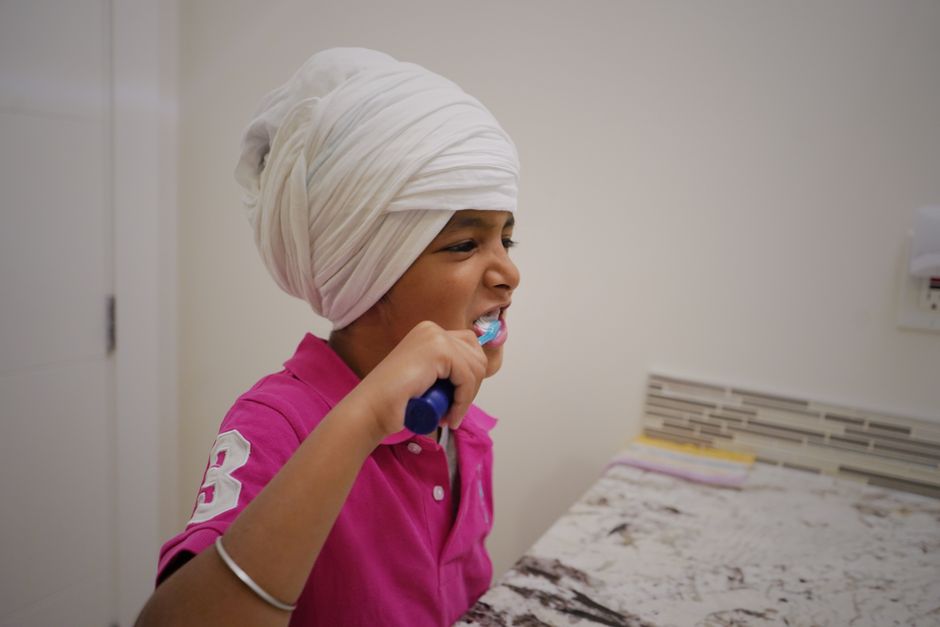
You’re on a camping trip, a red-eye flight, or a hotel room where the front desk has run out of courtesy kits. You reach for your toothbrush and it isn’t there. The good news: your mouth doesn’t need bristles to get cleaner. A clean finger, a bit of cloth, and water can remove a meaningful amount of plaque and food debris in a pinch. It won’t match a real toothbrush, but it can hold the line until you get one.
How To Brush Teeth Without Toothbrush
The most effective substitute is your own clean index finger. Wash your hands first, then rub your teeth and gums with firm, small circles for about two minutes. Cover the outside surfaces, the inside surfaces, and the chewing tops of every tooth.
Plaque is a soft, sticky film of bacteria that builds up on teeth within hours of eating. It is not yet hard, which is why mechanical wiping can dislodge some of it. Once plaque mineralizes into tartar, no finger, cloth, or brush can remove it — that requires a dental professional. The goal here is to interrupt plaque before it hardens, not to achieve a deep clean.
If you have a clean cloth, gauze, or a paper towel, wrap it around your finger. The slightly rougher texture grabs more debris than skin alone. Some people find a small piece of clean fabric works better than a bare finger, especially along the gum line where plaque tends to collect.
Work in a pattern so you don’t miss sections. Start in one corner of your upper jaw, move along the outside, then the inside, then the chewing surfaces. Repeat on the lower jaw. Rinse your finger or cloth as it gets coated.
What Can You Use If You Have No Toothbrush or Toothpaste?
Water alone does more than most people expect. Swishing vigorously and using your tongue and finger to scrub surfaces removes loose food and some plaque. It is not a substitute for brushing, but it is far better than doing nothing.
A few household items can help, with important caveats:
- Baking soda — a small amount on a wet finger can help scrub and reduce mouth odor. It is mildly abrasive. Swallow as little as possible and do not use it daily in place of toothpaste, since it lacks fluoride.
- Clean cloth or gauze — the texture improves plaque removal over a bare finger.
- Salt water rinse — a mild saltwater rinse can help clear debris and may soothe irritated gums. Do not swallow it.
- Mouthwash — if you have it, an alcohol-free rinse can reduce bacteria, but it does not physically remove plaque the way wiping does.
- Chewing sugar-free gum — this stimulates saliva, which helps clear food and neutralize acids. It is not cleaning your teeth, but it supports your mouth’s own defense.
Skip anything not meant for your mouth. Do not use harsh soaps, hydrogen peroxide at high concentrations, or abrasive powders. These can irritate or damage gum tissue and tooth enamel.
Does a Finger Actually Clean Your Teeth?
Partly. A finger or cloth can remove soft plaque and food debris from accessible surfaces. What it cannot do is reach the tight spaces between teeth or deep along the gum line where a toothbrush’s bristles work.
The evidence on this is limited but consistent in direction. Studies comparing finger wiping to brushing generally find that brushing removes more plaque, especially in hard-to-reach areas. So a finger is a reasonable short-term stand-in, not an equal replacement.
This matters most for the spaces between your teeth. Those gaps are where cavities and gum problems often begin, and neither a finger nor a brush reaches them well. That is why flossing or interdental brushes matter even when you have a toothbrush. Without either, you are doing the best you can with what you have.




How Long Can You Go Without Brushing?
Missing one or two brushings is not a dental emergency for most people. Plaque starts forming within hours, but it takes roughly a day or more to begin hardening into tartar. The longer you go, the more the risk of gum irritation and cavities climbs.
Going several days without any cleaning is when problems become more likely. Gums can become swollen or bleed, and the acid produced by mouth bacteria starts to wear at enamel. If you are stuck without a toothbrush for an extended stretch, clean your mouth as best you can several times a day — after meals especially.
Some situations raise the stakes. If you have braces, crowns, implants, or a history of gum disease, plaque accumulates faster and causes more trouble. If you have a weakened immune system, even short-term gum irritation can escalate. In those cases, getting back to a real toothbrush sooner matters more.
What About Using Your Fingers With Toothpaste?
If you have toothpaste but no brush, you can apply a small amount to a clean finger or cloth and rub it over your teeth. You get the fluoride and the cleaning agents, though not the scrubbing action of bristles.
Fluoride is the key ingredient. It helps harden enamel and makes it more resistant to acid attacks from bacteria and food. That benefit comes from the toothpaste itself, not the brush. So using toothpaste with a finger is genuinely better than using nothing.
Use a pea-sized amount, the same as you would on a brush. Spit it out afterward rather than swallowing. If you are using a cloth, expect it to absorb some of the paste, so you may need a little more.
Other Ways to Keep Your Mouth Clean in a Pinch
Rinsing with water after every meal or snack is one of the simplest things you can do. It clears loose food and dilutes the acids that bacteria produce. Swish for several seconds and spit.
Drinking water throughout the day helps too. A dry mouth is a friendlier environment for bacteria, and saliva is your mouth’s natural cleaning system. Staying hydrated keeps saliva flowing.
Chewing sugar-free gum, especially after eating, boosts saliva and can help neutralize acids. Look for gum with xylitol if you can find it. Some research suggests xylitol may help reduce cavity-causing bacteria, though the evidence is not strong enough to call it a replacement for brushing.
Avoid sugary and acidic drinks when you are already behind on cleaning. Every sip feeds the bacteria that produce the acid that damages enamel. Plain water is the safer choice.
When You Should Get Back to a Real Toothbrush
As soon as you reasonably can. Finger cleaning is a bridge, not a destination. The American Dental Association recommends brushing twice a day for two minutes with a fluoride toothpaste, and that guidance does not change just because you were caught without a brush.
Once you have a toothbrush again, don’t overdo it to make up for lost time. Brushing harder or longer than usual can irritate gums and wear enamel. Just return to your normal routine — twice a day, two minutes each time, and clean between your teeth once a day.
If you notice bleeding gums, persistent bad breath, or pain that doesn’t settle after you’re back to brushing, see a dentist. Those can be signs that plaque has been sitting too long, and a professional cleaning may be needed to remove what has hardened.
Frequently Asked Questions
Can I brush my teeth with just my finger?
Yes, a clean finger can remove some soft plaque and food debris from the surfaces of your teeth. It won’t reach between teeth or along the gum line as well as a toothbrush, so treat it as a short-term fix.
What can I use instead of toothpaste?
Baking soda on a wet finger or cloth can help scrub teeth and reduce odor, but it lacks fluoride and is mildly abrasive, so it is not a daily substitute. Water alone still helps remove loose debris.
How long is it okay to go without brushing your teeth?
Missing one or two brushings is generally not a crisis, but plaque begins hardening within about a day. Going several days raises the risk of gum irritation and cavities, so clean your mouth as best you can and get back to a brush soon.
Does rinsing with water clean your teeth?
Rinsing clears loose food and dilutes acids but does not remove plaque the way wiping or brushing does. It is a helpful add-on, not a replacement.
