
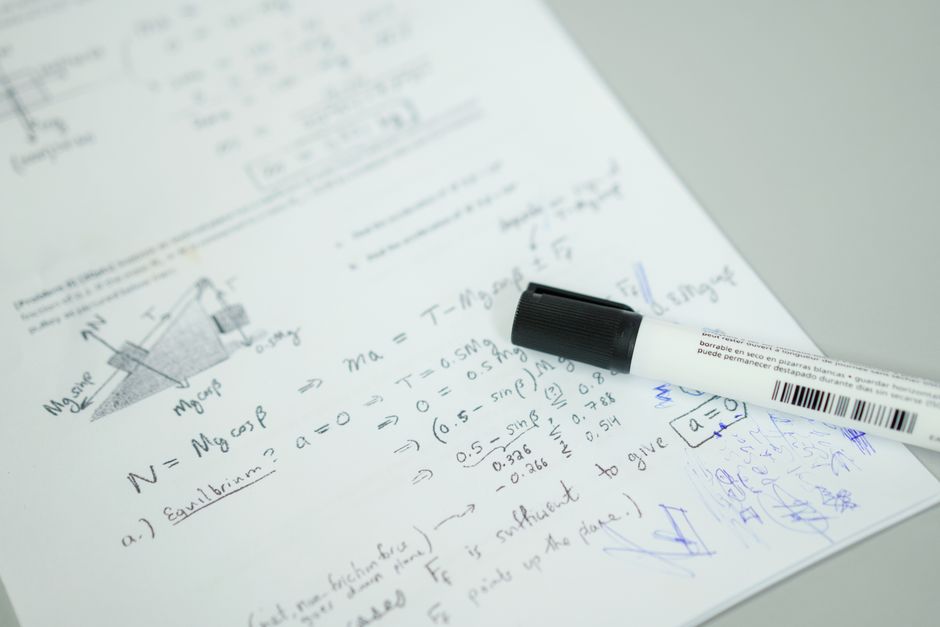
Dilution sounds like a lab procedure, but you use it more often than you think. Mixing frozen juice concentrate, watering down cleaning spray, or measuring liquid medicine for a child all involve the same basic math. The core formula is C1 × V1 = C2 × V2. C1 is the starting concentration, V1 is the volume of that starting liquid you use, C2 is the concentration you want, and V2 is the final total volume. You plug in the three values you know and solve for the fourth.
What Does the Dilution Formula Actually Mean?
The formula is a statement about conservation. When you add water to a liquid, you are not adding or removing the substance dissolved in it. You are only spreading that same amount through a larger volume.
That is why the math works. The amount of dissolved substance stays constant. Concentration times volume equals the total amount of substance. So if the amount on the left (before diluting) equals the amount on the right (after diluting), the equation balances.
This is also called the dilution equation, and it holds for any dilution where you are only adding solvent — usually water — and not adding more of the dissolved substance.
One practical consequence: the concentration and volume move in opposite directions. If you double the volume, the concentration halves. If you want a concentration one-tenth as strong, you need ten times the volume. That relationship is the whole idea in one sentence.
How To Calculate Dilutions Using The Formula Step by Step
Start by writing down what you know and labeling each value. Most mistakes come from mixing up which number is the starting concentration and which is the final one.
Work through it in this order:
- Identify C1: the concentration of the liquid you are starting with.
- Identify C2: the concentration you want to end up with.
- Identify V2: the final total volume you want to make.
- Solve for V1: the amount of starting liquid to measure out.
- Subtract V1 from V2 to find how much water or solvent to add.
Here is a worked example. Suppose you have a cleaner at 10% concentration and you want 500 mL of a 2% solution.
C1 × V1 = C2 × V2 becomes 10% × V1 = 2% × 500 mL. That gives 10 × V1 = 1000, so V1 = 100 mL. You measure 100 mL of the 10% cleaner, then add water until the total reaches 500 mL. The water you add is 400 mL.
Notice the last step. You do not add 400 mL to 100 mL and assume you land at 500 mL — you add solvent until the total volume is 500 mL. That distinction matters in a lab and matters when you are mixing something in a small container.
Why You Should Add Solvent To the Concentrate, Not the Other Way Around
Volume is not always perfectly additive when you mix two liquids. When a solute dissolves, the molecules can pack together in ways that make the final volume slightly less than the sum of the two starting volumes.
Because of this, the reliable method is to measure your V1 of concentrate first, then add solvent until the meniscus or fill line reaches V2. If you instead pour solvent first and try to top it off with concentrate, you can overshoot the final volume and end up with a weaker solution than intended.
This effect is usually tiny for everyday mixing like juice or household cleaners. In laboratory and medical settings, it can matter enough to change results, which is why the “concentrate first, then dilute to volume” rule is standard practice.




How Do You Calculate a Dilution Ratio Like 1:10?
A ratio like 1:10 tells you the proportion of concentrate to total, or concentrate to diluent, depending on who wrote it — and that ambiguity causes real errors.
In most consumer and industrial contexts, a 1:10 dilution means one part concentrate plus nine parts water, giving ten parts total. But some product labels use 1:10 to mean one part concentrate in ten parts total volume, which is one part concentrate plus nine parts water — the same thing. Others use it to mean one part concentrate added to ten parts water, which is eleven parts total.
If you are following a label, check whether it says “1 part to 9 parts” or “1 part in 10 parts” or “1:10 dilution.” When in doubt, follow the manufacturer’s stated final volume rather than the ratio shorthand.
To convert a ratio to the formula: a 1:10 dilution (1 part concentrate, 9 parts water) means C2 = C1 ÷ 10, and V1 = V2 ÷ 10. For a 1:4 dilution, C2 = C1 ÷ 4 and V1 = V2 ÷ 4.
What About Diluting Something That Is Already Diluted?
You can chain dilutions using the same formula, one step at a time. Each step uses the output of the previous step as its new C1.
Say you have a 20% stock and you want a 1% working solution. You could do it in one step: 20% × V1 = 1% × V2. For 100 mL final, V1 = 5 mL.
Or you could dilute in two steps. First make a 10% intermediate: 20% × V1 = 10% × 100 mL, so V1 = 50 mL. Then dilute that 10% to 1%: 10% × V1 = 1% × 100 mL, so V1 = 10 mL of the intermediate.
Serial dilutions like this are common in labs because very small volumes are hard to measure accurately. Measuring 5 mL directly is easy, but if you needed 0.05 mL, a two-step dilution lets you measure larger, more accurate volumes at each step. The trade-off is that small measurement errors multiply across steps.
Where Dilution Math Goes Wrong
Most dilution errors fall into a few predictable categories.
- Confusing concentration and amount. A “10% solution” and “10 mL of solution” are different things. Keep them separate.
- Forgetting to subtract. V1 is the concentrate volume, not the water volume. Water added equals V2 minus V1.
- Mixing units. If C1 is in mg/mL and C2 is in mg/L, convert one first. The formula only works when units match on both sides.
- Assuming volumes add perfectly. For precise work, dilute to the final volume rather than adding a calculated amount of solvent.
- Misreading ratios. As covered above, 1:10 can mean two different things depending on the source.
If you are diluting a medication, a pesticide, or anything with a safety label, follow the manufacturer’s or prescriber’s instructions exactly rather than calculating your own ratio. The formula is a tool for understanding, not a substitute for the labeled directions.
Does the Formula Work for Percentages, Molarity, and ppm?
Yes. The dilution equation is unit-agnostic as long as the units on both sides match. You can use percent, molarity (mol/L), parts per million, milligrams per milliliter, or any other concentration unit.
The one requirement is consistency. If C1 is in percent, C2 must also be in percent. If C1 is in molarity, C2 must be in molarity. V1 and V2 must also share the same volume unit — both in mL, or both in liters.
You can mix volume units if you convert first. For example, if V2 is given in liters and you want V1 in milliliters, convert V2 to milliliters before solving, or convert your answer afterward.
Frequently Asked Questions
What is the dilution formula?
The dilution formula is C1 × V1 = C2 × V2, where C1 and V1 are the starting concentration and volume, and C2 and V2 are the final concentration and volume. It works because the total amount of dissolved substance stays the same when you add solvent.
How do you calculate how much water to add?
Solve the formula for V1, which is the volume of starting liquid you need. Then subtract V1 from V2 to get the amount of water or solvent to add.
Does a 1:10 dilution mean 1 part to 9 parts or 1 part to 10 parts?
Most commonly it means 1 part concentrate plus 9 parts water, for 10 parts total. However, some sources use 1:10 to mean 1 part concentrate added to 10 parts water, so always check the specific instructions you are following.
Can I use the dilution formula with percentages?
Yes, as long as both concentrations are in percent and both volumes use the same unit. The formula works with any concentration unit, including molarity and parts per million.
Why do I add solvent to the concentrate instead of the other way around?
Because liquids do not always add up to exactly the sum of their volumes when mixed. Adding concentrate first and then diluting to the final volume line gives a more accurate result.
