
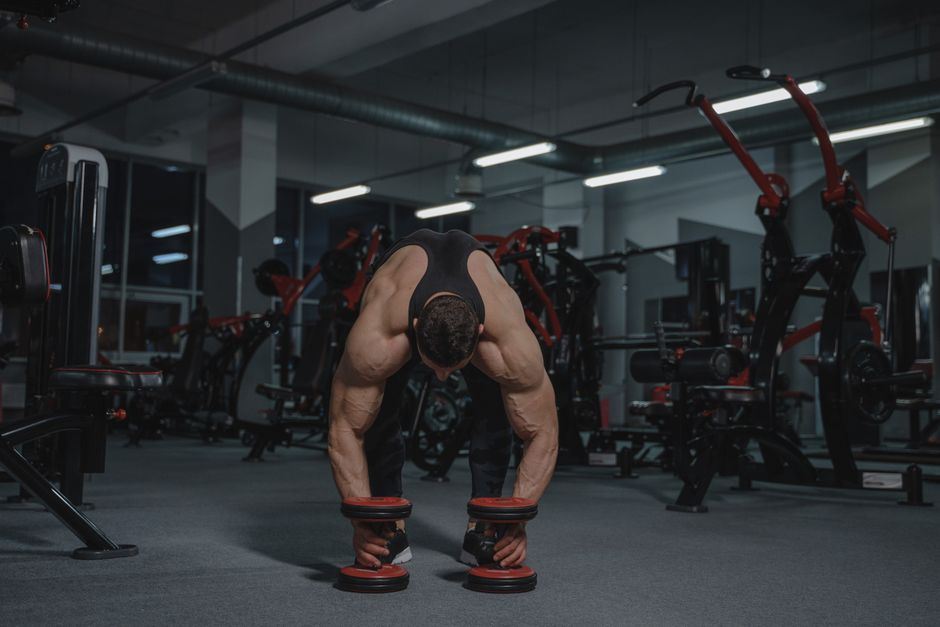
Building muscle and losing fat at the same time is possible, but it depends on your training history, your calorie intake, and how much protein you eat. People new to strength training, those returning after a long break, and people with more body fat tend to see both changes at once. Lean, experienced lifters usually find it much harder to do both simultaneously, and the research on that group is less encouraging.
The physiology is not mysterious. Muscle grows when you challenge it with resistance and give it enough protein and calories to repair. Fat comes off when you eat fewer calories than you burn. When those two conditions overlap, your body can pull energy from fat stores while still building new muscle tissue. That overlap is the whole game.
Can you actually build muscle and lose fat at the same time?
Yes, and the term researchers use for it is body recomposition. It is well documented in certain groups and much harder to achieve in others.
The people most likely to succeed at this are beginners to resistance training, people who have trained before and are coming back after time off, and people carrying more body fat, since stored fat can supply the energy needed to build muscle. A now-classic study of overweight adults found that a group doing resistance training while eating a reduced-calorie, higher-protein diet gained muscle and lost fat at the same time. That finding has been repeated in other populations.
The people who struggle most are lean, experienced lifters who are already close to their genetic potential. For them, building muscle generally requires eating at or above maintenance calories, while losing fat requires eating below it. Those two goals pull in opposite directions. Trying to do both often produces slow progress on each.
One clarification worth making: recomposition does not mean rapid change. It usually means modest muscle gain alongside steady fat loss over months. If you expect visible muscle growth in a few weeks, you will be disappointed.
Why does eating enough protein matter so much?
Protein is the raw material for muscle repair, and it is the single most important dietary lever for holding onto muscle while you eat less. When calories drop, the body can break down muscle for energy. Adequate protein plus resistance training sends a strong signal to preserve and build that tissue instead.
How much you need is one of the better-established numbers in this field. A commonly cited target for people trying to build muscle while in a calorie deficit is roughly 1.6 to 2.2 grams of protein per kilogram of body weight per day. In pounds, that is about 0.7 to 1 gram per pound. This range comes from research on protein intake and muscle protein synthesis, and it is widely used in sports nutrition guidance.
Two practical points matter more than the exact number:
- Spread protein across the day rather than eating it all at one meal. Roughly 20 to 40 grams per meal is a reasonable target for most adults.
- Get most of it from whole foods — eggs, dairy, poultry, fish, lean meat, soy, beans, and lentils. Protein powder is a convenience, not a requirement.
Going far above this range does not appear to add much muscle benefit for most people, and very high intakes offer no proven advantage for fat loss.
How many calories should you eat to lose fat without losing muscle?
A moderate calorie deficit protects muscle far better than an aggressive one. This is one of the clearest findings in the research.
When you cut calories too hard, the body ramps up muscle breakdown along with fat loss. A slow, steady deficit lets you keep more of the muscle you have while still losing fat. Many coaches and researchers describe a reasonable deficit as roughly 10 to 20 percent below your maintenance calories, though the exact figure depends on the person and no single number fits everyone.
Two things make a deficit safer for muscle:
- Keep resistance training in place. Without it, a large share of the weight you lose can come from muscle rather than fat.
- Keep protein high. The combination of training plus adequate protein is what separates fat loss from muscle loss.
Very low-calorie crash diets can produce fast scale movement, but a meaningful portion of that loss is often water and muscle. That is not the result most people want.




What kind of training builds muscle while you lose fat?
Resistance training is the non-negotiable part. Cardio helps with fat loss but does little to build or preserve muscle on its own.
The core principle is progressive overload — gradually asking your muscles to do more over time. That can mean adding weight, adding reps, or adding sets. Without some form of increasing demand, muscle has little reason to grow.
For most people, training each major muscle group roughly two times per week is a reasonable and well-supported approach. A common structure is three to four sessions per week covering the whole body, or an upper-lower split. The specific routine matters less than consistency and progression.
Here is where a lot of people go wrong: they add large amounts of cardio to burn more calories, then find their strength stalling. Excessive cardio can eat into recovery and make it harder to train hard enough to build muscle. Moderate cardio is fine and supports heart health. Piling on hours of it while in a calorie deficit usually works against muscle retention.
Why is progress slower than people expect?
Muscle growth is slow even in ideal conditions. In a calorie deficit, it is slower still.
Fat loss shows up on the scale relatively quickly, partly because of water shifts. Muscle gain shows up over weeks and months, and it is often hidden under fat at first. This mismatch is why many people quit a recomposition effort too early — they see the scale move but not the mirror, and they assume nothing is working.
Tracking helps. Strength going up on key lifts is one of the most reliable signs that muscle is being built, even when the scale is not moving much. Waist measurements and how clothes fit often change before the scale tells the full story.
One honest caveat: the rate at which any individual can build muscle varies a lot based on genetics, training age, sleep, stress, and nutrition. No formula predicts it precisely for a given person.
What about supplements and other claims?
Most supplements marketed for building muscle and losing fat have weak or absent evidence. The two that have the most support are protein powder, which is simply a convenient protein source, and creatine monohydrate, which has a large body of research supporting its role in strength and muscle gains.
Beyond those, the picture gets murky. Fat burners, testosterone boosters, and many “recomposition” products have little to no solid human trial evidence behind their specific claims. Some contain ingredients that are not well studied for safety. Treat bold marketing with skepticism.
Sleep and stress deserve more attention than most supplements. Poor sleep is associated with worse muscle retention and harder fat loss. These are not glamorous levers, but they are real ones.
| Factor | What the evidence supports |
|---|---|
| Protein intake | Roughly 1.6–2.2 g per kg body weight per day while in a deficit |
| Calorie deficit | Moderate (about 10–20% below maintenance) preserves more muscle |
| Resistance training | Essential; two sessions per muscle group per week is well supported |
| Cardio | Helps fat loss but does not build muscle; excess can hinder recovery |
| Creatine | Strong evidence for strength and muscle support |
| Fat burners | Little to no reliable evidence for the claims made |
Who should not try to do both at once?
If you are already lean and have trained for years, chasing both goals at once usually leads to frustration. A better plan for that group is to pick one goal at a time — a dedicated muscle-building phase, then a fat-loss phase.
People with very low body fat, those under significant stress, and those sleeping poorly will also find recomposition difficult. In those cases, fixing the fundamentals first tends to produce better results than pushing harder on diet and training.
For everyone else, the overlap approach works, and the basics are not complicated: lift with progression, eat enough protein, keep the calorie deficit moderate, and be patient. The evidence supports that combination. It does not support shortcuts.
Frequently Asked Questions
Can you build muscle and lose fat at the same time?
Yes, especially if you are new to lifting, returning after a break, or carrying more body fat. Lean, experienced lifters usually find it much harder and may need to focus on one goal at a time.
How much protein do you need to build muscle while losing fat?
A commonly used target is about 1.6 to 2.2 grams per kilogram of body weight per day, or roughly 0.7 to 1 gram per pound. Spreading it across meals works better than eating it all at once.
Should you do cardio to lose fat while building muscle?
Moderate cardio supports fat loss and heart health, but it does not build muscle and too much can slow recovery. Resistance training is the part that actually builds and preserves muscle.
How long does body recomposition take?
It typically takes months, not weeks, because muscle growth is slow and often hidden under fat at first. Rising strength on key lifts is one of the most reliable signs it is working.
