
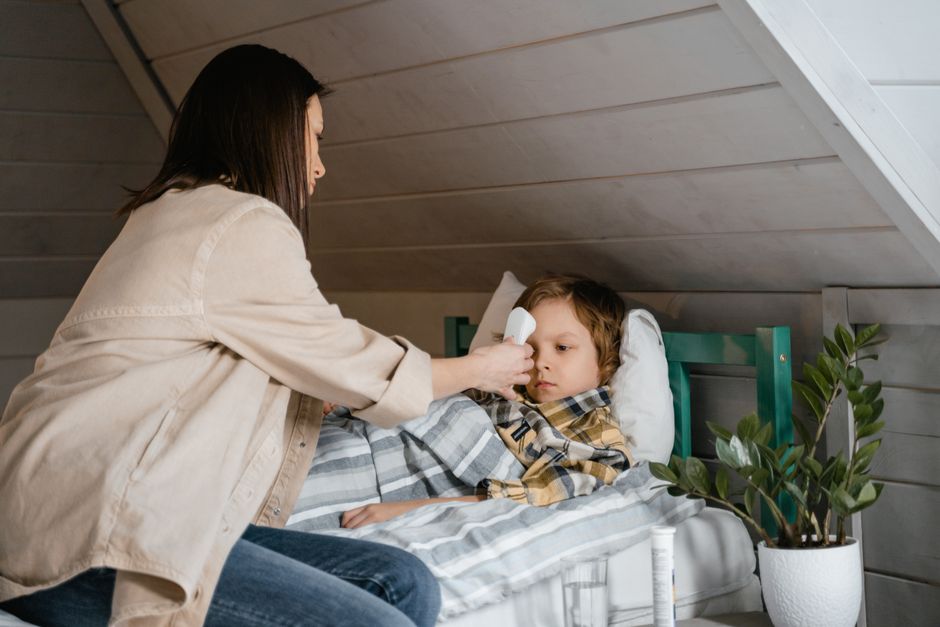
A fever in a toddler is common and usually not dangerous. Your main job is to keep your child comfortable, not to chase a specific number on the thermometer. For most toddlers, you do not need medication unless they are uncomfortable, and you should never give aspirin to a child.
What Counts As A Fever In A Toddler?
A fever is a body temperature of 100.4°F (38°C) or higher. This is the standard definition used across pediatric medicine. A reading between 99°F and 100.3°F is an elevated temperature, but it is not technically a fever.
How you take the temperature matters. A rectal thermometer gives the most accurate reading for toddlers. Ear and temporal artery thermometers are also reliable when used correctly. Armpit and forehead strip readings are less accurate and can miss a fever entirely.
Your child’s normal temperature can change slightly throughout the day. It is usually lower in the morning and higher in the late afternoon. A single high reading is less important than how your child looks and acts.
How To Break A Fever In A Toddler Dos And Donts
The goal is comfort, not a normal temperature. If your toddler is playing, drinking, and acting reasonably normal, you do not need to treat the fever at all. The fever is doing its job — it helps the immune system fight off the infection.
Do offer plenty of fluids. Water, milk, or an oral rehydration solution are all good choices. Fever increases fluid loss, and dehydration can make a child feel worse.
Do dress your child in light, breathable clothing. One light layer is usually enough. Overbundling traps heat and can make the fever higher.
Do consider acetaminophen or ibuprofen if your child is uncomfortable. “Uncomfortable” means they are fussy, crying, refusing to drink, or unable to sleep. It does not mean a specific number on the thermometer.
Do keep the room at a comfortable temperature. A slightly cool room is fine. Avoid drafts and do not make the room too warm.
Don’t give aspirin to a child or teenager. Aspirin during a viral illness is linked to Reye’s syndrome, a rare but serious condition that causes swelling in the liver and brain. This is a firm, non-negotiable rule.
Don’t use cold baths, ice packs, or rubbing alcohol. These cool the skin quickly, which causes shivering. Shivering actually raises the core body temperature and makes your child miserable. A lukewarm sponge bath is acceptable if your child finds it soothing, but skip it if they resist.
Don’t wake a sleeping child to give fever medication. Sleep is more important. If your child is sleeping comfortably, let them rest.
Don’t alternate medications without a clear plan. Some clinicians recommend alternating acetaminophen and ibuprofen, but this can lead to dosing errors. If you do alternate, keep a written log of what you gave and when. When in doubt, stick to one medication.
Fever Medication Dosing For Toddlers
Acetaminophen (Tylenol) is approved for children over 2 months old. Ibuprofen (Motrin or Advil) is approved for children over 6 months old. Both are effective at reducing fever.
Dosing is based on weight, not age. Check the label and use the dosing device that came with the medication. Kitchen spoons are not accurate and can lead to an overdose.
Acetaminophen is typically given every 4 to 6 hours. Ibuprofen is typically given every 6 to 8 hours. Do not give more than the label directs. Overdosing on acetaminophen can cause liver damage, and this is a genuine risk in young children.
Do not give ibuprofen to a child who is vomiting or significantly dehydrated. Ibuprofen can irritate the stomach and, in rare cases, affect kidney function in dehydrated children.
If your toddler is under 3 months old and has a fever of 100.4°F or higher, contact a doctor immediately. Do not give any medication before speaking with a healthcare provider in this age group.





When To Call The Doctor About A Toddler Fever
Most fevers in toddlers are caused by viral infections and resolve on their own within 3 days. But some situations require medical attention.
Call a doctor if your toddler:
- Is under 3 months old with a temperature of 100.4°F or higher
- Has a fever lasting more than 3 days
- Is younger than 2 years old with a fever lasting more than 24 hours
- Is lethargic, difficult to wake, or unusually irritable
- Has trouble breathing or is breathing faster than normal
- Has a stiff neck, severe headache, or a rash
- Is not drinking enough fluids or shows signs of dehydration
- Has had a seizure
Trust your instincts. You know your child better than anyone. If something feels wrong, call. It is always acceptable to seek medical advice even if you cannot pinpoint exactly what worries you.
A fever itself is rarely the emergency. The underlying illness is what matters. Most febrile seizures look alarming but are brief and do not cause brain damage. Still, any seizure warrants an immediate call to a doctor.
Can A High Fever Cause Brain Damage?
No. This is one of the most persistent myths in pediatric medicine. A fever from an infection, even a high one, does not cause brain damage.
The body’s thermostat regulates fever. It is set higher during an illness, which helps fight infection. The brain’s temperature control center keeps the temperature in a range that is safe for the body.
Brain damage from heat occurs at temperatures above 107.6°F (42°C). Fevers from infections rarely exceed 105°F (40.5°C). The body’s internal mechanisms prevent a fever from climbing into a dangerous range.
Overbundling can push a temperature higher, which is why light clothing is recommended. But even then, the danger is from heat stroke, not from the fever itself.
Home Comfort Measures That Actually Work
Medication is not the only tool. Simple measures can make a significant difference in how your toddler feels.
Fluids are the most important. Fever increases fluid loss through sweating and faster breathing. Offer small amounts frequently. Popsicles, ice chips, and gelatin cups count as fluids and are often more appealing to a sick child than a cup of water.
Rest is important, but do not force it. A toddler with a fever will naturally slow down. Let them set their own activity level. If they want to play quietly, that is fine. If they want to sleep, let them.
Light meals are fine if your child wants to eat. Do not force food. Loss of appetite is normal during a fever. The priority is fluids, not solid food.
A lukewarm bath can help if your child is uncomfortable. Use water that feels neutral to your wrist — not cold, not warm. Cold water causes shivering, which raises body temperature. Keep the bath short and take your child out if they start to shiver.
What Not To Do When Your Toddler Has A Fever
Some traditional remedies are not just ineffective — they are dangerous.
Rubbing alcohol is toxic. Alcohol is absorbed through the skin and can cause poisoning in young children. Never use it to treat a fever. This is a firm rule with no exceptions.
Cold baths and ice packs cause shivering. Shivering generates heat and raises core body temperature. They also make a sick child miserable. Skip them.
Aspirin is linked to Reye’s syndrome in children. Reye’s syndrome is a rare but potentially fatal condition. Acetaminophen and ibuprofen are the only appropriate fever medications for toddlers.
Over-the-counter cold medicines are not recommended for children under 4 years old. They do not treat fever effectively and carry risks of side effects. Stick to single-ingredient acetaminophen or ibuprofen.
Frequently Asked Questions
What temperature is too high for a toddler?
Any fever above 105°F (40.5°C) is unusual and warrants a call to your doctor. Fevers from infections rarely go higher than this, and brain damage does not occur until above 107.6°F.
Should I let a toddler’s fever run its course?
Yes, if your child is comfortable and drinking fluids. Fever helps the immune system fight infection. Treat it only if your child is clearly uncomfortable, fussy, or unable to sleep.
How long should a toddler fever last before seeing a doctor?
Call a doctor if the fever lasts more than 3 days, or more than 24 hours if your child is under 2 years old. Also call if the fever is accompanied by a rash, stiff neck, or trouble breathing.
Can I alternate acetaminophen and ibuprofen for a toddler?
Some clinicians recommend it, but it increases the risk of dosing errors. If you alternate, keep a written log of every dose. When in doubt, stick to one medication and follow the label directions.
Fever in a toddler is stressful, but it is also normal. Most fevers are short-lived and harmless. Keep your child hydrated, dress them lightly, and use medication only for comfort. Call a doctor when the fever persists, your child looks seriously ill, or you are simply unsure. Trust your judgment — you are the best person to decide when something is wrong.
