
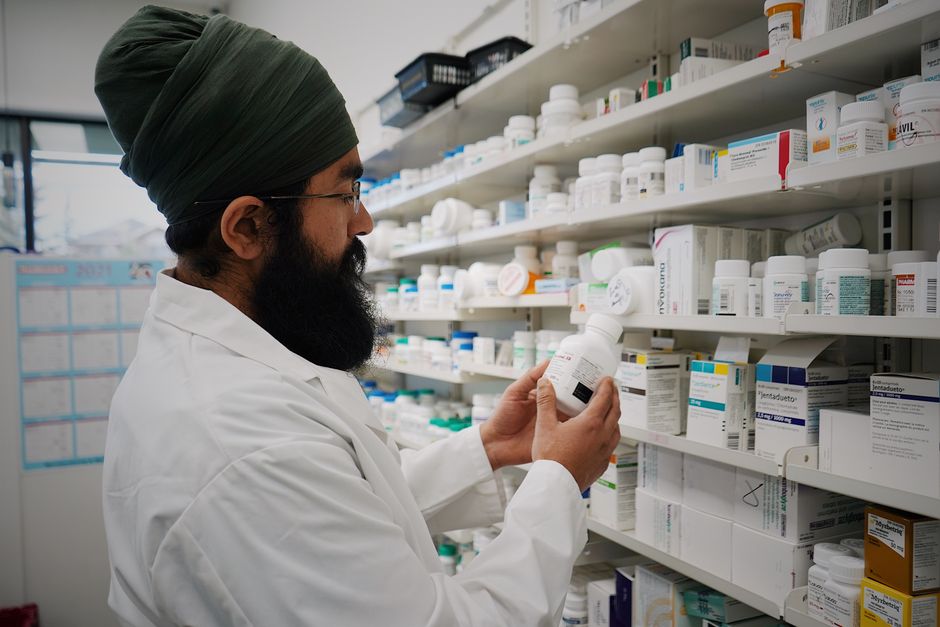
Becoming a dispensary pharmacist means earning a Doctor of Pharmacy degree, passing the North American Pharmacist Licensure Examination, and meeting your state’s specific requirements for dispensing medical cannabis. Most dispensary pharmacists in the United States earn between $110,000 and $140,000 per year, though pay varies by state, experience, and whether the role is clinical or retail-focused. The path takes about six to eight years of education and training after high school.
The role sits at an unusual intersection. You are a licensed pharmacist applying the same clinical judgment you would use in any pharmacy, but you are working with a plant-based product that remains federally illegal even where state law permits it. That legal tension shapes everything about the job.
What Does a Dispensary Pharmacist Actually Do?
A dispensary pharmacist reviews patient medical histories, evaluates whether cannabis is appropriate for their condition, recommends product types and dosages, and monitors for interactions with other medications. This is not a retail cashier role with a white coat.
The day-to-day work involves patient consultations that can run longer than typical pharmacy interactions. You might spend 20 minutes with a patient discussing how different cannabinoids and terpenes affect their specific symptoms. You review their current medication list. You flag potential interactions. You document everything.
Many dispensary pharmacists also train budtenders and dispensary staff on product pharmacology, dosing basics, and when to escalate a question to the pharmacist. Some serve as the designated medical professional required by state regulations for a dispensary to operate.
In medical-only states, the clinical component tends to be heavier. In recreational states, the pharmacist role may be smaller or absent entirely, depending on state law. Some states require a pharmacist on-site for medical sales but not for adult-use sales.
What Education and Licensure Steps Are Required?
The educational path to becoming a dispensary pharmacist is the same as for any licensed pharmacist. There is no separate degree for cannabis pharmacy.
Here are the steps:
- Complete prerequisite coursework — typically two years of undergraduate study in subjects like biology, chemistry, organic chemistry, anatomy, and calculus. Most pharmacy schools require specific courses and a minimum GPA, though the exact requirements vary by program.
- Earn a Doctor of Pharmacy (PharmD) degree — this is a four-year professional program accredited by the Accreditation Council for Pharmacy Education. Admission typically requires the Pharmacy College Admission Test (PCAT), though some schools have dropped this requirement in recent years.
- Pass the North American Pharmacist Licensure Examination (NAPLEX) — this is the standard licensure exam for all pharmacists in the United States.
- Pass the Multistate Pharmacy Jurisprudence Examination (MPJE) — this tests your knowledge of state-specific pharmacy law. Some states use their own equivalent exam.
- Complete your state licensure process — this includes background checks, fingerprinting, and any additional state requirements.
- Meet state-specific cannabis requirements — some states require additional training, registration, or certification specifically for dispensing medical cannabis. These requirements vary widely and change frequently.
The total timeline is typically six to eight years after high school: two to four years of undergraduate prerequisites plus four years of pharmacy school.
Do You Need Extra Training for Cannabis Pharmacy?
Most pharmacy school curricula include minimal education on cannabis. A 2021 survey of pharmacy programs found that most devote only a few hours to the topic, if any. That gap means dispensary pharmacists often seek additional training on their own.
Some organizations offer continuing education courses on cannabis pharmacology, endocannabinoid system function, and clinical applications. The quality and rigor of these programs varies considerably. There is no single standardized certification that all states or employers recognize.
Some states with medical cannabis programs require pharmacists to complete state-approved training before working in a dispensary. These requirements are set at the state level and change as programs evolve. Checking your specific state’s regulations is necessary because there is no national standard.
What matters most is understanding the endocannabinoid system, how THC and CBD interact with it, how different routes of administration affect onset and duration, and how cannabis may interact with other medications. This knowledge base is still developing. Research on cannabis-drug interactions is limited compared with most other drug classes.





How Much Do Dispensary Pharmacists Earn?
Salary data for dispensary pharmacists specifically is limited because the role is relatively new and not tracked separately by most employment surveys. General pharmacist salary data provides a reasonable baseline.
According to the U.S. Bureau of Labor Statistics, pharmacists across all settings earned a median annual wage of approximately $137,480 as of May 2024. The lowest 10 percent earned below $82,000, and the highest 10 percent earned above $170,000.
Dispensary pharmacists typically fall within or slightly below the general pharmacist range. Factors that affect pay include:
- State — states with established medical cannabis programs and higher costs of living tend to pay more
- Experience — entry-level dispensary pharmacists usually start lower than those with hospital or clinical pharmacy backgrounds
- Role type — a pharmacist who primarily consults with patients and trains staff may earn more than one in a purely supervisory capacity
- Employer size — large multi-state operators sometimes pay more than independent dispensaries, though this varies
Glassdoor and similar platforms report dispensary pharmacist salaries ranging from roughly $100,000 to $150,000, but these are self-reported figures and should be treated as rough estimates rather than authoritative data.
One non-obvious point: some dispensary pharmacists take a pay cut compared with hospital or retail pharmacy roles because they want the clinical autonomy or the specific patient population. Others earn comparable pay. It depends heavily on the individual market.
What Are the Legal and Professional Risks?
Cannabis remains a Schedule I controlled substance under federal law. This creates real complications for licensed pharmacists.
Federal law prohibits prescribing cannabis. Pharmacists in dispensaries do not write prescriptions in the traditional sense. They make recommendations or certifications, depending on state terminology. This distinction matters legally.
Professional liability insurance may not cover cannabis-related activities. Some malpractice carriers exclude cannabis from coverage. Pharmacists should verify their coverage before accepting a dispensary position.
Your pharmacy license is issued by the state, but federal agencies like the Drug Enforcement Administration (DEA) have historically taken the position that cannabis activity violates federal law. Enforcement priorities have shifted over time, but the legal risk has not been eliminated by state legalization.
Some pharmacists have reported difficulty with professional boards or credentialing bodies after working in cannabis. This is not universal, but it is a real consideration. The landscape is changing, but it has not changed completely.
How Do You Find a Dispensary Pharmacist Job?
Dispensary pharmacist positions are not typically listed on major hospital or retail pharmacy job boards. The search requires a different approach.
Networking matters more here than in most pharmacy roles. Professional organizations focused on cannabis pharmacy, state pharmacy associations with cannabis committees, and industry conferences are common entry points. Many positions are filled through word of mouth before they are publicly posted.
Multi-state cannabis operators often list positions on their own career pages. State-licensed dispensaries may post on general job boards or local cannabis industry sites. Some states maintain lists of licensed dispensaries where you can inquire directly.
Before applying, verify the following:
- Whether your state requires specific cannabis training or certification for pharmacists
- Whether your professional liability insurance covers cannabis-related work
- Whether your state board of pharmacy has issued guidance on dispensary pharmacist roles
- Whether the position is for medical sales, adult-use sales, or both
The role is not for every pharmacist. But for those interested in plant-based medicine, patient education, and working in a rapidly evolving field, it offers a distinct career path that did not exist a generation ago.
Frequently Asked Questions
How long does it take to become a dispensary pharmacist?
It typically takes six to eight years after high school: two to four years of undergraduate prerequisites and four years of pharmacy school, plus licensure exams. Some states also require additional cannabis-specific training before you can work in a dispensary.
How much do dispensary pharmacists make?
Dispensary pharmacists generally earn between $110,000 and $140,000 per year, though pay varies by state, experience, and employer. The Bureau of Labor Statistics reports a median annual wage of approximately $137,480 for all pharmacists as of May 2024.
Do you need a special license to work as a dispensary pharmacist?
You need a standard pharmacist license in your state, which requires a PharmD degree and passing the NAPLEX and MPJE exams. Some states with medical cannabis programs also require additional training or registration specific to cannabis dispensing.
Is it legal for a pharmacist to work in a dispensary?
Yes, in states that have legalized medical or adult-use cannabis, pharmacists can work in dispensaries under state law. However, cannabis remains a Schedule I controlled substance under federal law, which creates legal and professional complications that vary by state and employer.
