
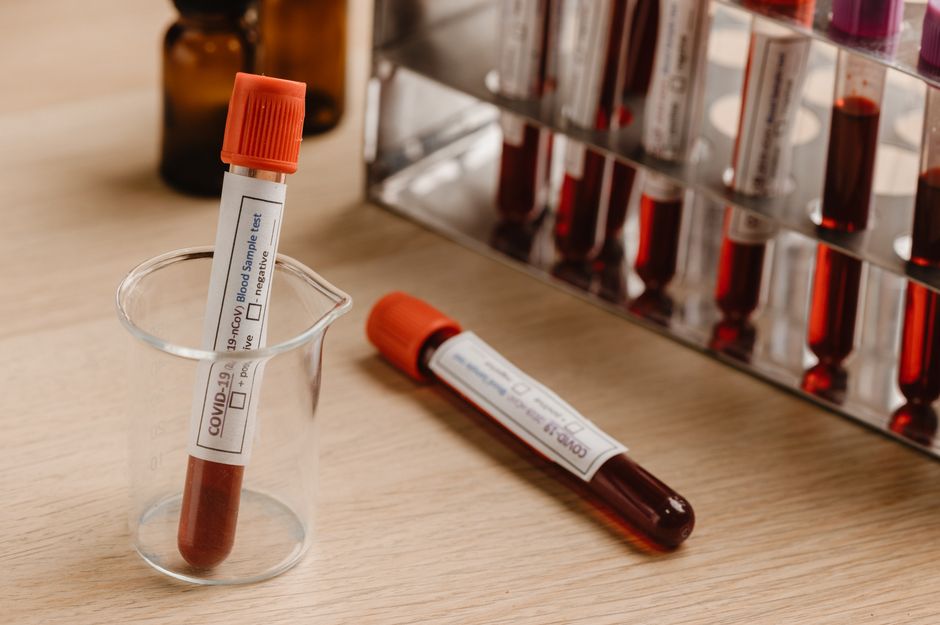
Blood tests that look for antibodies are called serological tests. These tests check if your body has fought off a specific germ before. They do this by finding proteins your immune system makes to fight infections.
When a virus or bacteria enters your body, your immune system creates antibodies. These antibodies are custom-made for that specific invader. A serological test uses a sample of your blood to see if those custom antibodies are present. If they are, it usually means you were infected at some point.
These tests cannot tell you if you are sick right now. They tell you about past infections. This is a key difference from tests that look for the virus itself.
How Do Serological Tests Actually Find Antibodies?
The most common method is called ELISA, which stands for enzyme-linked immunosorbent assay. The lab takes your blood sample and puts it into a plastic plate that has been coated with a specific part of a virus or bacteria.
If you have antibodies against that germ in your blood, they will stick to the coated plate. The lab then adds a second solution that causes a color change. A machine reads how much color appears. More color means more antibodies are present.
Another method is the lateral flow assay. This is the same technology used in home pregnancy tests. Your blood flows along a strip of paper. If antibodies are present, a colored line appears. These tests are faster but less precise than ELISA.
Neutralization assays are more complex. They mix your antibodies with live virus in a lab dish. If the antibodies stop the virus from infecting cells, you have neutralizing antibodies. These are the ones that actually protect you from getting sick again.
What Do Positive and Negative Results Really Mean?
A positive result means the test found antibodies against a specific germ. This usually means you were infected at some point in the past. It could also mean you were vaccinated, since vaccines also trigger antibody production.
A negative result means no antibodies were found. This could mean you were never infected. It could also mean you were infected very recently and your body has not made enough antibodies yet. This window period is usually one to three weeks after infection starts.
There is also a gray area called equivocal results. The antibody level is too low to call positive but too high to call negative. This often happens early in infection or in people with weakened immune systems. Doctors usually repeat the test in a few weeks.
Research published in the Journal of Clinical Microbiology found that serological tests for COVID-19 had sensitivity rates between 80 and 97 percent depending on when the sample was taken. Sensitivity means how well the test finds true positive cases. No test is perfect.
How Serological Tests Detect Immunity And Infection Over Time
Your body makes two main types of antibodies. IgM antibodies appear first, usually within a week of infection. They fade away after a few weeks. IgG antibodies appear later, around two weeks after infection, and can last for months or years.
This timing matters for understanding test results. If a test finds only IgM antibodies, it suggests a recent infection. If it finds only IgG antibodies, it suggests an older infection. If both are present, the infection is likely in the middle stage.
Some labs also measure IgA antibodies. These are found in mucus membranes like the nose and lungs. They are less commonly tested for most infections but can be useful for certain diseases.
The Centers for Disease Control and Prevention states that serological tests should not be used to diagnose active COVID-19 infection. The virus test called PCR is the right tool for that. Serological tests are used for surveillance and research purposes.





What Affects Test Accuracy?
Test accuracy depends on timing more than most people realize. Testing too early gives false negatives because antibodies have not formed yet. Testing too late may miss IgM antibodies that have already disappeared.
Cross-reactivity is another problem. Your body makes antibodies against many different germs. Sometimes antibodies against one virus look similar enough to another that the test gives a false positive. This happens with some coronaviruses that cause common colds.
People with autoimmune conditions can have abnormal antibody levels that confuse test results. So can people taking immunosuppressive drugs. The test cannot tell the difference between antibodies from infection and antibodies from other causes.
The table below shows how different factors affect test interpretation:
| Factor | Effect on Test | What It Means |
|---|---|---|
| Testing within 7 days of symptoms | Low sensitivity | May miss early infection |
| Testing after 14 days | High sensitivity | Most accurate window |
| Previous coronavirus infection | Possible cross-reactivity | Could cause false positive |
| Immunosuppression | Reduced antibody production | May cause false negative |
| Prior vaccination | Positive result | Cannot distinguish from infection |
Common Misconceptions About Serological Tests
The biggest myth is that a positive antibody test means you are immune. This is not always true. Some antibodies protect you, and some do not. The level of protection depends on the germ and how many antibodies you have.
Another misconception is that antibody levels stay the same forever. They do not. Antibody levels naturally drop over time. This does not mean you lose all protection. Your immune system keeps memory cells that can make new antibodies quickly if you encounter the germ again.
Some people think serological tests can tell you exactly when you were infected. They cannot. The tests only show that infection happened at some point. They cannot give a precise date.
There is also confusion about the difference between diagnostic tests and serological tests. Diagnostic tests like PCR look for the virus itself. Serological tests look for your body’s response to the virus. They answer different questions and are not interchangeable.
Practical Steps for Understanding Your Test Results
If you get a serological test, ask your doctor which specific test was used. Different tests have different accuracy rates. Ask about the timing of your possible exposure. This helps interpret whether a negative result is reliable.
Do not assume a positive result means you are safe. Some infections do not produce strong long-term immunity. The National Institutes of Health notes that antibody levels from natural infection can vary widely between individuals.
If you were vaccinated, a positive antibody test is expected. It does not tell you anything new. Vaccination status is already known. The test adds no useful information in this case.
Consider getting tested at a lab that uses validated tests. The FDA has authorized specific serological tests for certain diseases. Tests that have not been validated may give unreliable results.
- Wait at least two weeks after symptoms start for the most accurate result
- Ask your doctor what the test will and will not tell you
- Do not use serological tests to decide if you need a vaccine
- Understand that a single test is a snapshot, not a complete picture
- Discuss results with a healthcare provider who knows your history
Frequently Asked Questions
How long after infection do antibodies show up in a blood test?
IgM antibodies usually appear within 7 to 10 days after infection. IgG antibodies take about 14 to 21 days to reach detectable levels.
Can a serological test tell if I am currently contagious?
No, serological tests cannot tell if you are currently contagious. They only show past infection and cannot detect active virus in your body.
Do all positive antibody tests mean I am protected from reinfection?
Not all positive tests mean you are protected. Only neutralizing antibodies provide protection, and not all serological tests measure neutralizing antibodies.
Can a serological test distinguish between infection and vaccination?
Standard serological tests cannot tell the difference between antibodies from infection and antibodies from vaccination. Specialized tests exist but are not commonly used.
