
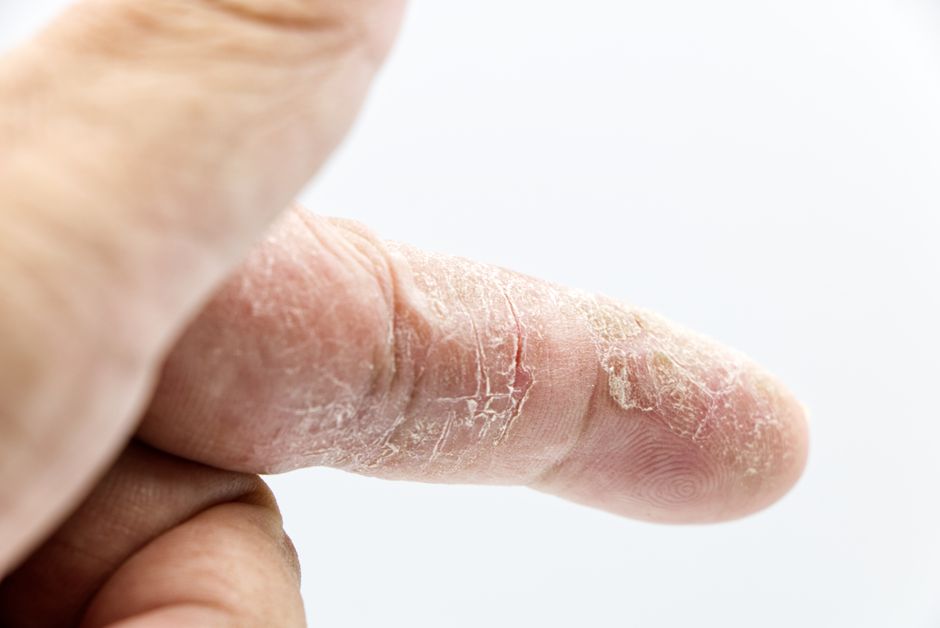
If you have ever pointed your phone at a strange mole or a persistent rash and let an app tell you what it might be, you are not alone. Millions of people now use artificial intelligence tools to check their skin before ever seeing a doctor. The short answer is this: AI can be quite good at recognizing certain skin cancers in research settings, but its real-world reliability is lower, and it varies widely depending on the tool, the condition, and who is using it. It is a promising assistive technology, not a replacement for a trained clinician, and no regulator has approved an AI app to diagnose skin conditions on its own.
How does AI actually analyze a skin condition?
Most consumer skin apps use a type of machine learning called a convolutional neural network. These systems learn by studying huge numbers of labeled images. Researchers feed the model thousands of photos of melanoma, for example, each tagged as either melanoma or benign. Over time, the model learns patterns in color, texture, border shape, and asymmetry that tend to separate one from the other.
When you upload a photo, the model compares your image to those patterns and outputs a probability. That number is a guess about how closely your photo resembles the images it was trained on. It is not a diagnosis. It is a statistical similarity score dressed up as an answer.
This matters because the model only knows what it has seen. If it was trained mostly on light skin, it may perform worse on darker skin. If it rarely saw a certain rare cancer, it may miss it. And if your photo is blurry, poorly lit, or taken at an odd angle, the input itself is compromised before the model even starts.
How accurate is AI at detecting skin cancer compared with dermatologists?
In controlled research, some AI models have matched or slightly exceeded dermatologists at telling melanoma from benign lesions. That finding comes from studies where the AI and the doctors looked at the same curated set of images. The conditions were clean. The images were high quality. The stakes were zero.
Real clinics are messier. Lighting varies. Lesions sit in awkward places. Patients have many spots, not one. A 2020 review in BMJ looked at a large body of studies on AI for skin imaging and found that most were small, poorly designed, or at high risk of bias. The authors concluded the evidence was not strong enough to support routine clinical use at that time.
The gap between research accuracy and real-world accuracy is the single most important thing to understand here. A model that scores well on a test set is not automatically a model that helps patients. What matters is whether it improves outcomes when used by real people in real settings. That evidence is still thin.
Why do AI skin apps give different answers than doctors?
Several factors explain the mismatch.
- Training data bias. Many datasets overrepresent lighter skin tones and certain cancer types, so accuracy drops for people who were not well represented.
- Image quality. A phone photo taken in a dim bathroom is not the same as a dermatoscopic image captured with a specialized lens.
- Narrow scope. Most apps are built to spot a handful of conditions. They may not recognize eczema, psoriasis, fungal infections, or rare cancers at all.
- No clinical context. A dermatologist asks about your history, sun exposure, family risk, and how long a spot has been there. An app sees one image and nothing else.
- Confidence miscalibration. Some apps report high confidence even when they are wrong, which can mislead users.
One non-obvious point: an AI that is very good at saying “this looks like melanoma” is not necessarily good at saying “this is definitely not melanoma.” Those are two different skills. A tool can catch most cancers while also flagging many harmless spots, or it can avoid false alarms while missing real ones. The balance between those errors is a design choice, and it is rarely explained to users.



What do regulators and health authorities say?
Regulatory bodies have taken a cautious stance. The US Food and Drug Administration has cleared some AI tools for specific, narrow clinical tasks, often as aids for clinicians reviewing images, not as standalone diagnostic devices for consumers. The FDA has repeatedly warned that it has not authorized any AI app or device that diagnoses skin cancer on its own.
This distinction matters. A tool cleared as an assistive device for a trained professional is not the same as a consumer app you download and point at your arm. Many apps on the market operate in a gray zone, offering “risk assessments” or “educational” outputs rather than formal diagnoses, which lets them sidestep stricter rules.
When established regulatory guidance does not exist for a specific app or use case, that absence is itself information. It means the tool has not been through the kind of review that would let anyone state its accuracy with confidence.
Can AI replace a dermatologist visit?
No. Not for diagnosis, and not for deciding whether a lesion needs removal. Dermatology involves touch, history, and judgment that a photo cannot capture. A clinician can feel a lesion, examine the whole body, ask about changes over time, and factor in your personal risk.
AI can still play a useful supporting role. Some clinicians use AI tools as a second opinion or a triage aid. Research on whether these tools improve patient outcomes in practice is ongoing and, so far, mixed. That is different from saying AI is useless. It is saying the evidence for real-world benefit is not yet settled.
If you notice a new, changing, bleeding, or non-healing spot, the safe move is to see a clinician. An app result should never be the reason you delay that visit. This is not a case where reassurance from a phone screen is worth much.
What are the risks of relying on AI for skin checks?
The clearest risk is a false negative. If an app tells you a spot is probably fine and you believe it, you may wait months before seeing a doctor. For melanoma and other skin cancers, delay can matter. Early detection is associated with better outcomes, and that is one of the more solid findings in this field.
The opposite risk is a false positive. An app flags something harmless, you panic, and you either spend money on unnecessary procedures or lose trust in the technology entirely. Neither outcome helps.
There is also a subtler risk: replacing a thorough skin exam with a quick photo. A single lesion checked by an app is not the same as a full-body examination by a trained professional, which can catch cancers in places you would never think to photograph.
How should you use AI skin tools, if at all?
If you choose to use one, treat it as a prompt to seek care, never as a substitute for it. A result that says “see a doctor” should be taken seriously. A result that says “low risk” should not override your own observation that something has changed.
Keep a few things in mind:
- No consumer AI app is approved to diagnose skin cancer on its own.
- Accuracy in research does not guarantee accuracy for your skin, your photo, or your condition.
- Any new, changing, or non-healing lesion deserves a professional look.
- A negative app result is not a clean bill of health.
The technology is improving, and it may eventually become a genuine aid in dermatology. Right now, the honest position is that AI is a supplement to clinical judgment, not a replacement for it. Anyone who tells you otherwise is selling something.
Frequently Asked Questions
Can AI diagnose skin cancer accurately?
In research settings, some AI models match dermatologists at distinguishing melanoma from benign lesions. In real-world use, accuracy is generally lower and varies by tool, skin tone, and image quality, and no consumer app is approved to diagnose skin cancer on its own.
Are skin check apps reliable?
Reliability varies widely, and most consumer apps have not been validated in large real-world studies. They can be useful as a prompt to see a clinician, but they should not be trusted to rule out cancer.
Should I see a doctor instead of using an AI app?
Yes, especially if a spot is new, changing, bleeding, or not healing. A clinician can examine your whole skin and consider your history, which an app cannot do.
Is AI better than a dermatologist at spotting skin problems?
No. Some AI models perform well on curated image tests, but they lack the context, physical examination, and judgment a dermatologist brings. AI is best viewed as a supporting tool, not a replacement.
