

Blue eyes are one of the least common eye colors in the world. Roughly 8 to 10 percent of people globally have blue eyes, which means about 1 in 10 humans. The numbers shift a lot depending on where you look: in parts of Northern and Eastern Europe, blue eyes are common, while in most of Africa and Asia, they are rare.
That gap between “rare worldwide” and “common in some places” is the whole story. Blue eyes are not evenly spread across the planet. They cluster in specific regions, and the reason comes down to genetics, migration, and a single mutation that appeared thousands of years ago.
What Percentage of the World Has Blue Eyes?
Global estimates put blue eyes at roughly 8 to 10 percent of the population. Brown eyes dominate everywhere, making up the large majority of people worldwide. Blue sits well behind brown, and roughly in the same range as hazel and amber depending on how you count mixed shades.
These global figures come from population surveys and genetic studies, and they carry real uncertainty. Eye color is often self-reported, and the lines between blue, gray, and green are blurry. Someone in one country might call their eyes blue while someone elsewhere calls the same shade gray. That fuzziness means any single worldwide number is an estimate, not a precise count.
What is clear is the regional pattern:
- Northern and Eastern Europe: blue eyes are common, often the majority in some countries
- Southern Europe: less common but still present
- Africa, Asia, and South America: generally rare outside populations of European descent
- United States: roughly a quarter of the population, though this share has been falling for decades
The US figure is worth pausing on. Blue eyes were more common among Americans a century ago than they are now. Immigration patterns and more people having children across different ancestries have gradually reduced the share. This is a demographic shift, not a biological one.
Why Are Blue Eyes So Rare?
Blue eyes are rare because they depend on a specific genetic setup that most of the world’s population does not carry. Eye color is not controlled by one gene alone, but one gene called OCA2 does most of the heavy lifting.
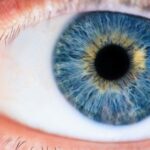
Here is the part many people get wrong. Blue eyes do not contain blue pigment. There is no blue dye in a blue iris. Instead, the iris has very little melanin, the brown pigment that colors eyes, skin, and hair. When melanin is low, light scatters inside the iris in a way that makes it look blue. This is the same basic effect that makes the sky look blue. The color is created by light, not by pigment.
Because blue eyes require this low-melanin setup, they only appear when a person inherits particular versions of the genes involved. In populations where those gene versions are uncommon, blue eyes stay rare.
Where Did Blue Eyes Originally Come From?
The leading scientific explanation traces blue eyes back to a single mutation in the OCA2 gene, estimated to have occurred somewhere between 6,000 and 10,000 years ago. Research on ancient DNA and modern genetics points to this mutation arising in a population in the region of the Black Sea, in what is now part of Eastern Europe and Western Asia.
That timing is recent in human terms. Our species is roughly 300,000 years old. Blue eyes, by this account, are a relatively new feature that spread as populations migrated and mixed.
An important clarification: all people with blue eyes today are thought to share this same mutation. That does not mean they are all closely related in a recent sense. It means the trait traces back to one common origin point, then spread widely through migration over thousands of years. This is why a person in Sweden and a person in Ireland can both have blue eyes without being recently related.
This origin story is well supported by genetic research, but like most things in human prehistory, the exact date and place carry some uncertainty. Different studies give somewhat different estimates.




Is Eye Color Really Just One Gene?
No. The OCA2 gene explains most of the difference between blue and brown eyes, but it is not the only player. Several other genes influence eye color, and this is why two blue-eyed parents can occasionally have a brown-eyed child.
The old classroom idea that eye color follows simple dominant-recessive rules is outdated. That simplified model, where brown always wins over blue, does not match what geneticists actually observe. Eye color is a polygenic trait, meaning many genes contribute, each with a small or moderate effect.
This matters for prediction. Genetic tests that claim to tell you your baby’s eye color from a saliva sample are working with probabilities, not certainties. The prediction can be wrong, and often is, because the full picture involves more genes than any consumer test measures.
Can Two Blue-Eyed Parents Have a Brown-Eyed Child?
Yes, it is possible, though uncommon. Because eye color involves multiple genes, two parents with blue eyes can carry gene versions that combine to produce brown or hazel eyes in their child.
This surprises people who learned the simple dominant-recessive model in school. Under that model, two blue-eyed parents could only have blue-eyed children. Reality is more complicated. The trait is influenced by several genes working together, so outcomes are not locked in.
The reverse is also true. Two brown-eyed parents can have a blue-eyed child if both carry the gene versions linked to low melanin. This is fairly common and does not require any unusual genetics.
Are Blue Eyes Linked to Any Health Risks?
People with blue eyes tend to have less melanin in the iris, and melanin offers some protection against ultraviolet light. Because of this, lighter eye colors, including blue, are associated with a higher risk of certain eye conditions.
Research has found links between lighter iris color and a greater chance of developing age-related macular degeneration, a leading cause of vision loss in older adults. Some studies also suggest a higher risk of uveal melanoma, a rare cancer of the eye. These are associations found in population studies, not guarantees, and the increased risk is generally modest.
Lighter eyes may also mean more sensitivity to bright light, since less pigment means less natural filtering. This is a common experience rather than a diagnosed condition.
What this does not mean is that blue eyes are a health problem. Most people with blue eyes never develop any of these conditions. It means the same low-melanin trait that creates the color also reduces a layer of natural UV protection, so protecting the eyes from strong sunlight is reasonable for anyone, and especially for people with light-colored eyes.
Will Blue Eyes Become More Rare Over Time?
The share of people with blue eyes in some countries has been declining, but the reasons are demographic rather than genetic. In the United States, for example, the proportion of blue-eyed people has dropped over the past century, mainly because of changing immigration and more mixing across populations with different ancestries.
There is a persistent claim that blue eyes are “dying out” and will disappear entirely. That claim is not supported. The gene versions that produce blue eyes are recessive in the sense that they can be hidden for a generation, but they do not vanish. As long as people who carry them have children, blue eyes can reappear.
What is actually happening is a shift in proportions, not an extinction. In regions where blue eyes are already common, they are likely to remain common. Globally, the percentage may drift as populations mix, but the trait itself is not headed for disappearance.
Does Eye Color Change Over a Lifetime?
Eye color can change in early childhood and, in some cases, later in life. Many babies are born with blue or grayish eyes that darken over the first year as melanin production increases. This is normal and expected.
In adults, eye color is generally stable, but it can appear to shift slightly with age, lighting, or what a person is wearing. These are usually perception effects rather than actual pigment changes.
A genuine change in eye color in adulthood, especially in just one eye, is worth mentioning to a doctor. It can sometimes signal an underlying eye condition. This is uncommon, but it is the kind of change that deserves a professional look rather than a wait-and-see approach.
Frequently Asked Questions
What percentage of people have blue eyes?
Roughly 8 to 10 percent of the world’s population has blue eyes, or about 1 in 10 people. The share varies widely by region, from a majority in parts of Northern Europe to rare in most of Africa and Asia.
Are blue eyes actually blue pigment?
No, blue eyes contain no blue pigment. They look blue because the iris has very little melanin, and light scatters inside it in a way that produces a blue appearance.
Can two blue-eyed parents have a brown-eyed baby?
Yes, it is possible, though uncommon. Eye color involves several genes, not just one, so two blue-eyed parents can still have a child with brown or hazel eyes.
Are blue eyes going extinct?
No. The share of blue-eyed people has declined in some countries for demographic reasons, but the trait is not disappearing. It can reappear in families as long as carriers have children.
