
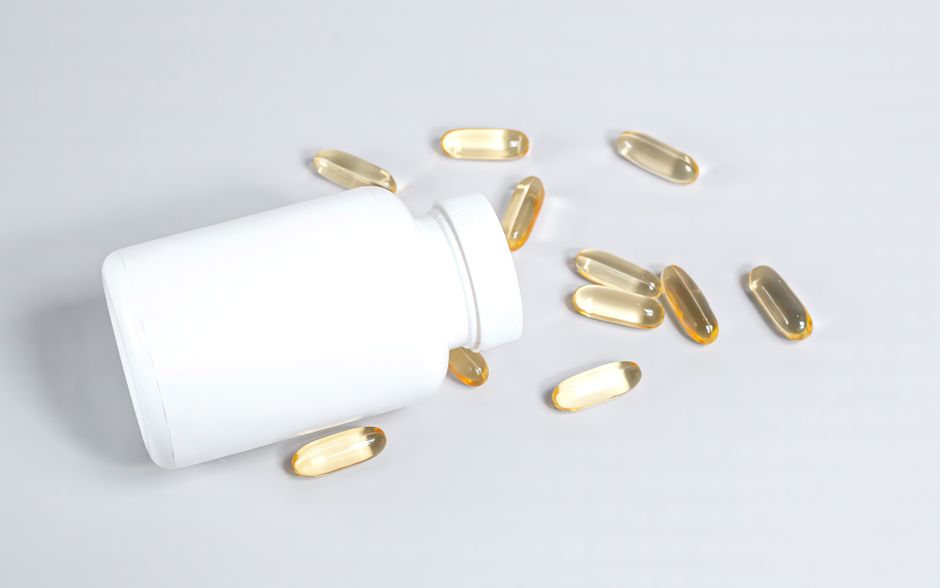
Omega-3 fatty acids lower triglycerides, sometimes substantially, but they do not reliably lower LDL cholesterol — and in some people they can raise it slightly. That difference matters more than most supplement labels let on. If you are taking fish oil to “fix your cholesterol,” you may be aiming at the wrong target.
The two blood fats respond to omega-3s in opposite ways. Triglycerides tend to fall. LDL cholesterol — the “bad” one most people worry about — often stays flat or drifts up a little. HDL cholesterol, the “good” one, usually changes very little. Understanding why helps you set realistic expectations and ask better questions of your doctor.
How Omega 3 Affects Cholesterol And Triglycerides Differently
Triglycerides are the fat molecules your body stores for energy and ships through your bloodstream between meals. Omega-3s reduce how much of this fat your liver makes and speed up how quickly it gets cleared from circulation. This is a well-established effect, and it is the strongest and most consistent thing omega-3s do to a standard lipid panel.
LDL cholesterol behaves differently. LDL particles carry cholesterol to tissues. When triglycerides drop, the liver sometimes repackages cholesterol in ways that leave more LDL circulating. This is why a person can see their triglycerides fall while their LDL creeps upward at the same time. It is not a sign the omega-3s are failing. It is a sign the two measurements are governed by different processes.
HDL cholesterol — the particle that helps return cholesterol to the liver — generally does not move much with omega-3 supplementation. Some studies show small increases, others show none. The effect is not reliable enough to count on.
Here is the practical consequence. If your main concern is high triglycerides, omega-3s are one of the more effective dietary tools available. If your main concern is high LDL, omega-3s are not the answer, and taking more of them will not change that.
What Does Omega 3 Actually Do to Triglycerides?
Omega-3s lower triglycerides through several mechanisms working at once. The two main fatty acids involved are EPA (eicosapentaenoic acid) and DHA (docosahexaenoic acid), both found in fatty fish. The body uses them to reduce production of triglycerides in the liver, increase the breakdown of triglyceride-rich particles in the blood, and shift how the liver handles incoming fats.
The size of the effect depends on the dose and on your starting level. People with very high triglycerides see larger drops than people whose triglycerides are already normal. Someone starting at 500 mg/dL has more room to fall than someone starting at 120 mg/dL. That is a general pattern, not a precise prediction for any one person.
Prescription omega-3 products, which deliver much higher doses of EPA or EPA plus DHA than standard fish oil capsules, exist specifically for people with severely elevated triglycerides. These are regulated as drugs, not supplements, and they are used under medical supervision. Over-the-counter fish oil is not interchangeable with them.
Diet matters too. Omega-3s work better in the context of a diet that is not loaded with refined carbohydrates and added sugars, both of which drive triglyceride production. Adding fish oil while drinking sugary beverages is swimming against the current.
Why Omega 3 Can Raise LDL Cholesterol Slightly
This is the part most supplement marketing leaves out. When triglyceride levels fall, LDL cholesterol often rises modestly. Researchers have observed this in many trials, particularly with higher doses of DHA.
The rise is usually small, and its meaning is debated. Some researchers argue the LDL particles that increase are larger and less likely to lodge in artery walls, which would make the change less concerning. Others are not convinced the shift is harmless. The honest position: the clinical significance of this small LDL increase is not fully settled.
What is clearer is that omega-3s are not a replacement for statins or other LDL-lowering approaches when LDL reduction is the goal. If your doctor has you on a medication to lower LDL, adding fish oil is not a substitute for it.
This also explains a confusing experience some people have. They start fish oil, their triglycerides improve, their LDL goes up, and they feel like they are going backward. The lipid panel is not wrong. It is showing two different effects from the same intervention.




How Much Omega 3 Do You Need for Triglyceride Lowering?
Dose matters, and the doses studied for triglyceride lowering are higher than what most people get from a typical serving of fish or a standard capsule.
General dietary guidance from major health organizations recommends eating fish, particularly fatty fish, at least twice a week. That is a food-based recommendation aimed at general cardiovascular health, not a specific triglyceride target.
For clinically meaningful triglyceride reduction, research has generally used doses in the range of 2 to 4 grams per day of combined EPA and DHA. That is far above the amount in a single standard fish oil capsule, which typically contains around 1 gram of fish oil but less than that in actual EPA and DHA. You would need to read the label carefully — the “fish oil” number and the “EPA + DHA” number are not the same thing.
These higher doses are not something to self-prescribe. High-dose omega-3 can interact with blood-thinning medications and carries other considerations. Doses in this range should be discussed with a physician, especially for anyone on anticoagulants or with a bleeding disorder.
There is no established clinical guideline for omega-3 dosing in children, pregnant women, or breastfeeding women for the purpose of lowering triglycerides. If that describes you, talk to a clinician rather than adjusting your own intake.
Fish Oil Supplements vs. Eating Fish
Whole fish and capsules are not equivalent, and the evidence favors food.
- Fatty fish delivers omega-3s along with protein, vitamin D, selenium, and other nutrients that capsules do not contain.
- Observational research links regular fish consumption to better cardiovascular outcomes, though observational studies cannot prove cause and effect.
- Fish oil capsules vary widely in actual EPA and DHA content, and independent testing has found that some products contain less than the label claims.
- Eating fish is generally cheaper per gram of omega-3 than high-quality supplements.
If you do not eat fish, supplements are a reasonable alternative, but choose products that disclose their EPA and DHA content and look for third-party testing. That is a practical quality step, not a guarantee of clinical benefit.
One clarification worth knowing: flaxseed, chia, and walnuts contain ALA (alpha-linolenic acid), a plant omega-3. The body converts ALA to EPA and DHA, but the conversion rate is low — often estimated at less than 10 percent, and conversion to DHA is lower still. Plant sources are healthy foods, but they are not an efficient way to raise EPA and DHA levels.
What About Heart Disease Risk?
Lowering triglycerides is not the same as lowering heart attack risk, and this is where omega-3 research gets genuinely complicated.
Some large trials of prescription omega-3 have shown cardiovascular benefit in specific groups, particularly people with elevated triglycerides already on statin therapy. Other large trials have shown no benefit. The results are mixed, and the reasons are still being worked out — differences in the type of omega-3, the dose, and the population studied all appear to matter.
What this means for you: omega-3s have a clear, well-documented effect on triglyceride levels. Whether that translates into fewer heart attacks for any given person is less certain, and it likely depends on who you are and what else is going on with your health.
No supplement replaces the fundamentals — blood pressure control, not smoking, physical activity, and managing blood sugar. Those have stronger and more consistent evidence behind them than any single nutrient.
Reading Your Lipid Panel After Starting Omega 3
If you start omega-3s and get repeat blood work, expect the pattern described above. Triglycerides down. LDL flat or slightly up. HDL roughly unchanged.
Do not panic at a small LDL increase, and do not celebrate a triglyceride drop as proof your heart risk has fallen. Both numbers are pieces of a larger picture that includes your age, blood pressure, smoking status, diabetes, and family history.
Bring the before-and-after numbers to your doctor rather than interpreting them alone. A lipid panel is a tool for a conversation, not a verdict.
Frequently Asked Questions
Does omega 3 lower cholesterol?
Omega-3s reliably lower triglycerides but do not reliably lower LDL cholesterol, and they can raise it slightly in some people. They also have little consistent effect on HDL cholesterol.
How much does omega 3 lower triglycerides?
The drop depends on your starting level and the dose, with larger reductions typically seen in people whose triglycerides are already high. Research on meaningful triglyceride reduction has generally used 2 to 4 grams per day of combined EPA and DHA, which is far more than a standard capsule provides.
Can I take fish oil instead of a statin?
No. Fish oil and statins work on different blood fats, and fish oil is not a substitute for LDL-lowering medication. Never stop or change a prescribed medication without talking to your doctor.
Is it better to get omega 3 from fish or supplements?
Whole fish is generally preferred because it provides omega-3s along with other nutrients, and observational studies link regular fish intake to better heart outcomes. Supplements are a reasonable option if you do not eat fish, but product quality varies.
