
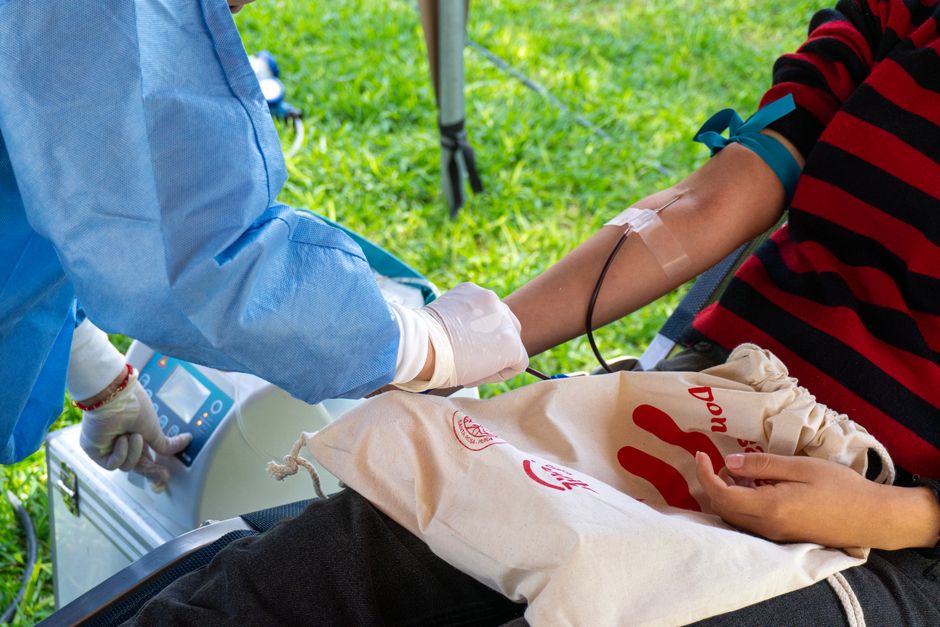
Plasma donation is one of the few ways a healthy adult can give something that gets turned into medicine for someone else within days. The short answer to how often you can donate plasma is this: federal rules allow up to twice in a seven-day period, with at least 48 hours between donations. That works out to a maximum of about 104 donations a year, though most centers and most donors do far fewer.
Those limits are not arbitrary. They exist because plasma is mostly water, and your body has to rebuild both the fluid and the proteins you gave away. Understanding why the rules are set where they are helps you decide what schedule actually works for your body.
How Often Can You Donate Plasma at a US Center?
Source plasma centers in the United States operate under rules that permit two donations in a seven-day period, separated by at least two days. The two-day gap is the part people most often get wrong. It means you cannot donate Monday and Tuesday, even if you feel fine.
This schedule is a regulatory floor, not a target. It is the maximum allowed, and it assumes a healthy donor who meets weight and protein requirements. Centers track your donations in a shared database, so you cannot exceed the limit by visiting a different company.
Whole blood donation works on a very different clock. Whole blood is usually limited to once every 56 days, because you are giving red blood cells that take weeks to replace. Plasma donation returns your red cells to you through a process called apheresis, which is why the recovery window is measured in days instead of months. That difference is the single biggest reason plasma can be donated so much more often.
What Happens to Your Body After You Donate Plasma?
Plasma is about 90 percent water. The remaining portion is a mix of proteins, electrolytes, hormones, and waste products. When you donate, a machine draws your blood, separates the plasma, and returns the blood cells and most of the fluid to you.
Your body replaces the lost fluid within roughly 24 to 48 hours if you are drinking normally. That is the main reason the two-day gap exists. The proteins are a slower story. Albumin and the various globulins your plasma carries are rebuilt over a longer period, which is why nutrition and hydration matter more with frequent donation than with a single donation.
Some donors notice lightheadedness, fatigue, or bruising at the needle site. These are common and usually short-lived. Less common but more serious is a reaction to the citrate anticoagulant used during apheresis, which can cause tingling around the mouth or in the fingers. Center staff are trained to manage this, and slowing the return rate often resolves it.
Why the Two-Day Rule Exists
The 48-hour gap is a fluid and protein recovery window, not a safety ritual. Regulators and plasma collection companies settled on it after tracking donor health and plasma protein levels across large numbers of frequent donors.
There is a real trade-off built into the limit. Donating more often helps meet the demand for plasma-derived therapies used to treat immune deficiencies, bleeding disorders, and other conditions. Donating too often without adequate recovery can push protein levels down and leave a donor feeling worn out.
Here is something many donors do not realize: the protein loss is cumulative in a way the fluid loss is not. A single donation is easy to bounce back from. Twice a week for months is a different physiological load, and it is why centers check your total protein and hemoglobin levels regularly rather than just once at signup.





What Determines Whether You Can Donate More or Less Often?
Your personal ceiling depends on factors the federal maximum does not account for. Centers screen for these at every visit, and a failed screen means you donate less often whether you planned to or not.
- Total protein and hemoglobin: If either falls below the center’s cutoff, you are deferred until it recovers. This is the most common reason frequent donors get turned away.
- Hydration: Poor hydration makes veins harder to access and increases the chance of a reaction.
- Body weight: Donors must meet a minimum weight, and the volume collected is scaled to body size.
- Diet: Adequate protein intake supports rebuilding what you lost.
- Recent illness, tattoos, or travel: These can trigger temporary deferrals unrelated to your donation frequency.
Age and overall health matter too. Older adults and people with certain medical conditions may be cleared less often or not at all. The center’s medical staff makes that call, not the general guideline.
How Does Plasma Donation Compare to Other Types?
The frequency limits for each donation type reflect what your body actually loses. This table shows the general US limits, though individual centers and your health status can tighten them.
| Donation type | Typical US limit | Why the limit differs |
|---|---|---|
| Plasma (source) | Up to twice in 7 days, at least 48 hours apart | Fluid replaced in 1-2 days; proteins take longer |
| Whole blood | About every 56 days | Red blood cells take weeks to regenerate |
| Platelets (apheresis) | Up to 24 times a year, often every 7 days | Platelets recover faster than red cells |
| Double red cells | About every 112 days | Two units of red cells lost at once |
These figures are general. Always confirm the current limit with the specific center you plan to use, because company policies and state rules can be stricter than the federal floor.
Does Donating Plasma Twice a Week Cause Harm?
For a healthy donor who meets the requirements, donating at the maximum allowed frequency is considered acceptable under current US regulations. That does not mean it is harmless for everyone.
The evidence on long-term effects of very frequent plasma donation is limited. Some research has raised questions about sustained effects on protein levels and on bone health in people who donate at high frequency for years. The findings are not uniform, and the studies have limitations. It is fair to say the long-term picture is not fully settled rather than to claim it is either clearly safe or clearly risky.
What is well established is that dehydration, inadequate protein intake, and ignoring deferral rules make problems more likely. If you feel persistently tired, notice swelling, or keep getting deferred for low protein, that is your body signaling that your current frequency is too high for you.
How to Donate Plasma Safely and Often
If you want to donate regularly, the practical steps are not complicated, but they need to be consistent rather than occasional.
- Drink water steadily in the 24 hours before and after donating, not just right before you walk in.
- Eat a protein-rich meal beforehand and keep protein intake up between donations.
- Do not donate on an empty stomach or after heavy alcohol use.
- Skip a session if you are sick, dehydrated, or still recovering from the last one.
- Keep your own record of donations so you do not rely on memory.
- Tell center staff about any new medication or health change.
Never try to work around the two-day rule or the screening checks. The limits exist because the people who set them watched what happens to donors who push past them.
Frequently Asked Questions
How many times a week can you donate plasma?
US regulations allow up to two plasma donations in a seven-day period, with at least 48 hours between them. Most centers and most donors follow a lighter schedule.
Can you donate plasma two days in a row?
No. There must be at least 48 hours between plasma donations, so back-to-back days are not allowed. Centers track this in a shared system, so switching companies does not get around the rule.
How long should you wait between plasma donations?
At least two days. This gap gives your body time to replace the fluid and begin rebuilding the plasma proteins you gave away.
Is it safe to donate plasma twice a week long term?
Current US rules permit it for healthy donors who meet screening requirements, but the evidence on years of high-frequency donation is limited. If you are repeatedly deferred for low protein or feel persistently run down, that frequency is too high for you.
