
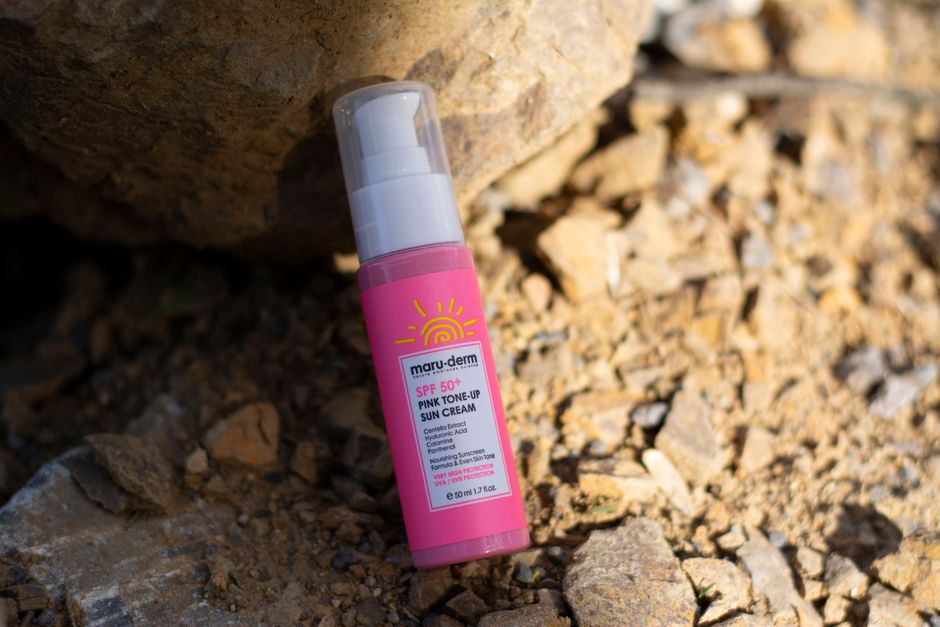
The short answer is that you need about half a teaspoon of sunscreen for your face and neck. That works out to roughly two finger-lengths of sunscreen squeezed along your index and middle fingers. Most people apply far less than this, which is why sunburn and skin damage still happen even when sunscreen is used daily.
Why Half a Teaspoon Matters
Sunscreen is tested in laboratories at a specific thickness. That thickness is 2 milligrams of product per square centimeter of skin. This is the standard used to determine the SPF number on the bottle.
When you apply less than that amount, you get less protection than the SPF label promises. Research consistently shows that people apply between 25 and 50 percent of the amount used in testing. If you apply half the required amount of an SPF 30 sunscreen, you may only get the equivalent of SPF 5 to 15 protection.
That difference is not cosmetic. It is the difference between meaningful protection and minimal protection.
How to Measure the Right Amount
Measuring half a teaspoon every morning feels tedious. The two-finger method is easier to remember.
Squeeze sunscreen along the full length of your index and middle fingers. That amount is roughly the half teaspoon needed for your face and neck. If you also cover your ears and the front of your chest, add a third finger-length.
This method works for lotions and creams. It does not work for sprays, which require a different approach. For sprays, apply until the skin glistens, then rub it in. Most people underapply sprays by a wide margin.
Does Face Sunscreen Need More Than Body Sunscreen?
The face needs the same thickness of sunscreen as the rest of your body. The difference is that the face has a smaller surface area, so it requires less total product.
The face and neck together make up roughly 4 to 5 percent of your total body surface area. A full-body application requires about one ounce, or a shot glass full. The face and neck alone need that half teaspoon.
Some dermatologists recommend a slightly thicker layer on the face because facial skin is more exposed to daily sun than most body skin. The practical takeaway: half a teaspoon is the minimum. Slightly more does not hurt.





When to Reapply Sunscreen on Your Face
Sunscreen does not last all day. Chemical filters break down in sunlight. Physical filters can be rubbed or sweated off. Either way, protection drops over time.
Reapply every two hours when you are outdoors. If you are swimming or sweating heavily, reapply more often. The two-hour rule applies regardless of whether your sunscreen claims to be water-resistant for longer periods.
For office workers who stay indoors most of the day, the rules are different. One application in the morning is often enough for a commute and lunch break. If you sit near a window, you still receive UVA exposure through glass. Reapplying before your commute home is a reasonable habit.
Does Makeup Affect How Much Sunscreen You Need?
Makeup with SPF is not a substitute for sunscreen. The amount of foundation people apply is far below the tested thickness. An SPF 30 foundation applied thinly might give you SPF 5 or less.
If you wear makeup, apply sunscreen first, let it dry, then apply makeup on top. Some people use powder sunscreens to touch up during the day. These are convenient but provide uneven coverage compared to lotion. They work best as a supplement, not a primary layer.
There is another option: tinted sunscreens. These provide both color and full SPF protection in one product. They can replace foundation for many people. Look for a tinted sunscreen with an SPF of 30 or higher and apply the full half teaspoon amount.
Does Skin Tone Affect How Much Sunscreen You Need?
No. The amount of sunscreen you need does not change based on skin tone. Darker skin has more natural melanin, which provides some built-in protection. That protection is roughly equivalent to SPF 13 at best.
Melanin does not block all UVA radiation. UVA rays penetrate deeper into the skin and cause premature aging and skin cancer risk. People with darker skin can develop skin cancer, and they often receive later diagnoses because of the assumption that sun damage is less of a concern.
The half teaspoon rule applies to everyone regardless of skin tone.
What Happens When You Apply Too Little Sunscreen
Underapplying sunscreen creates a false sense of security. You think you are protected by SPF 50 when your actual protection is closer to SPF 10 or 15.
This leads to three problems. First, sunburn. Second, cumulative DNA damage that does not show up for years. Third, premature skin aging from UVA exposure.
Sun damage is cumulative. Every day of underprotection adds to the total. The skin does not fully repair UV damage, and the effects build over decades. This is why dermatologists emphasize daily sunscreen use more than occasional perfect application.
Choosing the Right Sunscreen for Your Face
The best sunscreen is the one you will actually use every day. That said, facial sunscreens differ from body sunscreens in some meaningful ways.
Facial sunscreens are often formulated to be lighter and less greasy. They may be labeled as non-comedogenic, meaning they are less likely to clog pores. If you have acne-prone skin, look for this label, though it is not a guarantee that you will not break out.
Mineral sunscreens containing zinc oxide or titanium dioxide sit on top of the skin. They are less likely to irritate sensitive skin but can leave a white cast. Chemical sunscreens absorb into the skin and are invisible once applied. Both types work well when applied in the correct amount.
There is no evidence that one type of sunscreen is meaningfully more effective than the other when both are applied correctly. The SPF number matters more than the filter type.
Does Sunscreen Expire?
Yes. Sunscreen has a shelf life of about three years from the date of manufacture. Most bottles have an expiration date printed on them.
Using expired sunscreen is risky. The filters degrade over time and lose effectiveness. If you find a bottle from last summer that sat in a hot car, replace it. Heat accelerates the breakdown of sunscreen filters.
If your sunscreen has changed color, consistency, or smell, throw it out. These are signs that the product has degraded.
Myths About Sunscreen on the Face
One common myth is that you only need sunscreen on sunny days. UV rays pass through clouds. Up to 80 percent of UV radiation can penetrate cloud cover. Overcast days still cause sun damage.
Another myth is that sunscreen with vitamin D concerns means you should skip it. Sunscreen does reduce vitamin D production, but most people get adequate vitamin D from their diet and incidental sun exposure on unprotected skin. The risk of skin cancer from unprotected sun exposure outweighs the benefit of extra vitamin D production for most people.
A third myth is that SPF 100 gives double the protection of SPF 50. SPF 50 blocks about 98 percent of UVB rays. SPF 100 blocks about 99 percent. The difference is marginal, and the higher SPF gives people a false sense of security that leads to underapplying and forgetting to reapply.
Frequently Asked Questions
How much sunscreen should I put on my face?
Use about half a teaspoon for your face and neck. That is roughly two finger-lengths of sunscreen squeezed along your index and middle fingers.
Is one pump of sunscreen enough for the face?
Most sunscreen pumps dispense about a quarter teaspoon per pump, so you need two pumps for adequate face and neck coverage. If you are unsure, measure it once with a teaspoon to calibrate your pump.
Can I use body sunscreen on my face?
Yes, body sunscreen works on the face in terms of protection. It may feel heavier or greasier than face-specific formulas, and it may irritate sensitive skin, but the SPF protection is the same.
How often should I reapply sunscreen on my face?
Reapply every two hours when you are outdoors or near windows. Reapply more often if you are sweating or swimming. If you stay indoors all day, one morning application is often sufficient.
