
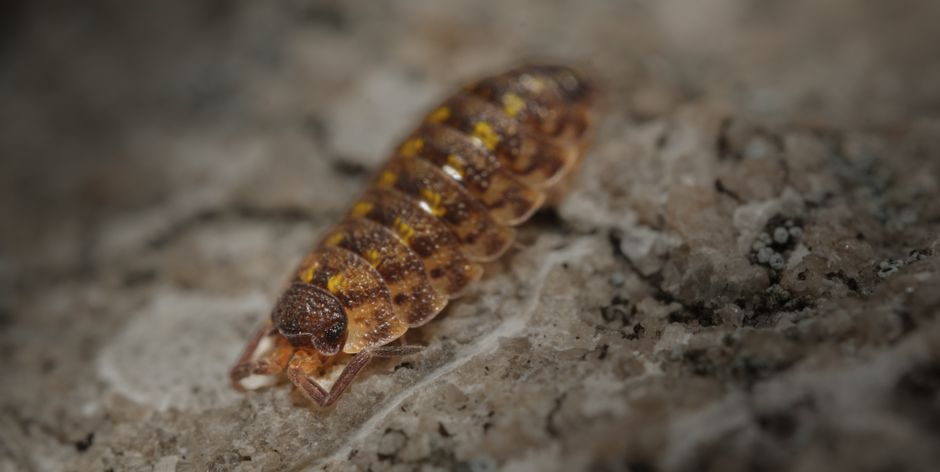
Isopods need roughly 1 gallon of enclosure space per 10 to 20 adult isopods for a healthy colony. A 10-gallon tank comfortably supports a starter colony of 50 to 100 isopods, while a 5-gallon container suits 25 to 50. That said, surface area matters more than volume. A wide, shallow enclosure beats a tall, narrow one every time because isopods live and forage on the ground, not in the air above it.
If you are keeping isopods as pets, as a cleanup crew in a bioactive terrarium, or as a feeder colony, getting the space right prevents the crashes, mold outbreaks, and die-offs that frustrate new keepers. Here is what actually matters and what does not.
How Much Space Do Isopods Need For A Healthy Colony?
The rule of thumb most experienced keepers use is 1 gallon of substrate-filled enclosure space per 10 to 20 adult isopods. This is a practical guideline, not a laboratory-derived standard, and it comes from years of hobbyist observation rather than controlled trials. No peer-reviewed study has established an exact minimum density for any isopod species.
What the guideline reflects is real biology. Isopods are detritivores. They eat decaying plant matter, leaf litter, and the microorganisms breaking that material down. A colony’s food supply is not the surface you see. It is the substrate volume and the leaf litter layer sitting on top of it. Crowd too many animals into too little substrate and the food runs out, waste accumulates, and stress rises.
Two factors override the gallon rule:
- Surface area. A 10-gallon tank that is long and low holds more usable floor space than a 10-gallon tank that is tall and narrow. Isopods rarely climb. Floor area is where they live.
- Species. Small species like dwarf white isopods can be kept at much higher densities than large species like Porcellio hoffmannseggi or Spanish isopods. A 5-gallon bin that comfortably houses hundreds of dwarf whites would be cramped for a dozen large adults.
The gallon guideline is a starting point. Watch your colony and adjust. Visible overcrowding, constant surface wandering, and food disappearing within hours are all signs you need more room.
Why Surface Area Matters More Than Tank Height
Isopods are ground-dwelling crustaceans. They spend nearly all their time in the leaf litter layer and the top inch or two of substrate, and they only climb when something is wrong or when they are exploring for food. A tall tank with a small footprint gives you the same gallon number as a shallow tank with a wide footprint, but far less usable habitat.
This is why plastic storage bins, sweater boxes, and shallow glass aquariums are popular. They maximize floor area per dollar and per shelf space. A 6-quart shoebox bin with a footprint of roughly 12 by 8 inches holds more usable isopod habitat than a decorative glass jar of similar volume.
Substrate depth is the other half of the equation. Aim for at least 2 to 3 inches of substrate for most species, and 4 inches or more for burrowing species. Depth gives you three things at once: a moisture gradient the isopods can move through, a food reserve as they graze on decaying material, and a buffer against ammonia buildup from waste.
A shallow layer of substrate in a huge enclosure is not the same as a deep layer in a smaller one. Volume of substrate, not volume of air, is what supports the colony.
How Many Isopods Can Live in a 5, 10, or 20 Gallon Enclosure?
These are practical starting points based on the 1 gallon per 10 to 20 adults guideline. They assume 2 to 3 inches of substrate and a healthy leaf litter layer. Adjust downward for large species and upward for dwarf species.
| Enclosure Size | Small Species | Medium Species | Large Species |
|---|---|---|---|
| 5 gallons | 50 to 100 | 25 to 50 | 10 to 20 |
| 10 gallons | 100 to 200 | 50 to 100 | 20 to 40 |
| 20 gallons | 200 to 400 | 100 to 200 | 40 to 80 |
Treat these numbers as a range, not a target. A colony at the low end of the range has room to breed and grow. A colony at the high end is already at capacity and will need expansion soon.
Starting small is almost always the better choice. A colony of 10 to 20 isopods in a 10-gallon enclosure will breed to fill the space within a few months under good conditions. Starting with 200 in the same enclosure skips the growth phase and jumps straight to overcrowding.




What Happens When a Colony Is Overcrowded?
Overcrowding in isopod colonies does not look like a crowded subway car. It looks like a slow decline. The signs build gradually, which is why new keepers often miss them until the colony has already crashed.
Common signs of overcrowding include:
- Food disappearing within hours of being added, every time
- Isopods wandering constantly on the surface instead of burrowing
- Molting failures and deformities in young isopods
- A sharp ammonia or sour smell from the substrate
- Sudden die-offs after what looked like stable growth
- Mold outbreaks that keep returning despite good ventilation
The mechanism is straightforward. More animals produce more waste. Waste breaks down into ammonia and other nitrogen compounds. In a small volume of substrate, those compounds build faster than the microorganism population can process them. Isopods are sensitive to ammonia, and chronic exposure stresses them, suppresses molting, and eventually kills them.
Food scarcity works the same way. When the leaf litter and supplemental food run out faster than you can replace it, the colony cannibalizes its own young and weakened adults. That is not aggression. It is a nutrient shortage playing out.
The fix is not more food. It is more space. Adding food to an overcrowded colony just accelerates the waste problem.
Does the Species Change How Much Space You Need?
Species size is the single biggest variable after surface area. A mature Porcellio hoffmannseggi can reach over an inch long. A dwarf white isopod is barely visible, often under a quarter inch. You can fit hundreds of dwarf whites in the same footprint that would house a dozen large Porcellio comfortably.
Species also differ in behavior. Some, like Porcellio laevis, are surface-active and roam widely. Others, like many Armadillidium species, burrow more and stay hidden. Surface-active species need more floor area per animal because they use more of it. Burrowing species can sometimes be kept at slightly higher densities because they divide their time between surface and substrate.
Reproductive rate matters too. Dwarf white isopods and Porcellio scaber breed quickly and will fill available space fast. Slower-breeding species like some Cubaris varieties give you more time before overcrowding becomes an issue. If you are keeping a fast-breeding species, plan for expansion from the start.
As a general rule, if you are unsure, go bigger. The cost difference between a 6-quart bin and a 15-quart bin is small. The cost of a colony crash is not.
How Do You Know When to Upgrade the Enclosure?
Upgrade when the colony shows consistent signs of pressure, not when it hits a specific number. Counting isopods in a breeding colony is impractical, and the gallon guideline is a starting estimate, not a trigger point.
Watch for these signals that it is time to move the colony to a larger enclosure:
- Food is gone within a few hours of every feeding
- You see isopods climbing the walls or gathering at the lid
- The substrate smells sour or ammonia-like even after a spot clean
- Mold returns within days of every cleanup
- You are finding dead adults without an obvious cause
- Juveniles appear in lower numbers than expected
When you upgrade, move the entire substrate, not just the isopods. The substrate contains beneficial microorganisms, springtails, and eggs you cannot see. Transferring it intact gives the colony a much smoother transition.
If you cannot upgrade, you can slow growth by reducing supplemental feeding and keeping the colony cooler. Neither is a long-term solution. Isopods breed when conditions are good, and a healthy colony will always outgrow its enclosure eventually.
Do Isopods Need Space to Hide and Forage?
Yes, and this is where the gallon rule can mislead. Space is not just room to stand. It is room for the behaviors that keep a colony healthy: hiding, foraging, molting, and breeding without constant competition.
Isopods are prey animals in the wild. They seek cover when stressed, and a colony with nowhere to hide shows higher mortality. Add cork bark, leaf litter, and pieces of decaying wood. These serve double duty as food and shelter. A colony with good cover can be kept at slightly higher densities than a bare enclosure because stress is lower.
Foraging space matters too. Isopods graze across a wide area in the wild, and in captivity they will do the same if given the chance. A wide, leaf-litter-covered floor lets them spread out naturally. A cramped floor forces them into constant contact, which increases competition and stress.
Molting is the most overlooked reason for space. Isopods molt in stages and are vulnerable during the process. They need quiet, humid, undisturbed areas to complete a molt successfully. In a crowded enclosure, molting isopods get disturbed, and failed molts are a common cause of death in overstocked colonies.
Frequently Asked Questions
How many isopods can I keep in a 10-gallon tank?
A 10-gallon tank comfortably supports roughly 50 to 100 medium-sized adult isopods, or 100 to 200 small species like dwarf whites. Large species like Porcellio hoffmannseggi should be kept closer to 20 to 40 adults in the same space.
Can isopods live in a small jar or critter keeper?
A small jar or critter keeper can work as a temporary holding container, but it is not suitable for a breeding colony. Isopods need at least 2 to 3 inches of substrate and enough floor area to forage, hide, and molt without constant crowding.
Do isopods need deep substrate or just floor space?
Both matter, but substrate depth is what supports long-term colony health. Aim for 2 to 3 inches minimum for most species, and 4 inches or more for burrowing species. Shallow substrate in a large enclosure does not substitute for proper depth.
How do I know if my isopod colony is overcrowded?
Constant surface wandering, food disappearing within hours, recurring mold, and a sour or ammonia-like smell from the substrate are the main signs. If these persist after a cleanup, the colony needs a larger enclosure.
