
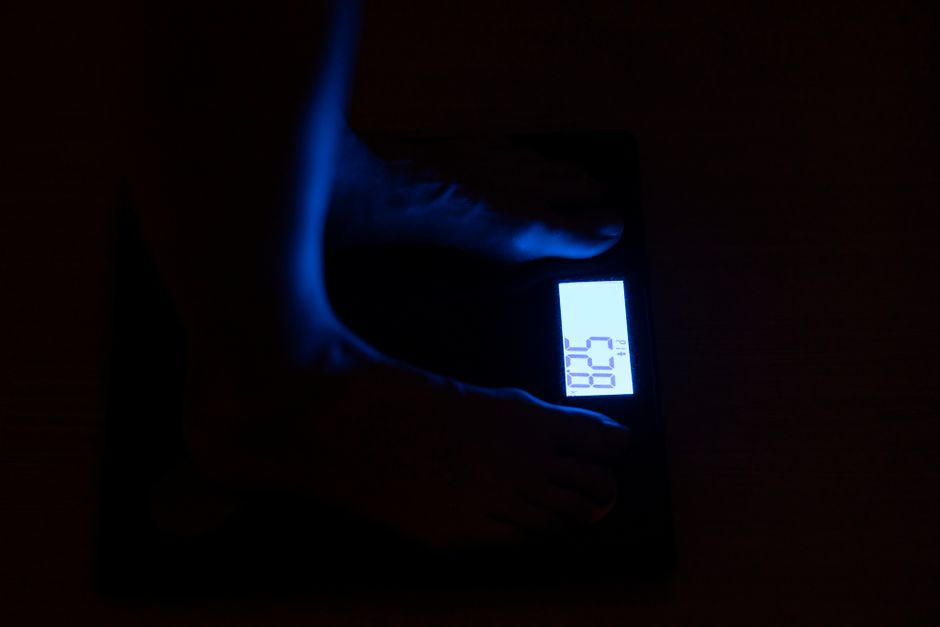
You step on the scale. The number stares back at you. It tells you what you weigh, but it does not tell you if that weight is healthy for your body. The honest answer is that your ideal weight depends on many things the scale cannot measure — your muscle mass, your bone density, your waist circumference, and your overall health markers. A person can weigh more than their “ideal” chart number and be healthier than someone who hits it exactly. The scale is one tool, not the final word.
What Does Your Body Weight Actually Tell You?
Body weight is a simple measurement. It is the total mass of your bones, organs, muscle, fat, and water. The number changes throughout the day based on what you eat, drink, and how much you have moved. A single weigh-in does not give you a health diagnosis.
Research published in the Journal of the American Medical Association found that weight alone does not predict health outcomes as well as other measures. The CDC reports that metabolic health depends more on where you carry fat than on total pounds. Two people can weigh the same and have very different health risks.
Think of your weight as one data point. It is useful for tracking trends over weeks and months. It is not useful for judging your daily health or worth. If your weight stays stable and your energy is good, that number matters far less than you think.
Why Body Mass Index (BMI) Falls Short
BMI is the most common tool doctors use to estimate healthy weight ranges. It is a simple calculation using height and weight. The formula has been around since the 1830s. It was never designed to assess individual health.
The National Institutes of Health acknowledges that BMI does not distinguish between muscle and fat. A professional athlete with very low body fat can have a BMI in the “overweight” or “obese” range. A person with very little muscle but high body fat can have a “normal” BMI. Both labels miss the real picture.
BMI also does not account for age, sex, or ethnicity. Research in The Lancet found that people of Asian descent have higher health risks at lower BMI levels than people of European descent. For older adults, a slightly higher BMI may actually be protective against bone loss and frailty.
Some doctors still use BMI as a screening tool. That is fine. But it should never be the only measure. If your BMI says “overweight” but your blood pressure, blood sugar, and cholesterol are normal and you exercise regularly, that label likely does not apply to you.
What the Scale Cannot Measure: Body Composition
Body composition tells you how much of your weight is muscle versus fat. This is the number that matters more than total weight. Two people at 150 pounds can have completely different body compositions. One may have 25 percent body fat. The other may have 15 percent. Their health profiles will differ significantly.
The most accurate methods for measuring body composition are DEXA scans and hydrostatic weighing. These are not something most people do regularly. A simpler option is a bioelectrical impedance scale. These are not perfectly accurate, but they give you a useful trend over time.
Waist circumference is another practical measure that research strongly supports. The American Heart Association states that a waist measurement over 35 inches for women and over 40 inches for men indicates higher risk for heart disease and type 2 diabetes. This is because belly fat, or visceral fat, is more metabolically active and harmful than fat stored under the skin.
If you want one number that tells you more than the scale, measure your waist. If it stays within healthy range and your clothes fit the same, your weight is likely fine regardless of what the scale says.





How Much Should I Weigh? What the Scale Wont Tell You About Healthy Ranges
The question “How much should I weigh?” has no single answer. Healthy weight ranges exist, but they are wide. For a person who is 5 feet 5 inches tall, a healthy weight range is roughly 114 to 150 pounds according to standard charts. That is a 36-pound spread. Within that range, your individual healthy weight depends on your frame size, muscle mass, and personal health history.
What the scale will not tell you is whether your weight is stable. Rapid weight loss or gain is often a stronger health signal than the number itself. The CDC notes that losing more than 5 percent of your body weight in six to twelve months without trying can signal an underlying health condition. Gaining weight quickly can indicate fluid retention or metabolic changes.
What the scale will not tell you is how your weight interacts with your lifestyle. If you eat well, sleep enough, manage stress, and move your body regularly, your weight is likely where it needs to be for your body. Forcing it to a lower number often backfires. The body resists weight changes that feel like starvation.
What the scale will not tell you is that muscle weighs more than fat. If you start strength training, your weight may stay the same or even go up while your body fat percentage drops. That is a win. The scale will show it as a loss if you only look at the number.
What Research Says About Weight and Longevity
Large population studies show a U-shaped relationship between weight and mortality. Very low body weight and very high body weight both carry higher risks. The lowest mortality risk is often in the “overweight” BMI category, not the “normal” category. This is called the obesity paradox.
A 2023 analysis in the Journal of the American Geriatrics Society found that adults over 65 with a BMI between 25 and 30 had lower death rates than those with a BMI under 22. The reasons are not fully understood. It may be that having some extra body mass provides energy reserves during illness. It may also be that people who maintain weight into older age are healthier overall.
What research consistently shows is that metabolic health matters more than weight. A study in JAMA Internal Medicine tracked over 50,000 adults and found that metabolically healthy people with obesity had no higher risk of death than metabolically healthy people of normal weight. The risk came from metabolic problems like high blood pressure, high blood sugar, and high triglycerides — not from weight alone.
If your blood work looks good and you feel strong, your weight is likely fine. Chasing a lower number on the scale can lead to muscle loss, slowed metabolism, and nutrient deficiencies. That is far worse than carrying a few extra pounds.
| Health Marker | What the Scale Shows | What the Scale Misses |
|---|---|---|
| Body weight | Total mass | Muscle vs. fat ratio |
| BMI | Height-to-weight ratio | Body composition, age, sex, ethnicity |
| Waist circumference | Nothing | Visceral fat level |
| Blood pressure | Nothing | Cardiovascular risk |
| Blood sugar | Nothing | Diabetes risk |
| Energy and strength | Nothing | Functional health |
What to Focus On Instead of the Number
Stop weighing yourself daily. Weekly weigh-ins at the same time of day give you better trend data. Morning after using the bathroom is the most consistent time. Even then, expect normal fluctuations of two to four pounds from water retention, salt intake, and hormone cycles.
Pay attention to how your clothes fit. If your pants feel tighter around the waist, that tells you something real. If they fit the same, your body composition is likely stable. This is more useful than a scale number.
Track your energy levels, sleep quality, and how you feel during exercise. These are markers of metabolic health that no scale can measure. If you have good energy and your blood work is normal, your weight is in the right range for your body.
If you want to change your body composition, focus on strength training and protein intake. Building muscle raises your resting metabolism. That helps you maintain a healthy weight more effectively than restricting calories. Crash dieting leads to muscle loss and a slower metabolism. That makes long-term weight management harder.
Some people report that obsessing over the scale makes them anxious and leads to unhealthy eating patterns. There is no clinical evidence that daily weigh-ins improve health outcomes for most people. If the scale causes you stress, put it away for a month. See how you feel.
Common Misconceptions About Healthy Weight
A common myth is that there is one perfect weight for your height. This is not true. Healthy weight exists as a range, and that range shifts with age. As you get older, your body naturally loses muscle and bone density. Your healthy weight at 25 is not the same as your healthy weight at 55.
Another myth is that losing weight always improves health. Rapid weight loss from extreme dieting can cause gallstones, nutrient deficiencies, and loss of muscle mass. A 2020 study in Nutrients found that weight cycling — repeatedly losing and gaining weight — is linked to higher cardiovascular risk. Slow, steady changes are safer than quick fixes.
Some people believe that if their BMI is normal, they are automatically healthy. This is also false. Normal-weight obesity is a real condition where a person has a healthy BMI but high body fat percentage and low muscle mass. These individuals can have the same metabolic risks as someone with a higher BMI. The scale alone does not catch this.
- Healthy weight is a range, not a single number. Your personal range depends on frame size, muscle mass, and age.
- Waist measurement matters more than total weight. Visceral fat is the strongest predictor of metabolic disease risk.
- Muscle gain can raise your weight while improving your health. The scale cannot tell the difference between muscle and fat.
- Metabolic health markers matter more than weight. Normal blood pressure, blood sugar, and cholesterol are better health targets.
- Daily weigh-ins often cause unnecessary stress. Weekly trends are more useful than daily fluctuations.
Frequently Asked Questions
What is a healthy weight for my height?
A healthy weight range is typically based on a BMI of 18.5 to 24.9, but this range does not account for muscle mass or body composition. A more personalized approach considers your waist circumference, activity level, and metabolic health markers.
Why does the scale show a different number every day?
Daily weight changes of two to four pounds are normal and come from water retention, salt intake, digestion, and hormone fluctuations. Weighing weekly at the same time gives a more reliable trend.
Can you be healthy at a higher weight?
Yes, research shows that metabolically healthy people with higher body weight have no greater risk of death than people of normal weight. Health markers like blood pressure and blood sugar matter more than the number on the scale.
Should I stop weighing myself altogether?
Not necessarily, but if the scale causes anxiety or leads to unhealthy behaviors, taking a break is reasonable. Focus on how your clothes fit, your energy levels, and your lab results instead.
