
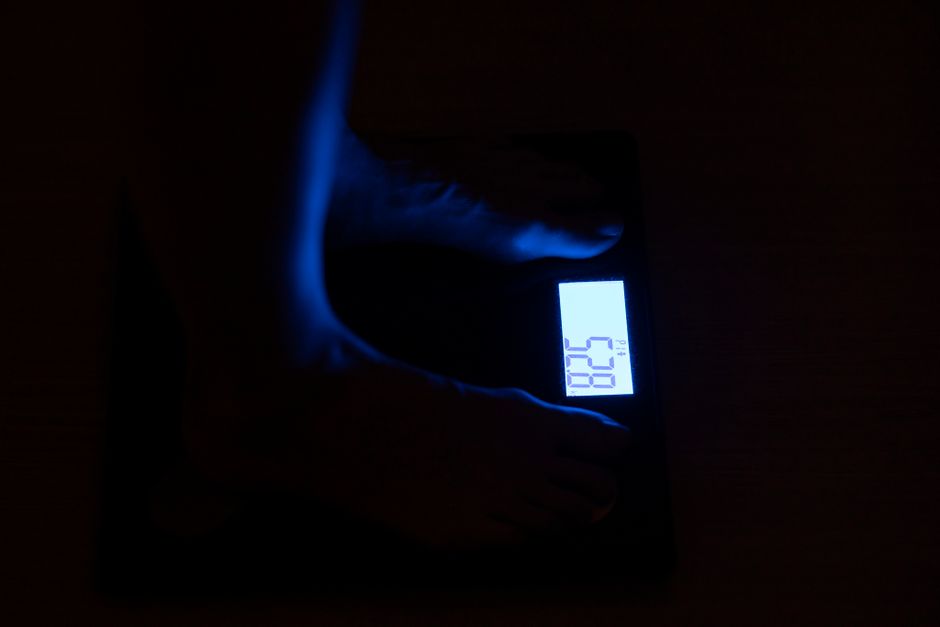
Your skeleton is the frame that holds your entire body together. It protects your organs, anchors your muscles, and gives you your shape. But when you step on a scale, you are weighing everything at once—muscle, fat, water, organs, and bone. So, how much does the skeletal system weigh on its own? For an average adult, the skeleton weighs about 15 percent of total body weight. That means a person who weighs 160 pounds has a skeleton that weighs roughly 24 pounds. The exact number depends on your height, sex, and overall body size.
How Much Does The Skeletal System Weigh in Pounds?
The skeletal system typically weighs between 15 and 25 pounds for most adults. This range covers most body sizes, from smaller-framed women to larger-framed men. Skeleton weight is closely tied to height because taller people have longer bones, which weigh more.
Bone density also plays a role. Denser bones weigh more than less dense bones. Age matters too. Bone mass peaks in your late 20s or early 30s. After that, bone density slowly declines, which means the skeleton gets lighter over time.
What Percentage of Body Weight Is Bone?
Bone makes up about 15 percent of an adult’s total body weight. This is a general average, not a fixed rule. For example, a 200-pound person may have a skeleton weighing around 30 pounds. A 120-pound person may have a skeleton closer to 18 pounds.
Men tend to have slightly heavier skeletons than women of the same height. This is because male bones are typically larger and thicker. The difference is usually a few pounds, not a dramatic gap.
The Skeleton Is Heavier Than You Think
Many people assume bones are light because they see hollow bird bones or dried museum specimens. Human bones are dense and solid. The femur, or thigh bone, is the longest and heaviest bone in the body. It alone can weigh over a pound in a large adult.
Your skeleton is living tissue. It is made of collagen, calcium, and other minerals. The minerals give bones their hardness, and the collagen gives them flexibility. This combination makes bone strong enough to support your weight while remaining slightly springy to absorb impact.
How Bone Weight Changes With Age
Bone mass follows a predictable curve across your lifespan. You build bone rapidly during childhood and the teenage years. Peak bone mass is usually reached between ages 25 and 30. After that, the balance shifts.
Starting around age 40, bone breakdown begins to outpace bone formation. This process speeds up for women after menopause because estrogen levels drop sharply. Estrogen helps protect bone density. Without it, women can lose up to 20 percent of their bone mass in the years right after menopause.
Men lose bone mass too, but more slowly. By age 70, both men and women typically have skeletons that weigh less than they did at age 30. This natural loss is why older adults are more prone to fractures.
Does Muscle Weigh More Than Bone?
Pound for pound, muscle and bone are both dense tissues. A cubic inch of bone is slightly heavier than a cubic inch of muscle. But the total mass of your muscle usually exceeds the total mass of your bone.
Most adults have more muscle weight than bone weight. This is why body composition matters more than total scale weight. Two people can weigh exactly the same, but one may have a heavier skeleton and the other more muscle or fat. The scale cannot tell you the difference.
This is also why body mass index, or BMI, is a limited tool. BMI uses only height and weight. It does not measure bone density, muscle mass, or fat distribution. A muscular athlete and a person with high body fat can have the same BMI.
How to Estimate Your Skeleton Weight
You cannot measure skeleton weight directly on a standard bathroom scale. But you can estimate it using your total body weight.
Multiply your weight in pounds by 0.15 to get an approximate skeleton weight. For example, if you weigh 150 pounds, your skeleton is about 22.5 pounds. This estimate works reasonably well for most adults of average build.
For a more precise measurement, you would need a DEXA scan. DEXA stands for dual-energy X-ray absorptiometry. This scan measures bone mineral density and body composition. It is the same test used to diagnose osteoporosis. DEXA scans are available at many hospitals and imaging centers, usually by referral from a doctor.
Why Does Bone Weight Matter for Health?
Bone weight is not just a curiosity. Low bone density increases fracture risk. A broken hip or wrist can dramatically change quality of life, especially in older adults.
Bone density is influenced by several factors you can control. Weight-bearing exercise, such as walking, running, and strength training, signals your body to maintain bone. Calcium and vitamin D are the key nutrients for bone health. Dairy products, leafy greens, and fortified foods provide calcium. Your skin makes vitamin D from sunlight, and it is also found in fatty fish and fortified milk.
Smoking and heavy alcohol use both harm bone health. Smoking reduces blood flow to bones. Alcohol interferes with calcium absorption. Cutting back on both can slow bone loss.
Common Myths About Bone Weight
One myth is that bones are hollow like bird bones. Human bones are not hollow. They have a dense outer layer and a spongy inner layer. The inner cavity contains bone marrow, which produces blood cells.
Another myth is that drinking milk guarantees strong bones. Milk is a good calcium source, but it is not enough on its own. Your body needs vitamin D to absorb calcium, and it needs physical activity to build bone. A person who drinks milk but never exercises may still have weak bones.
Some people worry that heavy bones mean they are overweight. This is rarely the case. Skeleton weight varies only by a few pounds between most people of similar height. A heavy scale reading is almost always due to muscle or fat, not bone.
Frequently Asked Questions
How much does the average adult skeleton weigh?
The average adult skeleton weighs 15 to 25 pounds. This is roughly 15 percent of total body weight.
Do bones weigh more than fat?
Yes, bone is denser than fat. A cubic inch of bone weighs more than a cubic inch of fat, but your total fat mass is usually much larger than your total bone mass.
Can you lose bone weight?
Yes, bone density naturally declines with age. The loss accelerates after menopause in women and becomes more noticeable in both sexes after age 70.
How can I increase my bone density?
Weight-bearing exercise and strength training are the most effective ways to maintain bone. Getting enough calcium and vitamin D also supports bone health at any age.
