
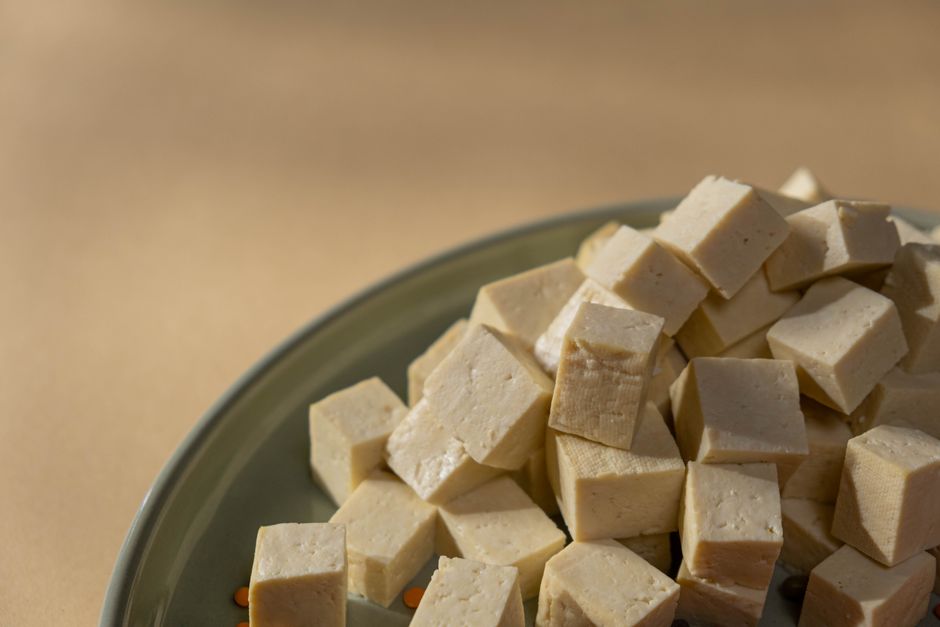
Firm tofu contains about 8 to 10 grams of protein per 100 grams, or roughly 8 to 10 grams in a 3-ounce serving. That puts it in the same range as a large egg or a small chicken thigh. Firm tofu is denser than soft or silken tofu, so it delivers more protein per bite — but the exact number depends on how the tofu was made and how much water it still holds.
If you are tracking protein, the label on the package is your most reliable source. Water content varies between brands, and that variation changes the protein number more than most people expect. A firm block that has been pressed longer will weigh less and pack more protein into the same volume.
How Much Protein Is In Firm Tofu Really?
Most firm tofu sold in US grocery stores lands between 8 and 10 grams of protein per 100 grams. That is the range the USDA reports for firm tofu prepared with calcium sulfate, the most common coagulant used in commercial tofu.
The confusion comes from serving size. A “serving” of tofu is often listed as 3 ounces, which is about 85 grams. That works out to roughly 7 to 9 grams of protein. But a typical block of tofu weighs 14 to 16 ounces, and many people eat a quarter to a third of a block in one sitting. That portion — about 4 to 5 ounces — delivers closer to 11 to 14 grams of protein.
Here is the part that trips people up. Firm tofu and extra-firm tofu are not the same product, and neither are firm tofu and pressed tofu. Extra-firm has more water pressed out, so the protein is more concentrated by weight. Some brands label a product “firm” when it is closer to what another brand calls “medium.”
The practical takeaway: read the nutrition panel. The number on the package reflects that specific product, and it is the number you should use for tracking.
How Does Firm Tofu Compare To Other Tofu Types?
Tofu comes in a range of textures, and protein content tracks closely with how much water the block retains. Softer tofu has more water, so a 100-gram portion has less protein. Firmer tofu has less water, so the same weight delivers more.
Here is a general comparison based on USDA data. These are approximate ranges, and actual values vary by brand and manufacturing method.
| Tofu Type | Protein per 100g (approx.) | Texture |
|---|---|---|
| Silken | 4-6 g | Very soft, custard-like |
| Soft | 5-7 g | Soft, spoonable |
| Medium | 7-9 g | Moderate, holds shape gently |
| Firm | 8-10 g | Dense, slices cleanly |
| Extra-firm | 10-13 g | Very dense, holds up to grilling |
Notice that silken tofu has roughly half the protein of firm tofu by weight. That matters if you swap one for the other in a recipe. A smoothie made with silken tofu will have noticeably less protein than one made with firm tofu, even if the portion looks the same.
This is also why pressing tofu at home changes the math. Pressing removes water. Remove water, and the protein concentration per gram goes up. The total protein in the block does not change, but the protein per bite does.
Is Tofu A Complete Protein?
Yes. Soy protein is a complete protein, meaning it contains all nine essential amino acids the human body cannot make on its own. This sets tofu apart from most plant proteins, which tend to be low in one or more essential amino acids.
The amino acid profile of soy is close to that of animal protein. The World Health Organization has used soy protein as a reference standard for evaluating other proteins, which tells you how complete it is.
One clarification worth making: the old idea that you need to carefully combine plant foods at every meal to get complete protein is outdated. Your body maintains a pool of amino acids and draws from it throughout the day. Eating a variety of protein sources over 24 hours is what matters, not perfect pairing at each meal. That said, tofu does not require this workaround anyway because it is already complete on its own.



How Does Firm Tofu Protein Compare To Meat, Eggs, And Other Plant Proteins?
Tofu holds its own against animal proteins on a per-gram basis, though the comparison shifts depending on what you measure. Per 100 grams, firm tofu delivers roughly 8 to 10 grams of protein. Cooked chicken breast delivers about 31 grams per 100 grams. Cooked lean beef is in a similar range. So by weight, meat is roughly three times more protein-dense than firm tofu.
But weight is not the only way to compare. Tofu is also about 70 to 80 percent water. If you compare on a dry-weight basis, the gap narrows considerably. And if you compare per calorie, tofu looks different again because it contains fat and carbohydrate alongside protein.
Against other plant proteins, firm tofu is competitive:
- Eggs: One large egg has about 6 grams of protein. A 3-ounce serving of firm tofu has roughly 7 to 9 grams.
- Lentils: Cooked lentils have about 9 grams of protein per 100 grams, similar to firm tofu.
- Chickpeas: Cooked chickpeas have about 8 to 9 grams per 100 grams.
- Tempeh: Fermented soybean cake, usually higher in protein per 100 grams than tofu because it contains less water.
- Greek yogurt: About 10 grams per 100 grams, comparable to firm tofu.
The honest framing: firm tofu is a solid protein source, but it is not a protein concentrate. If you are aiming for a high protein target, you will likely need to eat a larger portion of tofu than you would of chicken to hit the same number.
Does The Type Of Coagulant Affect Protein Content?
The coagulant used to make tofu does not meaningfully change the protein content. It changes the mineral content. This is a common point of confusion, so it is worth separating the two.
Tofu is made by adding a coagulant to soy milk, which causes the soy proteins to curdle and form curds. The two most common coagulants are calcium sulfate and magnesium chloride. A third, gluconolactone, is used mainly for silken tofu.
Calcium sulfate adds calcium to the final product. Tofu made this way can be a meaningful source of calcium — some brands provide a substantial portion of the daily value in a single serving. Magnesium chloride, sometimes sold as nigari tofu, adds magnesium instead. Neither coagulant changes the protein content in any significant way.
If calcium intake matters to you, check the label. Tofu set with calcium sulfate is one of the better non-dairy calcium sources available. Tofu made with magnesium chloride will show much less calcium on the panel.
How Much Tofu Do You Need To Hit A Protein Target?
That depends entirely on your target. There is no single recommended protein intake that applies to everyone, and I am not going to pretend there is. Protein needs vary with body weight, activity level, age, and health status.
What can be said with confidence is the arithmetic. If firm tofu provides about 9 grams of protein per 100 grams, then:
- A 3-ounce (85g) serving gives roughly 7 to 8 grams
- A 6-ounce (170g) serving gives roughly 15 to 17 grams
- A full 16-ounce block gives roughly 36 to 45 grams, depending on the brand
For people who eat tofu as their main protein at a meal, a 6-ounce portion is a reasonable starting point if you want a meaningful protein contribution. Those with higher protein needs — athletes, older adults, people recovering from illness — may need larger portions or additional protein sources alongside it.
For specific protein targets tailored to your situation, that is a conversation for a registered dietitian or your physician. No article can give you a personal number.
Does Cooking Firm Tofu Change Its Protein Content?
No. Cooking does not destroy protein in tofu in any meaningful way. Heat causes protein to denature — it unfolds and restructures — but denaturation is not the same as destruction. Your body digests denatured protein just fine, and in some cases more easily.
The one thing cooking does change is water content. If you press tofu and then bake or pan-fry it, you drive off more water. The block gets lighter. The protein per gram goes up. The total protein on your plate stays the same as what you started with.
Freezing tofu is a related trick. When tofu is frozen and then thawed, the ice crystals break the protein structure and push out water. The result is a spongier texture that absorbs marinades well and holds more protein per gram after pressing. It is a texture change, not a protein change.
Frequently Asked Questions
How much protein is in 100g of firm tofu?
Firm tofu typically contains about 8 to 10 grams of protein per 100 grams, based on USDA data. The exact amount varies by brand and how much water the block retains.
Is firm tofu a complete protein?
Yes. Soy protein contains all nine essential amino acids, making tofu a complete protein. This is unusual among plant proteins, most of which are low in at least one essential amino acid.
How much protein is in a whole block of firm tofu?
A standard 16-ounce block of firm tofu contains roughly 36 to 45 grams of protein, depending on the brand. That works out to about 9 to 11 grams per 4-ounce portion.
Does firm tofu have more protein than eggs?
A 3-ounce serving of firm tofu has about 7 to 9 grams of protein, compared with roughly 6 grams in one large egg. Per gram of food, firm tofu is slightly higher in protein than egg.
