

Most bodybuilders need between 0.7 and 1 gram of protein per pound of body weight per day to build and maintain muscle. That works out to roughly 1.6 to 2.2 grams per kilogram of body weight. The lower end of that range is enough for most people. Eating more than that does not appear to build extra muscle, though it is not harmful for healthy kidneys.
That range comes from a large body of research on resistance training and protein intake. It is also the range most sports nutrition position stands point to. The rest of this article explains where those numbers come from, why they are not higher, and how to apply them to your own body weight.
How Much Protein Does A Bodybuilder Need By Weight?
The research on protein and muscle building has a clear answer. When you combine resistance training with adequate calories, protein intake around 1.6 grams per kilogram of body weight per day supports muscle growth. Some studies suggest benefits up to about 2.2 grams per kilogram per day, especially in leaner lifters or during aggressive training.
Above roughly 2.2 grams per kilogram per day, the added protein does not appear to produce more muscle. A widely cited meta-analysis by Morton and colleagues, published in the British Journal of Sports Medicine, found that protein intake beyond about 1.6 grams per kilogram per day did not add further gains in most people. The upper figure of 2.2 grams per kilogram accounts for individual variation and harder training phases.
Here is the conversion that matters for most US readers. One kilogram equals 2.2 pounds. So 1.6 grams per kilogram is about 0.73 grams per pound. And 2.2 grams per kilogram is about 1 gram per pound.
What Does That Look Like at Different Body Weights?
The table below shows the daily protein range for a few common body weights. It uses 0.7 grams per pound as the lower end and 1 gram per pound as the upper end. These are rounded for easy use.
| Body weight | Lower end (0.7 g/lb) | Upper end (1 g/lb) |
|---|---|---|
| 150 lb (68 kg) | 105 g | 150 g |
| 175 lb (79 kg) | 123 g | 175 g |
| 200 lb (91 kg) | 140 g | 200 g |
| 225 lb (102 kg) | 158 g | 225 g |
| 250 lb (113 kg) | 175 g | 250 g |
One important note. These numbers should be based on lean body mass or a healthy target weight, not on total weight if you carry a lot of excess body fat. Fat tissue does not need protein the way muscle does. A 250-pound person with high body fat does not need 250 grams of protein. Basing the calculation on lean mass gives a more realistic target.
Why Is the Number Higher Than for Non-Lifters?
Resistance training increases the amount of protein your body breaks down and rebuilds in muscle. This process is called muscle protein turnover. Lifting weights damages muscle fibers and triggers repair, and that repair requires amino acids, the building blocks of protein.
People who do not train heavily have lower protein needs because their muscles are not being remodeled as aggressively. The general adult recommendation to prevent deficiency is about 0.8 grams per kilogram of body weight per day. That is a minimum to avoid losing muscle, not an amount to maximize growth.
Bodybuilders sit at the high end of the spectrum because they are asking their bodies to add and hold onto muscle. The extra protein supplies the raw material for that process. Without enough, training still happens but the muscle-building response is blunted.


Does Timing and Per-Meal Amount Matter?
Total daily protein matters most. If you hit your daily target, the exact timing of meals is a secondary concern. That said, how you spread protein across the day does affect how well your body uses it.
Research on muscle protein synthesis suggests that a dose of roughly 20 to 40 grams of high-quality protein per meal stimulates muscle building effectively in most people. Larger doses in a single sitting do not appear to add much more. Spreading protein across three to five meals is a reasonable approach.
The “anabolic window” idea, that you must eat protein within minutes of training, is overstated. Some evidence supports eating protein around your workout, but the effect is small compared with hitting your total daily intake. Getting protein in over the hours before and after training is sufficient for most people.
Does Protein Source Matter?
Animal proteins generally contain all the essential amino acids in proportions the body uses well. Eggs, dairy, poultry, fish, and beef are examples. Whey protein, a milk derivative, is popular among bodybuilders because it is absorbed quickly and is rich in leucine, an amino acid that helps trigger muscle protein synthesis.
Plant proteins can support muscle growth too, but they require a bit more planning. Many plant sources are lower in one or more essential amino acids. Eating a variety of plant proteins across the day, such as combining grains with legumes, covers the gaps. Some research suggests plant-based lifters may benefit from slightly higher total protein intake to compensate, though the evidence here is less settled than for animal sources.
Whole food sources are the foundation. Protein powder is a convenience, not a requirement. It helps people reach their target when food alone is impractical, but it offers no special advantage beyond that.
Is More Protein Better, and Is It Safe?
More is not better past a point. Once you meet your body’s needs for repair and growth, extra protein is either used for energy or stored. It does not translate into extra muscle. Eating well beyond your target mostly adds calories and cost.
On safety, the concern about high protein intake harming healthy kidneys is not supported by current evidence. Studies in people with normal kidney function have not found that higher protein diets cause kidney damage. This is a well-established point in the sports nutrition literature.
The picture is different for people who already have kidney disease. In that case, protein intake needs medical supervision, and a doctor’s guidance takes priority over any general recommendation. Anyone with a known kidney condition should talk to their clinician before increasing protein.
One more honest caveat. Very high protein intakes can crowd out other nutrients if they replace fruits, vegetables, and whole grains. And some people experience digestive discomfort from sudden increases or from certain protein powders. Increasing intake gradually and choosing varied sources helps.
How Do You Actually Hit Your Target?
Most people find it easier to anchor each meal around a protein source rather than counting grams all day. A palm-sized portion of meat, fish, or poultry is a rough guide. Eggs, Greek yogurt, cottage cheese, and legumes fill in the rest.
- Include a protein source at every meal, not just dinner.
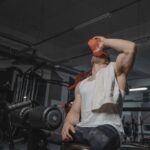
- Use a protein shake when food is inconvenient, not as a replacement for meals.
- Base your target on lean mass or a healthy weight if you carry excess body fat.
- Spread intake across the day rather than loading it into one meal.
- Track your intake for a week to see where you actually land before changing anything.
The most common mistake is not eating too little protein. It is eating an inconsistent amount, hitting the target some days and falling well short on others. Consistency over weeks and months is what supports muscle growth, not any single day’s intake.
Frequently Asked Questions
How much protein per pound of body weight should a bodybuilder eat?
Aim for about 0.7 to 1 gram of protein per pound of body weight per day. Base this on lean mass or a healthy target weight if you carry excess body fat.
Is 200 grams of protein a day too much for building muscle?
For most people, 200 grams a day is more than needed and does not build extra muscle beyond a reasonable target. It is not harmful for healthy kidneys, but it adds calories and cost without added benefit.
Can you build muscle on less protein than the recommended amount?
Yes, some muscle growth is possible below the optimal range, especially for beginners. But intake below roughly 0.7 grams per pound appears to limit how much muscle you can build over time.
Do you need protein powder to hit your protein target?
No, protein powder is a convenience, not a requirement. Whole foods like eggs, dairy, poultry, fish, and legumes can meet your target without supplements.
