
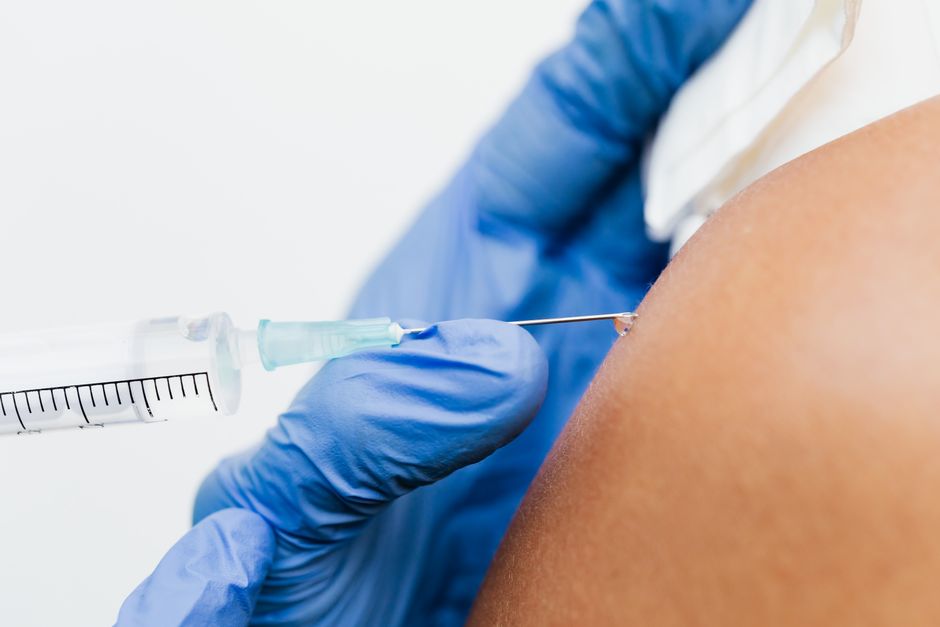
There is no single hCG dose that fits everyone. For men using hCG to treat low testosterone or to improve fertility, typical prescribed doses range from about 1,500 to 3,000 IU given two or three times per week by injection, but the exact amount depends on your diagnosis, your goals, and how your body responds. hCG is a prescription medication. The dose is set by a doctor based on blood tests and monitored over time, not chosen from a chart.
What Is hCG and Why Is It Used for Fertility or Low T?
Human chorionic gonadotropin (hCG) is a hormone that mimics luteinizing hormone (LH) in the body. In men, LH is the signal from the pituitary gland that tells the testes to produce testosterone and sperm.
When a man’s pituitary isn’t sending enough LH — a condition called hypogonadotropic hypogonadism — the testes don’t get the signal to work. hCG injections can replace that missing signal. This is why hCG is used in two related but distinct situations: to raise testosterone when the problem is at the pituitary level, and to support sperm production in men who want to father a child.
It’s important to understand what hCG is not. It is not a general testosterone booster. It does not work if the testes themselves are damaged or not functioning. In those cases, hCG has nothing to stimulate.
How Much hCG Should You Inject for Low Testosterone?
For men with hypogonadotropic hypogonadism, a typical starting dose is 1,500 to 2,000 IU injected under the skin or into a muscle two to three times per week. Some doctors start lower and adjust upward based on testosterone levels measured in the blood.
The goal is to bring testosterone into the normal range — generally 300 to 1,000 ng/dL for total testosterone, though reference ranges vary by lab. Your doctor will check levels periodically and adjust the dose. There is no fixed ceiling that applies to everyone, but doses above 3,000 IU per injection are uncommon in this context.
Response varies widely. Some men reach normal testosterone on 1,500 IU three times weekly. Others need higher doses. Age, body weight, testicular function, and the underlying cause of low testosterone all affect how much hCG is needed.
This is not a condition you can self-treat. hCG requires a prescription in the United States. Buying it from unregulated sources carries real risks — the product may be counterfeit, contaminated, or not hCG at all.
How Much hCG Should You Inject for Fertility?
When the goal is sperm production, hCG is often used at doses of 1,500 to 3,000 IU two or three times per week, sometimes alongside other medications. The exact protocol depends on whether you have hypogonadotropic hypogonadism or are trying to recover fertility after testosterone therapy.
Testosterone therapy suppresses sperm production because it shuts down the pituitary’s signals to the testes. Men who want to restore fertility after using testosterone are sometimes prescribed hCG to restart that signaling. This use is common in clinical practice, though the evidence for how well it works in different situations is not uniform.
Sperm production takes time. It typically takes about 72 to 90 days for a full sperm cycle, so any effect on fertility won’t show up immediately. Doctors usually check semen analysis after a few months of treatment, not weeks.
Some men need additional treatment beyond hCG. If hCG alone doesn’t restore sperm production, a doctor may add follicle-stimulating hormone (FSH) or other medications. This is a decision made based on semen analysis results and the underlying cause.





How Is the Dose Determined and Adjusted?
Dosing is not guesswork, but it is also not precise. Doctors use a combination of factors to set and adjust the dose:
- Diagnosis: Whether the problem is at the pituitary or testicular level changes everything. hCG only works if the testes can respond.
- Blood tests: Testosterone levels, LH, FSH, and other hormones guide the starting dose and adjustments.
- Treatment goal: Raising testosterone and restoring fertility may require different doses and timelines.
- Response: How your body responds over weeks and months determines whether the dose goes up, down, or stays the same.
- Side effects: If side effects appear, the dose may be reduced or the schedule changed.
There is no single protocol that all doctors follow. Some start with lower doses and increase slowly. Others start at a moderate dose and adjust based on early blood work. The approach depends on the doctor’s training and the patient’s specific situation.
What matters most is monitoring. hCG affects hormone levels throughout the body, and unchecked dosing can cause problems.
What Are the Risks and Side Effects of hCG Injections?
hCG raises testosterone, and elevated testosterone has known effects. Common side effects include injection site reactions, mood changes, acne, and fluid retention. Some men experience breast tenderness or enlargement because testosterone can convert to estrogen.
More serious concerns include:
- Polycythemia: Testosterone can increase red blood cell production. This thickens the blood and raises the risk of clots. Doctors monitor hematocrit levels during treatment.
- Infertility: Ironically, hCG used alone at high doses can sometimes suppress sperm production rather than support it. This is why fertility protocols often include other medications.
- Testicular changes: hCG can cause the testes to enlarge or become sensitive. In rare cases, it may trigger or worsen certain testicular conditions.
- Hormone imbalance: Because hCG affects multiple hormones, it can disrupt the body’s normal feedback loops.
These risks are why hCG is a prescription medication that requires medical supervision. Self-dosing or using hCG without monitoring is dangerous.
Can You Use hCG Without a Prescription?
No. hCG is a prescription medication in the United States. It is not available over the counter, and buying it from online sources or gym suppliers is illegal and risky.
Products sold as “hCG” outside of pharmacies may not contain hCG at all. They may be contaminated, incorrectly dosed, or entirely fake. There is no way to verify what you’re injecting without pharmaceutical oversight.
Some clinics market hCG for weight loss. The FDA has not approved hCG for weight loss, and the evidence does not support it for that purpose. If a clinic is selling hCG for weight loss, that is a red flag.
If you think you need hCG for low testosterone or fertility, the first step is seeing a doctor — typically an endocrinologist or a urologist with training in male reproductive health.
What Should You Expect During Treatment?
hCG treatment is not a one-time fix. It requires ongoing monitoring, dose adjustments, and patience.
For low testosterone, some men notice changes in energy, mood, or libido within a few weeks. But hormone levels take time to stabilize, and the full effect may take two to three months. Blood tests are usually done every few months to check testosterone and other markers.
For fertility, the timeline is longer. Sperm production takes about three months per cycle. Semen analysis is typically done after three to six months of treatment. Some men respond quickly. Others need months of adjustment or additional medications.
Not everyone responds to hCG. If the testes are not functional, hCG will not work. If the dose is too low, nothing changes. If it’s too high, side effects may appear without better results. This is why working with a doctor who monitors your progress is essential.
What Else Should You Know About hCG for Low T or Fertility?
hCG is one tool among several for managing low testosterone and fertility. It is not the only option, and it is not always the best option.
For men with primary testicular failure — where the testes themselves are damaged — hCG will not help. Testosterone replacement therapy may be more appropriate, though it suppresses fertility. For men who want both normal testosterone and fertility, hCG is often part of a broader protocol that may include FSH, clomiphene, or other medications.
The evidence for hCG in these uses is well established for hypogonadotropic hypogonadism. For other situations — like recovering fertility after testosterone therapy — the evidence is mixed. Some studies show benefit. Others show limited response. The results vary based on how long testosterone was used, the dose, and individual factors.
What is clear is that hCG is not a DIY treatment. It requires a diagnosis, a prescription, and ongoing medical supervision. If you are considering hCG for low testosterone or fertility, the first step is a conversation with a doctor who understands male reproductive health.
Frequently Asked Questions
What is the typical hCG dose for low testosterone?
Typical prescribed doses range from 1,500 to 2,000 IU injected two to three times per week, adjusted based on blood testosterone levels. The exact dose is set by a doctor and monitored over time.
How much hCG is used for fertility in men?
For fertility, doses of 1,500 to 3,000 IU two or three times per week are common, sometimes combined with other medications. The protocol depends on the underlying cause and is adjusted based on semen analysis results.
Can I inject hCG at home without a doctor?
No. hCG is a prescription medication and requires medical supervision for safe use. Self-dosing or buying hCG from unregulated sources is illegal and carries serious health risks.
How long does hCG take to work for fertility?
Sperm production takes about 72 to 90 days per cycle, so effects on fertility are not immediate. Semen analysis is typically done after three to six months of treatment to assess response.
