
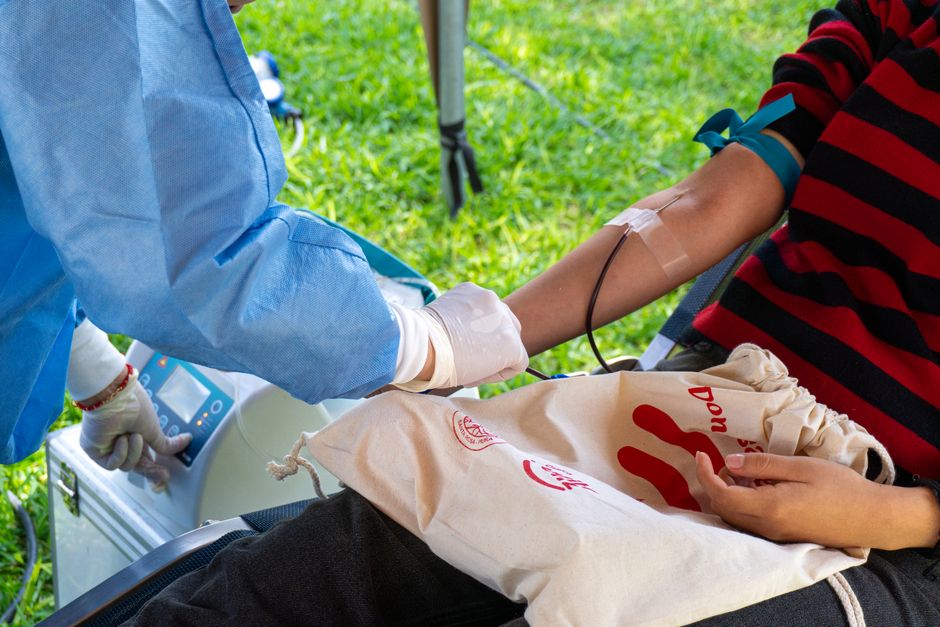
Donating plasma typically pays between $20 and $70 per donation, with most new donors earning around $50 to $60 per session in their first month. The exact amount depends on your location, the center you use, your body weight, and how often you donate. Some centers pay more for the first few visits as a promotion, then lower the rate for regular donations.
This is not a fixed price like buying milk. It varies widely. And the money is compensation for your time and effort — not payment for the plasma itself. Plasma centers call it a “donor fee” for legal reasons.
How Much Do You Get From Donating Plasma Per Visit?
A single plasma donation usually pays between $30 and $60 for a return donor. New donors often earn more during their first month. Many centers offer $50 to $100 per donation for the first 4 to 8 visits, then drop to the standard rate.
Your weight matters. Heavier donors produce more plasma per session. Some centers pay by volume. A person over 175 pounds may get $10 to $15 more per donation than someone under 150 pounds.
The time commitment is about 90 minutes per visit for the first time and 60 to 75 minutes for return visits. You cannot donate more than twice in a 7-day period. Federal rules require at least 48 hours between donations.
How Much Can You Earn Per Month Donating Plasma?
If you donate the maximum allowed twice per week, monthly earnings typically range from $240 to $560. A common scenario is about $350 to $450 per month for a regular donor at a standard-paying center.
Some centers offer loyalty bonuses or referral fees. If you complete a certain number of donations in a month, you might earn an extra $20 to $50. Referral bonuses are usually $10 to $25 per person you bring in.
Do not plan your budget around the maximum possible amount. Centers change their pay structures. Promotions end. Your schedule may not allow twice-weekly visits. The reliable range is lower than the advertised maximum.
Does the Location Affect How Much You Get Paid?
Yes. Plasma centers in different states and cities pay different rates. Urban areas with more competition between centers tend to pay higher rates. Rural areas with fewer options usually pay less.
For example, centers in large Texas cities often pay more than centers in smaller Midwest towns. Some states have multiple chains competing for donors. Others have only one center within a reasonable drive.
Check the websites of CSL Plasma, BioLife, Grifols, and BPL Plasma for current rates in your area. Call ahead. Online rates are not always accurate.




What Affects How Much You Get From Donating Plasma?
Several factors determine your payment per donation:
- Your weight — heavier donors give more plasma and get paid more.
- New donor promotions — first-time donors earn significantly more.
- Donation frequency — some centers pay more for your second donation of the week.
- Center policies — each center sets its own pay scale.
- Time of year — plasma shortages sometimes lead to higher pay.
- Referral bonuses — bringing in new donors adds to your total.
The biggest factor is simply which center you visit. A 10-minute drive to a different chain can mean $15 to $20 more per visit.
Is Donating Plasma Safe?
Donating plasma is generally safe when done at licensed centers. The process uses sterile equipment that is used once and discarded. You cannot catch anything from the needle or tubing.
The most common side effects are mild dehydration, dizziness, and bruising at the needle site. These resolve within a few hours for most people. Drinking water before and after donation helps prevent them.
Serious complications are rare. A 2020 review of donor safety data found that serious adverse events occur in about 1 in 10,000 donations. These include fainting, nerve irritation, and citrate reactions from the anticoagulant used during the process.
Do not donate if you are feeling unwell, have low iron, or have a known bleeding disorder. Tell the staff about all medications you take. Some blood thinners and certain medical conditions disqualify you from donating.
Who Can Donate Plasma?
You must be at least 18 years old in most states. Some states allow 16- and 17-year-olds with parental consent. You must weigh at least 110 pounds.
You need to pass a health screening. This includes checking your blood pressure, pulse, temperature, and hemoglobin levels. You also answer questions about your medical history, travel, and lifestyle.
Certain medications disqualify you temporarily or permanently. These include some blood thinners, insulin, and medications for HIV or hepatitis. The FDA sets these rules, not the individual centers.
You must also test negative for hepatitis B, hepatitis C, HIV, and syphilis. If you test positive, you are permanently deferred from donating. The center reports positive results to health authorities.
How Often Can You Donate Plasma?
The FDA allows plasma donation twice within a 7-day period with at least 48 hours between donations. This means you could donate Monday and Thursday, then again the following Monday and Thursday.
Some centers limit you to once per day. Most do not. But your body needs time to replace the plasma proteins. Donating more than twice per week is not allowed anywhere in the United States.
Long-term frequent donation may lower your protein and immunoglobulin levels. Most people recover within 24 to 48 hours with adequate nutrition. Centers check your protein levels periodically to make sure you are safe to donate.
Is Donating Plasma Worth the Money?
For most people, yes — if you have the time and can tolerate the process. Earning $30 to $60 per hour for sitting in a chair is good money. But the full time commitment includes travel, check-in, screening, and recovery time.
A typical visit takes 2 to 3 hours total when you factor in driving, waiting, and the donation itself. That drops the effective hourly rate to $10 to $20 per hour for many donors. That is still decent for sitting and watching your phone.
Some people find the process uncomfortable. The needle is larger than a standard blood draw needle. The anticoagulant can cause a tingling sensation in your lips and fingers. This passes quickly but bothers some donors.
Do not rely on plasma donation as a primary income source. The pay can change. You can be deferred for health reasons. Centers close unexpectedly. Treat it as supplemental income only.
Frequently Asked Questions
How much do you get from donating plasma for the first time?
New donors typically earn $50 to $100 per donation during their first month, with many centers offering promotional rates for the first 4 to 8 visits.
How much do you get from donating plasma twice a week?
Regular donors earning the standard rate of $30 to $60 per visit make $240 to $480 per month donating twice weekly.
How much do you get from donating plasma compared to donating blood?
Blood donation is unpaid in the United States, while plasma donation pays $30 to $70 per visit because it takes longer and requires more equipment.
How much do you get from donating plasma if you weigh less than 150 pounds?
Lighter donors give less plasma per session and typically earn $5 to $15 less per donation than donors over 175 pounds.
