
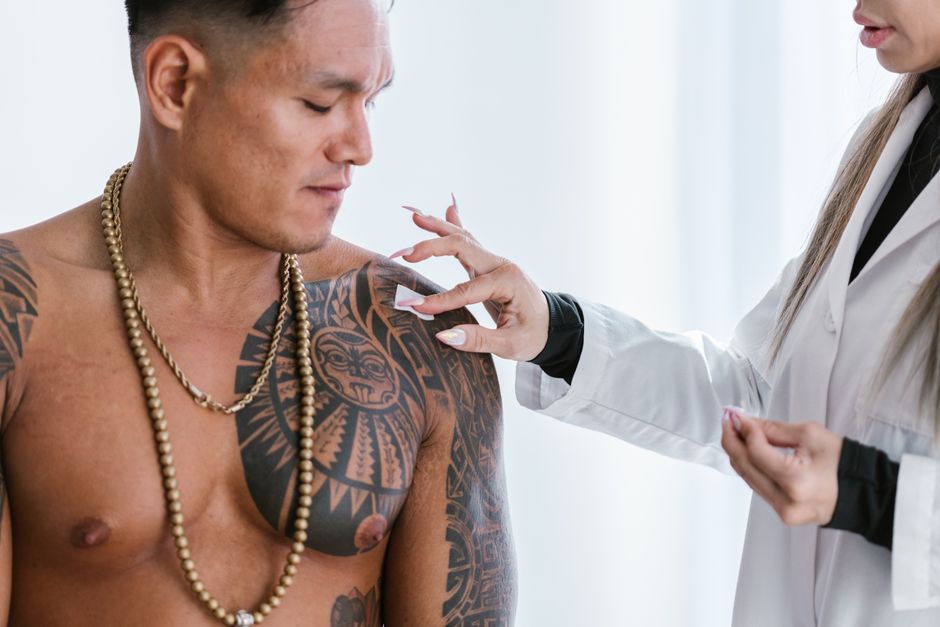
Tattoo pain is real, but it is also highly individual. The same tattoo that one person calls unbearable another person describes as a mild annoyance. Pain depends on where the needle goes, how long the session lasts, and your own pain tolerance. Most people compare the feeling to a sharp scratching or a repeated cat scratch, not a deep cut. The pain is temporary, and it ends when the needle stops.
What Does Tattoo Pain Actually Feel Like?
Most people describe the sensation as a sharp, scratching pain. The tattoo machine uses needles that puncture the skin anywhere from 50 to 3,000 times per minute. Each puncture deposits ink into the dermis, the second layer of skin. That repeated piercing creates a burning or stinging sensation.
Some areas feel more like a vibration. Others feel like a hot scratch. The outline work usually feels sharper because the artist uses a single needle or a small group of needles. The shading and filling stages often feel less intense because the needles are grouped together, spreading the impact over a wider area.
After the first few minutes, your body releases adrenaline. This natural response can dull the pain temporarily. Many people say the first 15 minutes are the most intense, and then the pain levels off. That adrenaline drop is also why some people feel shaky or lightheaded after the session ends.
Which Body Parts Hurt the Most?
Pain levels follow a fairly consistent pattern across the body. Areas where the skin is thin, where bone sits close to the surface, or where nerves are dense tend to hurt more. Areas with thicker skin, more fat, or fewer nerve endings hurt less.
The most painful spots are consistently reported as:
- Ribs and sternum
- Spine
- Elbows and kneecaps
- Armpits
- Inner bicep
- Collarbone
- Hands and fingers
- Feet and ankles
- Neck and throat
The least painful spots include the outer upper arm, the forearm, the outer thigh, the calf, and the upper back. These areas have thicker skin and more cushioning between the skin and the bone.
One non-obvious factor is the nerve density in each area. The fingertips and lips have far more nerve endings than the outer arm. More nerve endings mean more pain signals reaching your brain. The ribs hurt not just because the skin is thin but because the nerves there are sensitive and the bone has no padding over it.
How Long Does the Pain Last During a Session?
A tattoo session can last anywhere from 30 minutes to several hours. The pain is not constant in intensity. It builds and fades depending on what the artist is doing.
Line work is usually the sharpest. The artist presses a single needle into the skin to create the outline. This feels like a precise, cutting scratch. Shading uses multiple needles and covers more surface area. It feels more like a dull vibration or a sunburn being rubbed.
Color packing, where the artist fills in solid areas, can feel like a deeper pressure. Some people describe it as a scraping sensation. The longer the session goes, the more the skin becomes irritated. The area can become swollen and tender, which makes the later parts of the session hurt more than the beginning.
Most artists will take breaks during longer sessions. Some will stop at the two-hour mark if the client is struggling. There is no shame in asking for a break. Your skin needs time to recover, and your pain tolerance drops as fatigue sets in.





Does Tattoo Placement Change the Pain?
Yes, placement changes everything. The same design on the outer arm and the ribs will feel completely different. The outer arm has thicker skin and more fat. The ribs have thin skin stretched directly over bone.
Here is a general pain scale based on common placement reports:
| Body Part | Pain Level | Why |
|---|---|---|
| Outer upper arm | Low | Thick skin, good padding |
| Forearm | Low to moderate | Moderate skin thickness |
| Outer thigh | Low | Thick skin, fat layer |
| Calf | Moderate | Skin over muscle |
| Upper back | Moderate | Thicker skin, fewer nerves |
| Inner bicep | High | Thin skin, more nerves |
| Ribs | Very high | Thin skin over bone |
| Spine | Very high | Bone close to surface |
| Elbow | Very high | Bone, thin skin, movement |
| Hands and fingers | High | Dense nerves, thin skin |
| Feet and ankles | High | Thin skin, many nerves |
Keep in mind this is a general guide. Individual pain tolerance varies widely. Some people find the ribs manageable. Others find the outer arm unbearable. Your personal sensitivity matters as much as the location.
What Makes Tattoo Pain Worse?
Several factors can increase the pain you feel during a tattoo. Knowing them ahead of time can help you prepare.
Sleep deprivation lowers your pain tolerance. Your body is already stressed, and it has fewer resources to manage discomfort. Arriving well-rested makes a measurable difference.
Alcohol and blood thinners can increase bleeding. More blood at the surface makes it harder for the artist to see the work, and the skin becomes more irritated. You should not drink alcohol in the 24 hours before a tattoo. Aspirin, ibuprofen, and other blood thinners should also be avoided unless a doctor has told you to take them.
Menstrual cycles can increase skin sensitivity. Some women report that tattoos hurt more during their period. The evidence here is limited, but hormonal changes can affect pain perception. If you know you are more sensitive at certain times of the month, consider scheduling around that.
Dehydration makes the skin less elastic. Dry skin takes the needle less smoothly, which can increase the sensation. Drinking water in the days before your appointment helps.
Does Tattoo Size or Detail Affect Pain?
Size and detail affect how long you sit, not necessarily how intense the pain is per minute. A small, highly detailed piece can be intense because the artist is working in a concentrated area. A large piece with solid shading covers more ground but may feel less sharp.
Longer sessions are harder on your body regardless of the design. Your skin becomes raw, your adrenaline fades, and your pain tolerance drops. A five-hour session will hurt more in hour four than in hour one, even if the artist is doing the same type of work.
Some large tattoos are done in multiple sessions. This is not just for the artist’s convenience. It gives your skin time to heal between sessions. Each session starts with fresh skin, which keeps the pain more manageable.
Can You Reduce Tattoo Pain?
There are ways to make the process more comfortable, but none of them eliminate the pain completely.
Numbing creams are available over the counter. They contain lidocaine or benzocaine, which temporarily numb the skin surface. Many tattoo artists apply them before starting. The effect lasts about 30 to 60 minutes. Some artists are willing to work with numbing creams; others prefer not to use them because they can change how the skin takes the ink. Ask your artist before you buy anything.
Topical sprays are also used during sessions. These are applied directly to the tattooed area to reduce pain as the work progresses. They are more common in recent years, but not every artist uses them.
Distraction works for some people. Listening to music, podcasts, or audiobooks can shift your focus away from the needle. Talking with the artist can help too, though some artists prefer to concentrate.
Breathing exercises are a simple tool. Slow, deep breaths reduce your body’s stress response. Holding your breath or tensing up makes the pain feel worse.
What does not work is drinking alcohol beforehand. Alcohol thins your blood, increases bleeding, and makes you less able to sit still. It also impairs your judgment. No reputable artist will tattoo someone who is intoxicated.
How Much Do Tattoos Hurt Compared to Other Pain?
People often want a comparison they can understand. Tattoo pain is generally described as less intense than a broken bone or a severe burn. It is more intense than a paper cut or a mild sunburn.
Most people rate tattoo pain between a 3 and a 7 on a 10-point scale, depending on the location. The pain is sharp but brief. It stops the moment the needle lifts off the skin. Unlike a chronic pain condition, tattoo pain has a clear endpoint.
One thing that surprises many people is the aftercare discomfort. The tattoo itself may hurt less than the healing process. The tattooed area can feel like a bad sunburn for the first few days. It may swell, ooze, and itch. That discomfort is part of the healing process and is completely normal.
When Should You Not Get a Tattoo?
Certain situations should make you postpone your tattoo appointment. If you are sick, your immune system is already working hard. Adding a wound to that load can slow healing and increase infection risk.
If you have a skin condition like eczema or psoriasis in the area, the tattoo can trigger a flare. Some dermatologists advise against tattooing over active lesions. If you have a history of keloid scarring, talk to a dermatologist before getting inked.
If you are pregnant, most artists will not tattoo you. There is no solid evidence that tattoo ink harms a developing baby, but the infection risk and the stress response are not worth taking. Most professional studios have a policy against tattooing pregnant women.
If you are on blood thinners or immunosuppressants, talk to your doctor first. These medications change how your body handles bleeding and healing. Your artist needs to know about any medication you take.
Frequently Asked Questions
What is the most painful place to get a tattoo?
The ribs, spine, elbows, and armpits are consistently reported as the most painful spots. These areas have thin skin, dense nerves, and bone close to the surface.
How long does tattoo pain last?
The sharp pain stops the moment the needle lifts off the skin. The area may feel sore and tender for a few days afterward, similar to a bad sunburn.
Does getting a tattoo feel like a needle shot?
No. A shot is a single quick puncture. A tattoo is a repeated scratching or stinging sensation that continues for the whole session.
Can I use numbing cream for a tattoo?
Yes, over-the-counter numbing creams with lidocaine are available. Ask your tattoo artist first, because some artists prefer not to use them.
