
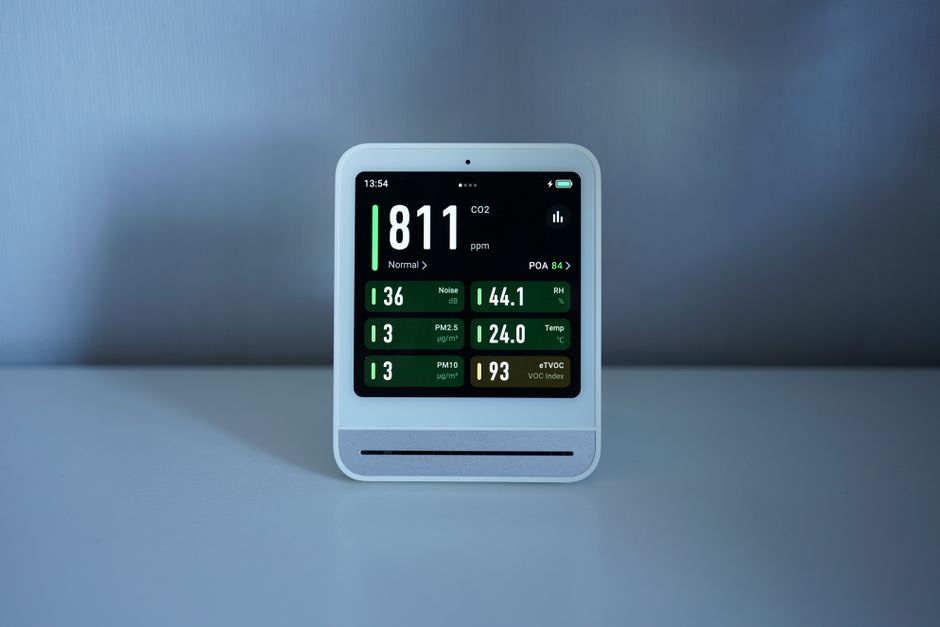
Carbon monoxide becomes dangerous well before you can smell or see it. The U.S. Consumer Product Safety Commission treats 9 parts per million (ppm) as the point where a home carbon monoxide alarm must sound before it has been exposed for 8 hours, and the Occupational Safety and Health Administration sets the workplace exposure limit at 50 ppm averaged over an 8-hour day. At 1,200 ppm, unconsciousness and death can occur within minutes.
Carbon monoxide is a colorless, odorless gas that binds to hemoglobin in your blood far more tightly than oxygen does. That means your cells can be starved of oxygen even when you are breathing normally. There is no safe way to detect it without a working alarm.
How Much Carbon Monoxide Is Too Much in a Home?
The threshold for a home is lower than most people assume. The Consumer Product Safety Commission requires that carbon monoxide alarms sold in the U.S. sound before the following exposure conditions are reached:
- 70 ppm for 1 to 4 hours
- 150 ppm for 10 to 50 minutes
- 400 ppm for 4 to 15 minutes
These are alarm thresholds, not safe exposure levels. They define the point at which a device must warn you, not the point at which harm begins. The World Health Organization recommends that average indoor carbon monoxide levels stay below 7 mg/m³ over 24 hours and below 35 mg/m³ over 1 hour. For context, 7 mg/m³ is roughly equivalent to about 6 ppm.
A single reading of 9 ppm is not an emergency on its own. It may reflect a poorly ventilated gas stove or a fireplace running in a closed room. What matters is the pattern: rising levels, repeated alarms, or readings that stay elevated over hours. Those are signals to ventilate the space and call a qualified technician.
Different alarm types respond to different thresholds. Listed alarms must meet the CPSC requirements above, but some models are designed to sound earlier at lower concentrations. If your alarm has a digital display, treat any sustained reading above 9 ppm as a reason to act, not to wait.
What Carbon Monoxide Levels Do to the Body?
The health effects of carbon monoxide follow a predictable pattern as concentration and exposure time increase. The table below reflects general clinical understanding of acute exposure in healthy adults.
| Concentration | Typical effect |
|---|---|
| 9 ppm | Alarm threshold; no symptoms expected in healthy adults |
| 50 ppm | OSHA 8-hour workplace limit |
| 70 ppm | No symptoms expected, but alarm must sound within 1 to 4 hours |
| 150 to 200 ppm | Mild headache, fatigue, nausea possible after 2 to 3 hours |
| 400 ppm | Headache and nausea within 1 to 2 hours; life-threatening after 3 hours |
| 800 ppm | Dizziness, nausea, and convulsions within 45 minutes; death within 2 to 3 hours |
| 1,200 ppm | Unconsciousness and death within minutes |
These figures describe healthy adults. People with heart disease, anemia, or chronic lung conditions may experience symptoms at lower concentrations. Fetuses, infants, and older adults are also more vulnerable because their bodies handle oxygen and carbon monoxide differently.
One detail that often gets missed: the symptoms of mild carbon monoxide poisoning — headache, fatigue, nausea — are identical to common viral illness. That is why poisoning is frequently missed in its early stages, especially when an entire household feels unwell at the same time.
Why Does Carbon Monoxide Harm You at Low Levels?
Carbon monoxide binds to the hemoglobin in your red blood cells about 200 to 250 times more strongly than oxygen does. This means even small amounts of the gas can occupy oxygen-carrying sites and prevent red blood cells from delivering oxygen to your tissues.
The damage does not stop at hemoglobin. Carbon monoxide also binds to proteins in your heart muscle and other tissues, which can interfere with how those cells use oxygen. This is part of why cardiac symptoms can appear at relatively low exposure levels, particularly in people with existing heart conditions.
Your body clears carbon monoxide slowly. Once you stop breathing it in, the level in your blood falls by roughly half every 4 to 5 hours under normal conditions. This is why symptoms can persist after you leave the source, and why emergency treatment may include high-flow oxygen to speed the process.




What Are the Symptoms of Carbon Monoxide Poisoning?
Symptoms of carbon monoxide poisoning overlap heavily with other common conditions, which makes them easy to dismiss. In mild cases, the most common symptoms are:
- Headache
- Fatigue or weakness
- Nausea or vomiting
- Dizziness
- Shortness of breath
At higher exposures, symptoms can progress to confusion, chest pain, blurred vision, loss of coordination, and loss of consciousness. In severe cases, carbon monoxide poisoning can cause brain damage, heart damage, and death.
A pattern worth knowing: if multiple people in the same home or building feel unwell at the same time, or if symptoms improve when you leave and return when you come back, carbon monoxide is a serious possibility. Pets getting sick alongside people is another signal.
Anyone with symptoms suggesting carbon monoxide poisoning should get fresh air immediately and seek emergency medical care. Do not wait to see if symptoms pass on their own.
Who Is Most at Risk From Carbon Monoxide?
Some groups develop symptoms at lower concentrations and with shorter exposures than healthy adults. These include:
- People with coronary artery disease or other heart conditions
- People with anemia or sickle cell disease
- People with chronic obstructive pulmonary disease (COPD) or asthma
- Pregnant women and their fetuses
- Infants and young children
- Older adults
- People who smoke, since smoking already raises baseline carbon monoxide levels in the blood
For pregnant women, the concern is not only their own exposure. Carbon monoxide crosses the placenta, and fetal hemoglobin binds it more tightly than adult hemoglobin does. This means a mother with mild symptoms may be carrying a fetus with more significant exposure. Any suspected carbon monoxide exposure during pregnancy warrants prompt medical evaluation.
People who smoke may have baseline carboxyhemoglobin levels several times higher than non-smokers, which reduces the margin before symptoms appear. This does not change the alarm thresholds for a home, but it does affect how quickly a person might feel unwell at a given concentration.
How Do You Prevent Carbon Monoxide Exposure?
Prevention comes down to three things: proper combustion, good ventilation, and working alarms. The Centers for Disease Control and Prevention recommends installing a battery-operated or battery backup carbon monoxide detector near every sleeping area in the home, and checking or replacing the battery regularly.
Other steps that reduce risk:
- Have heating systems, water heaters, and any other gas, oil, or coal-burning appliances serviced by a qualified technician each year
- Never use a portable generator, charcoal grill, camp stove, or portable camping stove inside a home, garage, basement, or tent — even partially enclosed spaces are dangerous
- Never run a car or truck inside an attached garage, even with the garage door open
- Never use a gas oven to heat a home
- Make sure chimneys and flues are not blocked or leaking
- Know the symptoms of carbon monoxide poisoning and act quickly if they appear
Carbon monoxide alarms have a limited lifespan. Most manufacturers recommend replacing the unit every 5 to 7 years, though the exact interval varies by model. Check the manufacturer’s instructions for your specific alarm.
One point that gets overlooked: alarms are not a substitute for maintenance. A furnace that is producing excess carbon monoxide is a problem whether or not your alarm is sounding, and a properly maintained system is the first line of defense.
What Should You Do if Your Alarm Sounds?
If a carbon monoxide alarm sounds, treat it as real until proven otherwise. Move everyone — including pets — outside to fresh air immediately. Do not try to find the source first. Call 911 or your local fire department from outside the building.
Do not re-enter the building until emergency responders say it is safe. If anyone has symptoms such as headache, dizziness, nausea, or confusion, tell the responders so they can assess for carbon monoxide poisoning.
If no one has symptoms and the alarm was triggered briefly, you still need to have the building inspected by a qualified technician before resuming normal use. A brief alarm can indicate a real combustion problem that will return.
For anyone who has been exposed and is being evaluated, treatment typically involves high-flow oxygen. In severe cases, hyperbaric oxygen therapy may be used, though its benefit compared with standard oxygen is debated in the medical literature and it is not appropriate for every case.
Frequently Asked Questions
How much carbon monoxide is too much in a home?
The Consumer Product Safety Commission requires home alarms to sound before reaching 70 ppm for 1 to 4 hours, 150 ppm for 10 to 50 minutes, or 400 ppm for 4 to 15 minutes. Any sustained reading above 9 ppm is a signal to ventilate and investigate.
Can you smell carbon monoxide?
No. Carbon monoxide is colorless and odorless, which is why working alarms are the only reliable way to detect it in a home.
How long does carbon monoxide stay in your body?
After exposure stops, blood carbon monoxide levels fall by roughly half every 4 to 5 hours under normal conditions. High-flow oxygen speeds this process.
At what level does carbon monoxide cause death?
At 1,200 ppm, unconsciousness and death can occur within minutes. At 800 ppm, death can occur within 2 to 3 hours.
