
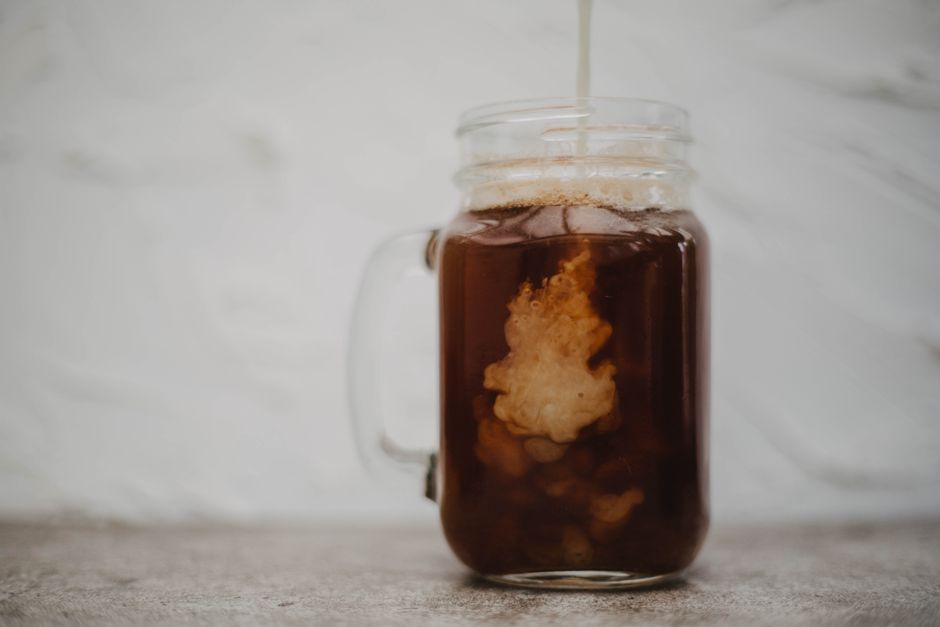
Cold brew coffee typically contains between 150 and 200 milligrams of caffeine per 16-ounce serving, which is roughly double the caffeine of a standard cup of drip coffee. However, the exact amount varies widely depending on the coffee-to-water ratio, the type of beans used, and how long the coffee steeps. Because cold brew is a concentrate, a single glass can deliver a significant caffeine punch that many people do not expect.
How Much Caffeine Is In Cold Brew Compared to Regular Coffee?
A standard 8-ounce cup of drip coffee contains about 80 to 100 milligrams of caffeine. Cold brew, when served in a typical 16-ounce glass, often contains 150 to 200 milligrams or more. That is not because cold brewing extracts more caffeine per bean, but because cold brew is usually made with a much higher coffee-to-water ratio.
When you make cold brew, you use roughly two to three times more coffee grounds than you would for hot coffee. The result is a concentrated liquid that is often diluted with water or milk before drinking. If you drink it straight without dilution, you are consuming that full concentrated dose.
An espresso shot contains about 63 milligrams of caffeine per single shot. A 16-ounce cold brew can equal the caffeine of roughly three espresso shots. Many people are surprised by this comparison because cold brew tastes smoother and less bitter than hot coffee, which makes it easy to drink quickly.
Why Does Cold Brew Have More Caffeine Than Hot Coffee?
Cold water does not extract caffeine more efficiently than hot water. In fact, hot water extracts caffeine from coffee grounds faster. The difference comes down to brewing ratios and serving sizes.
Hot coffee is brewed with about 1 to 2 tablespoons of ground coffee per 6 ounces of water. Cold brew typically uses 1 cup of ground coffee per 4 cups of water, which is a much denser mixture. That dense mixture steeps for 12 to 24 hours, allowing the water to pull out a substantial amount of caffeine and flavor compounds.
Another factor is serving size. Cold brew is almost always served in larger glasses, often 12 to 16 ounces or more. Even if the caffeine concentration per ounce is similar to hot coffee, the larger volume means more total caffeine in your cup.
There is a common belief that cold brew is naturally lower in acid and therefore gentler on the stomach. That is true for acid content, but it has nothing to do with caffeine levels. The caffeine content is determined by the beans and the brewing recipe, not the water temperature.
What Determines the Exact Caffeine Content in Your Cold Brew?
Several factors influence how much caffeine ends up in your glass. The most important is the coffee-to-water ratio used by the café or the recipe you follow at home.
- Bean type: Robusta beans contain roughly twice as much caffeine as Arabica beans. A cold brew made with robusta will have significantly more caffeine than one made with arabica.
- Steep time: Longer steeping extracts more caffeine, but most of the caffeine is extracted within the first 12 hours. Steeping beyond 18 hours adds relatively little additional caffeine.
- Grind size: Finer grounds expose more surface area to water, which can increase caffeine extraction. However, cold brew typically uses a coarse grind to prevent over-extraction of bitter compounds.
- Dilution: Many cafés serve cold brew concentrate over ice or with milk. The amount of dilution dramatically changes the final caffeine content per serving.
If you buy cold brew from a café, the caffeine content is rarely listed on the menu. Starbucks, for example, publishes nutritional information online, but smaller shops may not. When in doubt, ask the barista whether the drink is concentrate or ready-to-drink, and whether it is diluted before serving.



How Much Caffeine Is Safe Per Day?
Health authorities generally agree that up to 400 milligrams of caffeine per day is safe for most healthy adults. That is roughly four 8-ounce cups of drip coffee, or about two 16-ounce cold brews at the higher end of the range.
For pregnant women, the recommendation is lower. Most clinical guidance suggests limiting caffeine to 200 milligrams per day during pregnancy. That means a single 16-ounce cold brew could approach or exceed the daily limit, depending on how it was brewed.
Caffeine sensitivity varies from person to person. Some people feel jittery or anxious after a single cup, while others can drink coffee late in the evening and sleep fine. Genetics play a large role in how quickly your body metabolizes caffeine.
Consuming more than 400 milligrams in a short period can cause side effects like rapid heartbeat, insomnia, nervousness, and digestive upset. Extremely high doses, above 1,000 milligrams, can be dangerous and may require medical attention.
How to Estimate the Caffeine in Homemade Cold Brew
If you make cold brew at home, you can estimate the caffeine content based on your recipe. A standard recipe uses a 1:4 or 1:5 ratio of coffee to water. That means 1 cup of ground coffee to 4 or 5 cups of water.
One cup of ground coffee weighs roughly 85 to 90 grams. Arabica coffee contains about 1 to 1.2 percent caffeine by weight. That means your entire batch of concentrate contains roughly 850 to 1,080 milligrams of caffeine before dilution.
If your batch makes about 4 cups of concentrate, each 8-ounce serving contains roughly 210 to 270 milligrams of caffeine. If you dilute that concentrate half and half with water or milk, the caffeine per 8-ounce glass drops to about 105 to 135 milligrams.
These are estimates, not exact measurements. The actual caffeine content depends on the specific beans, roast level, and steep time. But this gives you a practical way to gauge how much caffeine you are consuming from homemade cold brew.
Is Cold Brew Stronger Than Espresso?
By volume, no. Espresso contains about 63 milligrams of caffeine per fluid ounce, which is far more concentrated than cold brew. A 1-ounce shot of espresso has roughly 63 milligrams, while an ounce of cold brew concentrate might have 25 to 35 milligrams.
By serving size, yes. A typical cold brew drink is 12 to 16 ounces, while an espresso shot is 1 to 2 ounces. The total caffeine in a large cold brew is usually higher than a single or even double espresso.
This distinction matters if you are watching your caffeine intake. A double espresso contains about 126 milligrams of caffeine. A 16-ounce cold brew can contain 200 milligrams or more. The cold brew delivers more total caffeine, even though espresso is more concentrated.
Does Decaf Cold Brew Exist?
Yes, decaffeinated cold brew is available. It is made using decaf coffee beans that have had most of their caffeine removed before brewing. The decaffeination process removes roughly 97 percent of the caffeine from the beans.
An 8-ounce cup of decaf cold brew contains about 2 to 5 milligrams of caffeine. That is a negligible amount for most people, though it is not completely caffeine-free. People who are highly sensitive to caffeine or who have medical conditions requiring strict caffeine avoidance should still be cautious with decaf.
Some cafés offer decaf cold brew, but it is less common than regular cold brew. If you are ordering at a café and do not see decaf cold brew on the menu, ask. Many shops will make it if they have decaf beans available.
How to Manage Your Caffeine Intake With Cold Brew
If you enjoy cold brew but want to control your caffeine intake, there are practical steps you can take. The simplest is to drink smaller servings. A 12-ounce cold brew contains less caffeine than a 16-ounce or 20-ounce serving.
You can also dilute your cold brew with water, milk, or ice. This does not change the total caffeine in the drink, but it spreads it out over a larger volume. You will drink more liquid but consume the same amount of caffeine.
Pay attention to how your body responds. If you feel anxious, have trouble sleeping, or notice a racing heartbeat after drinking cold brew, you may be consuming more caffeine than your body handles comfortably. Reducing your serving size or switching to a half-caf blend can help.
Cold brew is not inherently dangerous. It is simply a concentrated form of coffee that delivers more caffeine per glass than most people expect. Knowing the caffeine content and how your body responds is the key to enjoying it safely.
Frequently Asked Questions
How much caffeine is in a 16-ounce cold brew?
A 16-ounce cold brew typically contains 150 to 200 milligrams of caffeine. The exact amount depends on the coffee-to-water ratio and the type of beans used.
Is cold brew stronger than regular coffee?
Cold brew is usually more concentrated than drip coffee, so a standard serving contains more total caffeine. A 16-ounce cold brew can have roughly double the caffeine of an 8-ounce cup of drip coffee.
Does cold brew have more caffeine than espresso?
Espresso has more caffeine per ounce, but cold brew has more caffeine per serving. A typical cold brew drink contains more total caffeine than a single or double espresso shot.
Can I get decaf cold brew?
Yes, decaf cold brew is available and contains only 2 to 5 milligrams of caffeine per 8-ounce serving. It is made with decaffeinated coffee beans.
