
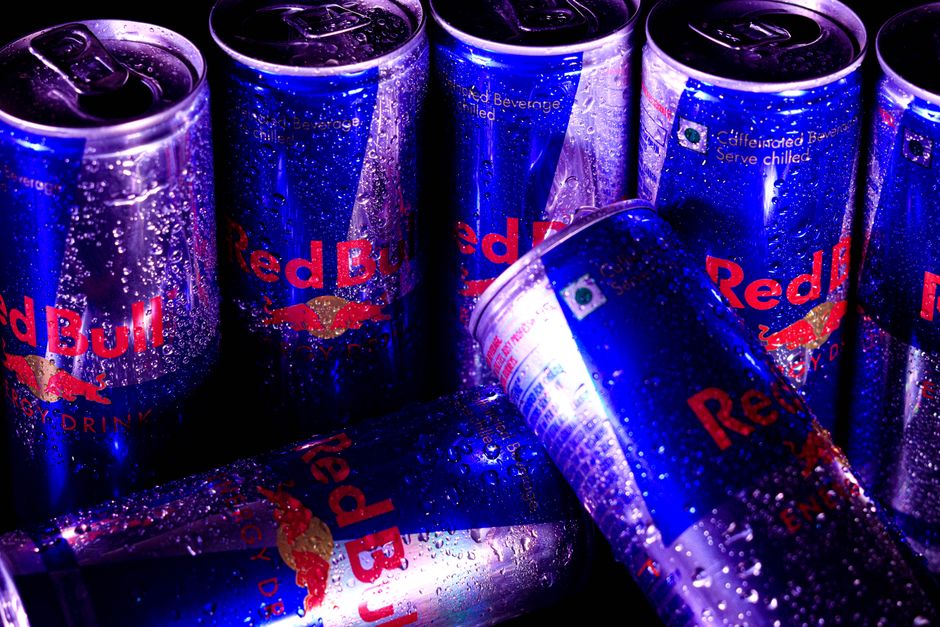
A standard 8.4-ounce can of Red Bull contains 80 milligrams of caffeine. That is the original flavor and the Sugarfree version. This amount is roughly equivalent to a standard cup of brewed coffee, though coffee caffeine content varies widely by brand and brewing method.
For most healthy adults, 80 mg is a moderate dose. It falls well within general guidelines that suggest keeping daily caffeine intake under 400 mg. That means an average adult could drink several 8.4-ounce cans in a day without exceeding typical safety limits, though individual tolerance matters.
How Much Caffeine Is In An 8.4 Oz Can Of Red Bull?
The exact number is 80 mg per 8.4 fluid ounces. This applies to both the classic Red Bull Energy Drink and the Sugarfree version. The company has published this value consistently, and it matches what independent laboratory analyses have found.
Red Bull also sells larger sizes. A 12-ounce can contains about 114 mg of caffeine, and a 16-ounce can contains about 151 mg. If you drink from a larger can, the caffeine scales up with the volume. The 8.4-ounce size remains the standard single-serving reference point for the brand.
One important detail: the 80 mg figure applies to the original recipe. Red Bull also makes flavored editions like Summer Edition or Coconut Berry. Those flavors typically contain the same 80 mg per 8.4 ounces, but you should check the label because seasonal flavors can occasionally differ.
How Does Red Bull Compare To Coffee And Other Drinks?
Comparing caffeine across beverages is not always straightforward because serving sizes differ. But the per-ounce numbers help clarify the picture.
Red Bull has about 9.5 mg of caffeine per fluid ounce. A typical brewed coffee has roughly 12 to 16 mg per ounce, depending on strength. Espresso is much more concentrated, with about 63 mg per single 1-ounce shot. So Red Bull sits slightly below average brewed coffee in concentration.
Here is a side-by-side look at common caffeine sources:
| Beverage | Serving Size | Caffeine (approx.) |
|---|---|---|
| Red Bull (original) | 8.4 oz | 80 mg |
| Brewed coffee | 8 oz | 95 mg |
| Espresso | 1 oz shot | 63 mg |
| Black tea | 8 oz | 47 mg |
| Green tea | 8 oz | 28 mg |
| Cola (typical) | 12 oz | 34 mg |
The coffee figure is an average. Some coffee shops serve drinks with 200 mg or more in a single cup. A small drip coffee from one chain may have 150 mg while the same size from another has 260 mg. Red Bull is more consistent because it is a manufactured product with a fixed recipe.
What Else Is In Red Bull Besides Caffeine?
Caffeine gets most of the attention, but Red Bull contains other ingredients that matter for understanding how it affects you. The full ingredient list includes carbonated water, sucrose, glucose, citric acid, taurine, sodium bicarbonate, magnesium carbonate, and B vitamins.
Taurine is the ingredient people ask about most. Taurine is an amino acid that occurs naturally in the body and in foods like meat and fish. It is not a stimulant. The amount in Red Bull is about 1000 mg per 8.4-ounce can. Some research has looked at whether taurine combined with caffeine affects performance, but the evidence for a meaningful additive effect remains limited.
The sugar content is worth noting. An 8.4-ounce can of original Red Bull contains 27 grams of sugar. That is about 6.75 teaspoons. The Sugarfree version uses artificial sweeteners instead and has zero sugar. The carbohydrate load in the sugared version affects blood glucose and energy differently than caffeine alone.
B vitamins are present in small amounts. Red Bull contains niacin, vitamin B6, and vitamin B12. These are water-soluble vitamins, and the amounts are generally not high enough to produce noticeable effects in a healthy person who eats a balanced diet.





How Long Does The Caffeine Effect Last?
Caffeine reaches peak levels in your blood about 30 to 60 minutes after you drink it. The half-life of caffeine in most adults is roughly 4 to 6 hours. Half-life means the time it takes for your body to eliminate half of the caffeine. So after 5 hours, you might still have about 40 mg of the original 80 mg in your system.
Several factors change that timeline. Pregnancy slows caffeine metabolism significantly, extending the half-life to as long as 10 to 15 hours in later stages. Liver disease also slows clearance. Smoking speeds up caffeine breakdown, which means smokers process caffeine faster than nonsmokers.
Individual genetics play a role too. Some people carry gene variants that make them fast metabolizers, while others are slow metabolizers. A slow metabolizer may feel the effects of an 80 mg dose for much longer than a fast metabolizer. This partly explains why two people can drink the same can of Red Bull and have completely different experiences.
Is 80 Mg Of Caffeine Safe?
For a healthy adult, yes. Health authorities generally agree that up to 400 mg of caffeine per day is not associated with adverse health effects in most people. That is the equivalent of five 8.4-ounce cans of Red Bull. Staying below that level is a reasonable target for most adults.
Pregnant women are the exception. Guidance for pregnancy has shifted over the years, and current recommendations are more conservative. Most clinical guidance suggests pregnant women keep caffeine under 200 mg per day. An 8.4-ounce Red Bull contains 80 mg, so one can fits within that limit, but it uses up a substantial portion of the daily allowance.
Children and adolescents should consume less. There is no single official number for kids, but the general clinical direction is that children should avoid energy drinks entirely. The combination of caffeine and other stimulant-like ingredients in energy drinks is not appropriate for developing bodies, and no established safe dose exists for this population.
Caffeine sensitivity varies widely. Some people feel jittery or anxious after 80 mg. Others drink several cans without noticing much. If you are sensitive, you already know it. If you are not sure, start with a smaller serving and see how your body responds.
Can Red Bull Give You Energy Beyond The Caffeine?
The energy boost from Red Bull comes primarily from caffeine. Caffeine blocks adenosine receptors in the brain, which reduces the feeling of sleepiness. That is the main mechanism behind the alertness you feel after drinking it.
The sugar in the original version also plays a role. Glucose enters the bloodstream quickly and provides a rapid source of fuel. This is why the sugared version may feel different from the Sugarfree version. The sugar spike is fast, but it can also lead to a crash later as blood glucose drops.
The other ingredients — taurine, B vitamins, and the rest — have not been proven to enhance energy on their own. Marketing materials sometimes suggest these ingredients work together to improve performance, but the clinical evidence for a synergistic effect is weak. Caffeine alone explains most of the effect you feel.
One study published in the Journal of Strength and Conditioning Research examined Red Bull’s effect on physical performance. The researchers found improvements in endurance and reaction time, but the dose used was higher than a single 8.4-ounce can. Whether the same benefits appear at 80 mg is less clear.
Frequently Asked Questions
How much caffeine is in a regular 8.4 oz Red Bull?
A regular 8.4-ounce can of Red Bull contains 80 mg of caffeine. The Sugarfree version has the same amount.
Is 80 mg of caffeine a lot?
No, 80 mg is a moderate dose. It is less than a typical cup of brewed coffee and well below the 400 mg daily limit recommended for most healthy adults.
How many 8.4 oz Red Bulls can I drink in a day?
Most healthy adults could drink up to five 8.4-ounce cans and stay within general daily caffeine guidelines. Individual tolerance varies, so fewer may be appropriate if you are sensitive to caffeine.
Does Red Bull have more caffeine than coffee?
No. An 8.4-ounce Red Bull has 80 mg, while an 8-ounce cup of brewed coffee averages about 95 mg. Coffee also varies widely, with some servings containing much more.
